On July 30 and 31 of 2012, almost half of India fell into darkness in what was then the largest power outage of all time triggered by the northern and eastern grids collapse throwing the lives of over 68 crore people out of gear. The days that followed brought images of stalled trains, dysfunctional hospitals, and workplaces run by diesel generators to our drawing rooms and beyond.
By 2014, when Narendra Modi was on his way to be sworn in as India’s Prime Minister, the domestic energy sector was marked by shortages, inefficiencies and inequities. Around 27 crore people lived without access to electricity, as per the International Energy Agency (IEA). Coal’s share was 60 percent of installed power capacity, which could not prevent routine shortages. Renewable energy was minuscule, as solar energy’s installed capacity stood at just 2.82 GW and wind energy, although around 21GW, suffered from the government’s policy uncertainty and grid constraints.
By 2014, when Narendra Modi was on his way to be sworn in as India’s Prime Minister, the domestic energy sector was marked by shortages, inefficiencies and inequities.
In the cooking fuel front, biomass such as firewood, cow dung, and crop residue were a mainstay for over 14.5 crore households. The biomass exposed them to indoor air pollution, which led to respiratory and cardiovascular diseases, among other grave health problems.
No wonder, around 5 lakh Indians, as per World Health Organization (WHO) report, were dying prematurely every year from household air pollution. While Liquefied Petroleum Gas (LPG) connections were easily accessible to the urban middle class, women in rural households suffered in smoky kitchens.
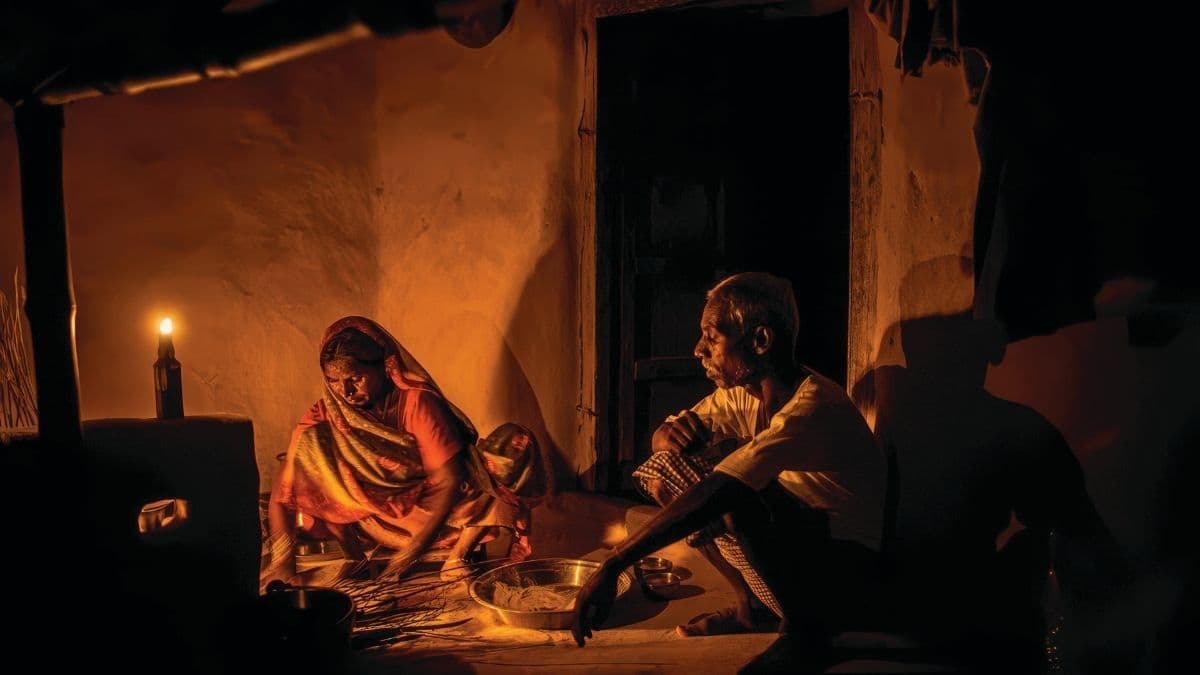
Before India’s energy transition, millions relied on firewood and kerosene lamps—reflecting the deep-rooted challenges of energy access and reliability.
Similarly, the country’s energy basket tilted towards crude oil. It had to significantly import crude oil, as domestic production was unable to meet demand, and natural gas’s share in the energy mix was marginal.
Adding to woes, petroleum infrastructure was confined to coastal areas, leaving the vast hinterland reliant on costly road tankers to supply fuel. Also, the power sector’s losses remained about 23 percent, and financially stressed Distribution Companies (DISCOM) frequently resorted to load shedding.
The industry observers and economists were of the view that unless India undertook major reforms, energy shortage would impede its economic rise. The country that nursed ambition to achieve a double‑digit growth was instead characterised by kerosene lamps, diesel shortages and annual coal import bills that impacted the government exchequer.
When Narendra Modi promised in 2014 to deliver ‘24×7 Power to All’ and transform the country into an energy secured nation, many dismissed it as jumla (rhetoric). Yet, over the next decade, India’s energy transformation story would experience a transformation whose scale and speed few had imagined.
Overhauling Oil & Gas
The country’s oil & gas sector faced a paradox in 2014. Despite its position as the world’s fourth-largest energy consumer, per-capita availability fell behind global averages. While crude oil imports catered to over 78 percent of demand, natural gas, which was hailed globally as a ‘Bridge Fuel’, comprised just around 6 percent of India’s energy mix. The hydrocarbon theme was one of perennial dependence, limited domestic exploration and fragmented infrastructure.
No wonder that Modi’s one of the earliest moves was directed at rewriting the rules of upstream exploration. In 2016, the government launched Hydrocarbon Exploration and Licensing Policy (HELP) to discard the archaic production‑sharing contracts with a revenue‑sharing model. Under HELP, the Open Acreage Licensing Policy (OALP) was introduced for allowing companies to bid for blocks of their choice at any time rather than waiting for government auctions.
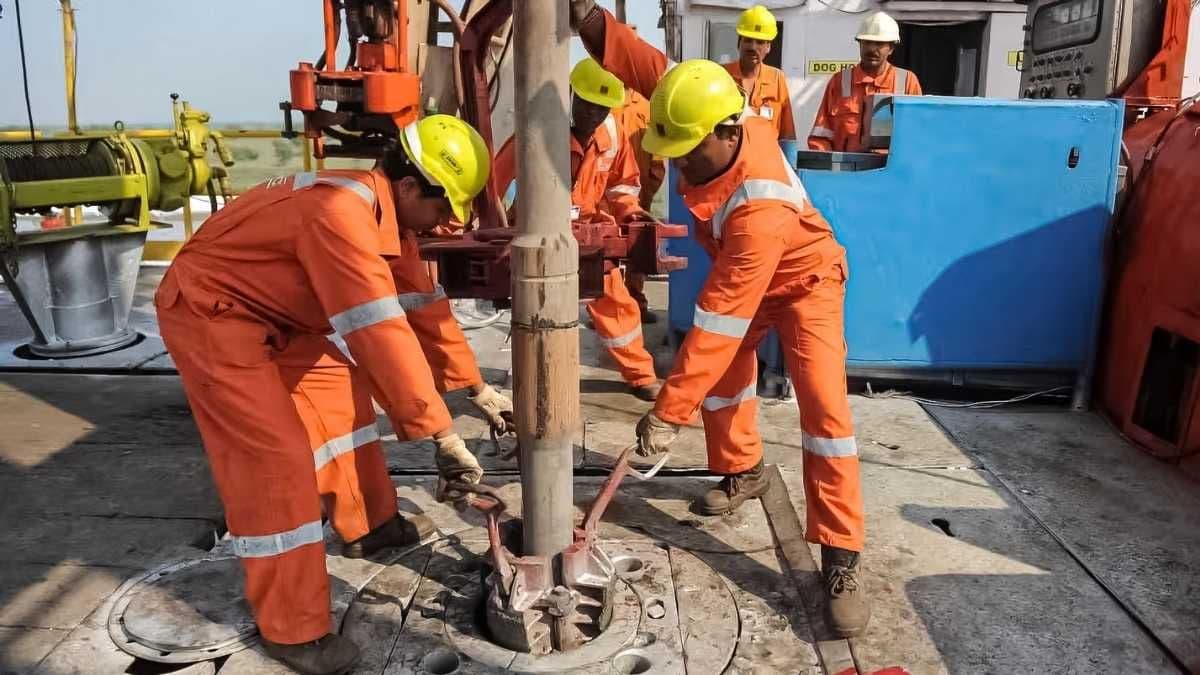
Oil & gas crew carrying out drilling operations, reflecting India’s push for expanded domestic exploration and energy security.
If reforms in upstream prepared the foundation, pipelines and terminals kept up the momentum with the rollout of the Pradhan Mantri Urja Ganga project in 2016. Also known as the Jagdishpur-Haldia-Bokaro-Dhamra pipeline (JHBDPL), it aimed to connect the country’s eastern and north-eastern parts that heavily depended on costlier road transport. By April 2025, 3,227 km of pipeline section had been laid, and 3,119 km of the section had been operationalised. Also, since 2014, India has doubled its Liquified Natural Gas (LNG) import capacity from 22 066 Million Metric Tonnes Per Annum (MMTPA) to 52.7 MMTPA with additions of three new terminals at Ennore, Dhamra, and Mundra and the capacity expansion of the existing facilities at Dahej.
The downstream sectors, was similarly, appeared to be ambitious. The refining capacity increased from 215.066 MMTPA in April 2014 to 256.816 MMTPA in April 2024. Representing this expansion were mega projects such as the Indian Oil Corporation Ltd’s (IOCL) Paradip Refinery in Odisha in 2016. With a total capacity of 5.33 Million Metric Tonnes (MMT) at Vizag, Mangaluru, and Padur, the government invested in Strategic Petroleum Reserves (SPR) for maintaining emergency stockpiles of crude oil during a supply shock.
Heralding a LPG Revolution
India’s rural kitchens emerged as the face of change when Modi in May 2016 launched Pradhan Mantri Ujjwala Yojana (PMUY). The scheme provides deposit-free LPG connection to adult women from poor and deprived households across the country. As of July 2025, around 10.33 crore LPG connections were released. In fact, a 2018 joint study by Indian Council for Medical Research (ICMR) Public Health Foundation of India (PHFI), the Ministry of Health and Family Welfare, and The Lancet acknowledged the role of PMUY in reducing household air pollution in rural households, a health dividend echoed by the WHO.
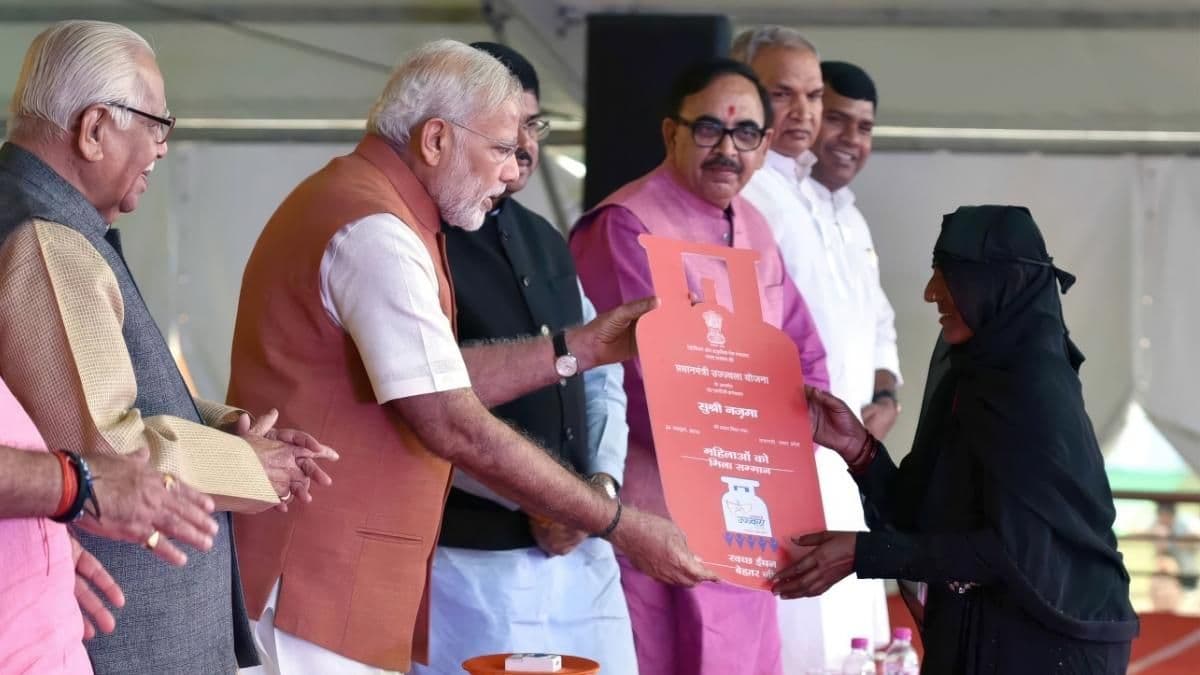
Prime Minister Narendra Modi presents an LPG connection certificate under the Pradhan Mantri Ujjwala Yojana, empowering rural households through access to modern energy.
Repositioning Biofuels
Before 2014, India’s biofuel programme was ambitious; however, by and large, it remained aspirational. It started with the Ethanol Blending Programme in 2003, with a mandate of a 5 percent blend in petrol only in nine states and four union territories before extending to the entire country three years later.
The 2009 biofuel policy set an ambitious goal of a 20 percent blend of biodiesel by 2017. It allowed the use of sugarcane juice instead of depending solely on molasses. But the target remained distant due to sugarcane supply chain bottlenecks and the inability of Oil Marketing Companies (OMC) to get bids for more than 50 percent of the amount offered for purchase.
The biofuel gained steam under the Modi government, when it was repositioned as an energy and climate priority for India. The National Policy on Biofuels 2018, amended in 2022, expanded the feedstock menu to maize, damaged food grains, and industrial waste, among others for promoting biofuel production, minimising waste, and supporting farmers. It also unlocked ₹5,000 crore in viability gap funding for next- gen refineries to make advanced technologies more commercially viable and attract investment from private sector. The policy advanced the target of a 20 percent blending goal from 2030 to 2025, and projects like the E100 pilot in Pune for the production and distribution of ethanol across the country signalled readiness for ethanol as a primary fuel.
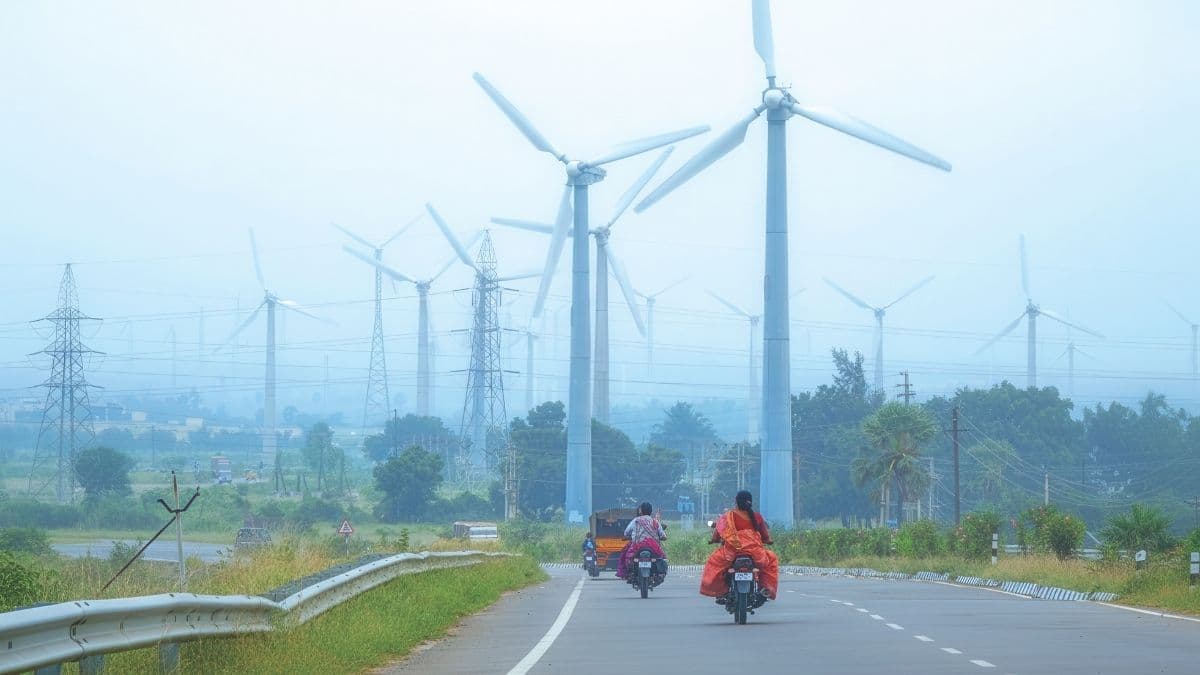
Wind energy infrastructure expanding across India, reflecting the nation’s accelerating renewable and biofuel transition.
Ever since Modi assumed power, biofuel procurement has jumped from 38 crore litres in the Ethanol Supply Year (ESY) to 707 crore litres in ESY 2023-34, an increase of over 18 times. The biofuel initiatives have critically saved India of ₹91,000 crore in import bills and are expected to bring around ₹43,000 crores in forex savings this year at 20 percent blending.
National Policy on Biofuels 2018, amended in 2022, expanded the feedstock menu to maize, damaged food grains, and industrial waste, among others.
The government’s biofuels push is reinforced by the Sustainable Alternative Towards Affordable Transportation (SATAT) scheme launched in 2018. It envisages setting up 5,000 Compressed Biogas (CBG) plants to produce 15 MMT per annum. As of July 2025, 108 CBG plants commissioned and 4,094 active Letter of Intent reportedly issued, which can significantly substitute the import of natural gas providing additional forex savings, creating a market for agri-waste residue, and supporting waste-to-energy economy practices in urban areas.
Building a Clean Energy Momentum
Halfway through 2025, India succeeded in reaching a groundbreaking milestone in its energy transition journey when it accomplished 50 percent of its installed electricity capacity from non-fossil fuel sources comprising renewables, large hydro, and nuclear. This is five years ahead of the target set under its Nationally Determined Contributions (NDC) to the 2015 Paris Agreement.
As of June of the same year, India’s total installed power capacity stood at about 476 GW, almost evenly divided between thermal (240 GW or 50.52 percent) and non-fossil sources (235.7 GW or 49 percent), including 226.9 GW from renewable and 8.8 GW from nuclear.
Solar, particularly, raced away. By 2025 April, installed solar capacity across ground-mounted, rooftop, hybrid, and off-grid reached 110.9 GW from 2.82 GW in 2014. What is more, India became the world’s third biggest solar energy producer by generating 1,08,494 GWh of solar power.
By mid 2025, India reached a groundbreaking milestone in its energy transition when it achieved 50% of its installed electricity capacity from non-fossil fuel sources.
That momentum continued in investment and capacity addition. India attracted over $3.4 billion in FDI in renewables in FY 2024-25. The country recorded 29.52 GW in new capacity, reaching 220.10 GW, as per the Union Ministry of New and Renewable Energy. Occupying a lion’s share is solar with 23.83 GW, and wind added 4.15 GW of the additions. By July 2025, the country’s cumulative solar capacity crossed 119 GW, which is over 63 percent of the renewable base, excluding large hydro.
This surge is reflected in power generation numbers, with renewable electricity output recording an increase of 24.4 percent over the same period last year to 134.4 billion kWh in the first half of this year. Renewables from non-hydro sources alone supplied more than 17 percent of the country’s generation, marking its highest share in years. Notably, the transition is no longer confined to utility-scale farms, but households installing rooftop solar systems under schemes such as PM Surya Ghar: Muft Bijli Yojana and Pradhan Mantri Kisan Urja Suraksha Evam Utthaan Mahabhiyan (PM- KUSUM), signalling a shift toward democratisation of energy.
Setting a Sight on Green Hydrogen and E-fuels
If solar and wind power witnessed aggressive expansion in the last decade in India, the next decade is likely to be shaped by green hydrogen, which is a promising fuel sans carbon baggage for diverse industry uses. In January 2023, the Modi government approved the National Green Hydrogen Mission. It allocated ₹19,744 crore for the mission to transform India into a global hub for the clean fuel’s production, use and export. The government has set a bold annual production target of 5 MMT a year by 2030, requiring an investment of over ₹8 lakh crore, savings around ₹1 lakh crore on fossil imports, and abating about 50 MMT million of greenhouse gas (GHG) emissions per year.
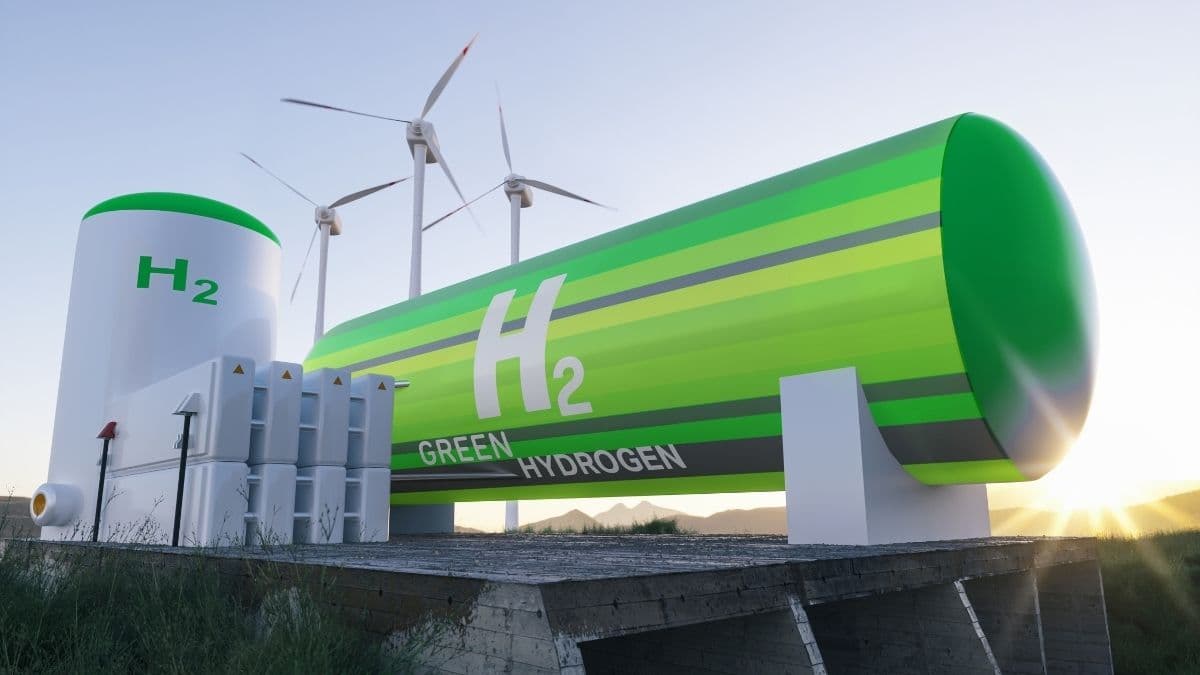
India fast-tracks clean energy push with policy-backed green hydrogen powered by renewables
While the government’s policy framework stands on several pillars, at its heart lies the Strategic Interventions for Green Hydrogen Transition (SIGHT) programme. Under SIGHT, the government has earmarked ₹17,490 crore to provide incentives to domestic electrolyser manufacturing and green hydrogen production. Moreover, ₹400 crore has been allocated to set up research ecosystem, which can commercialise green hydrogen.
Eventually, Coal India Ltd inked a non-binding Memorandum of Understanding (MoU) with AM Green, part of the Greenko Group in May 2025 to supply 4,500 MW of carbon- free energy to latter’s green ammonia facilities. This makes it one of the world’s largest renewable energy supply contracts. Vital for fertilisers and heavy industry, the supply project for green ammonia production aims to accelerate India’s transition to Net Zero emissions. The MoU supports the growing green hydrogen and ammonia sector by integrating solar and wind power with pumped hydro storage for continuous green energy.
Under SIGHT, the government has earmarked ₹17,490 crore to provide incentives to domestic electrolyser manufacturing and green hydrogen production.
Similarly, Bharat Petroleum Corporation Ltd (BPCL), Sembcorp Industries, and Indian Oil Corporation Ltd (IOCL) have undertaken pilot projects across hydrogen and its derivatives. These signals corporate India views commercial opportunity in what was once only policy ambition.
Equally ambitious is the mobility agenda under the mission. The government sanctioned 37 buses and trucks, out of which 15 vehicles were to run on hydrogen fuel cells and 22 hydrogen-based internal combustion engine vehicles on 10 routes across the country. With a financial support of ₹208 crore, these pilot projects are to be commissioned within the next 18-24 months, paving the way for the broader implementation of such technologies in India.
Besides, the financial support for green hydrogen by state governments estimated to be ₹5.05 lakh crore, which is 26 times the union mission’s allocation, as estimated in a 2024 study by the Council on Energy, Environment and Water (CEEW). Notably, in their respective state green hydrogen policies, Andhra Pradesh, Rajasthan, and Uttar Pradesh provide duty waivers or have slashed the interstate open access charges to sharpen the country’s competitive edge in reducing production costs. As hydrogen hogs the spotlight, the next disruptor is likely to be e-fuels.
Synthetic fuels such as E-methanol, e-kerosene, and e-ammonia produced from green hydrogen and captured carbon dioxide are critical for decarbonising sectors such as shipping and aviation known to be notoriously challenging to decarbonise. As per research firm Enerdata, India is linked to 12 percent of the global e-fuel pipeline, a striking statistic considering the technology’s nascent stage.
However, the breakthrough was reached last year when IOCL’s Panipat refinery got certification for producing Sustainable Aviation Fuel (SAF) using used cooking oil. This development underlines India’s resolve to not just to produce but to innovate.
Financing the Transition
If the energy transition is poised to fuel 21st century India, its financing and policy scaffolding are ensuring the ambition is credible. Over the decade, Modi has built a multi-pronged framework comprising budgetary support, production incentives, foreign capital, and global partnerships, all of which underwrite the shift.
The Budget allocation for the Ministry of New and Renewable Energy (MNRE) has increased 27 times from ₹956.39 crore in FY 2014-15 to ₹26,549.38 crore in FY 2025-26, indicating policy consistency.
To reduce import dependence and build a competitive manufacturing base, the government allocated over ₹24,000 crore in Production Linked Incentives (PLI) for solar modules and advanced chemistry cell batteries. What is more, the broader ‘Make in India’ initiative has joined with these incentives to attract global players for setting up units in renewables and cleantech. Notably, the Budget allocation for the Ministry of New and Renewable Energy (MNRE) has increased 27 times from ₹956.39 crore in FY 2014-15 to ₹26,549.38 crore in FY 2025-26, indicating policy consistency.
Also, the country’s openness to Foreign Direct Investment (FDI) has been pivotal. Renewable energy drew over $16.5 billion in FDI from 2014 to 2023, according to Department for Promotion of Industry and Internal Trade (DPIIT), with marquee investors such as global investment firm Brookfield, Singapore sovereign wealth fund GIC, and Abu Dhabi Investment Authority (ADIA) backing large-scale solar and wind platforms. These not only provide patient capital but also boosted global credibility to India’s green bets.
To stitch international partnerships into this financing fabric, Modi simultaneously worked the diplomatic circuit. India’s International Solar Alliance (ISA) presidency, with France’s co-presidency, has been instrumental in attracting funding commitments for energy projects from multilateral and foreign lenders.
The World Bank announced it would provide more than $1 billion to support India’s solar expansion through investments in solar generation. The German KfW has committed around €1 billion since 2017 to support the Indian-German solar partnership in expanding production capacity for solar energy. The European Investment Bank has provided €200 million in support for solar power generation in India. The Japan Bank for International Cooperation (JBIC) co-financed with India and launched a $600 million fund to invest in sustainability projects in the country. In 2012, the UAE pledged to allocate $75 billion in sovereign funds to India to promote clean energy.
Together, these domestic and international instruments, Modi created a financeable ecosystem. Simply put, he has projected India’s energy transition as an investment story going beyond environmental obligation.
Road to 2030 & Vision 2047
Prime Minister Narendra Modi’s energy transition strategy has consistently been evaluated by its ability to pivot from ambition to action. After reaching a 20 percent ethanol blending target by mid-2025, five years ahead of schedule, India’s transition is accelerating from policy slogans to industrial scale.
Ethanol production, which increased from 38 crore litres in 2014 to 661 crore litres in June 2025, has already saved the exchequer ₹1.36 lakh crore in foreign exchange and boosted farm incomes by ₹1.18 lakh crore in payments.
However, 2030 is not about the ethanol blending target alone. The government’s 500 GW non-fossil capacity target requires renewable energy growth at a rate exceeding past performance by far. India has already surpassed the 50 percent mark of electricity capacity from non-fossil sources by mid-2025, half a decade ahead of its Paris Agreement timeline. Achieving the remainder will require a substantial increase in funding, as yearly investments in clean energy will need to rise to approximately $68 billion annually. This represents a nearly 20 percent compound increase from current levels, as per a UK-based think tank Ember.
Green hydrogen has shifted from concept to core industrial strategy with the National Green Hydrogen Mission. The mission targets 5 million tonnes of annual production by 2030 supported by around 125 GW of dedicated renewables and an investment corridor of ₹8 lakh crore.
Equally bold is the downstream, as dependence on grey hydrogen for fertilisers and refineries is to be replaced. Further, the country’s industrial hubs are being configured for hydrogen-driven manufacturing and export markets.
Narrative is changing in the oil and gas sector as well. As domestic exploration continues, strategic upgradation are underway. India’s refineries are being optimised for SAF and biofuels. Besides, city-gas networks are expanding to cushion rural households from fossil fuel volatility. Ethanol blending may have reduced crude demand, but the shift toward bio-CBG and second-generation feedstocks is what is designed to reshape the sector’s future.
Domestic energy equity remains critical. The LPG rollout under the PMUY may have brought India’s kerosene era to an end. But, the journey extends to eliminate energy poverty by 2030 involving rural induction stoves, biogas systems, and grid electrification to eliminate energy poverty by the same year.
The 2047 Viksit Bharat vision elevates Modi’s energy transition strategy from climate policy to nation building. It envisions energy independence to be synonymous with economic sovereignty. NITI Aayog projects that by 2047, renewable and nuclear energy could together comprise more than 73 percent of India’s power mix and nuclear’s role nearly triples by then.
The other large consumer, mobility is poised to transform, with a full transition to zero-emission vehicles that could reduce crude imports by over 90 percent, saving close to $240 billion cumulatively by mid-century.
In Modi’s calculus, the reconfiguration of India’s traditional energy sectors is not an isolated reform, but are building blocks of a new energy ecosystem. If momentum continues, the country will not just meet its targets, it will redefine them. The direction is clear: energy transition has arguably become India’s most ambitious legacy project that stakes its claim on prosperity, governance, and geopolitical influence.