The country has spent a decade adding renewable capacity. The next challenge: to make that power available when the grid needs it. India’s renewable energy build-out has reached a scale at which the key question is changing. It had 291.73 GW of renewable energy capacity as of July 2026, as per the Ministry of New and Renewable Energy (MNRE). Solar’s share was 164.59 GW, wind 58.14 GW and large hydro 52.06 GW. Non-fossil capacity, including nuclear, stood at 300.51 GW. The numbers not only mark a substantial expansion of the generation base, but also expose the next problem: installed capacity does not tell the grid when that electricity will be available.
The distinction is becoming more important as electricity demand rises, new loads such as electric vehicles and green hydrogen emerge, and solar generation increasingly shapes the daily operating pattern of the power system. A system with large quantities of low-marginal cost renewable capacity still needs enough dependable capacity, reserves, transmission and flexibility to meet demand during hours when renewable output is low. India’s planning documents now increasingly treat those requirements as part of renewable integration rather than as a separate issue.
The Problem is Timing
The Central Electricity Authority’s (CEA) Long-term National Resource Adequacy Plan for 2026-27 to 2035-36 puts the issue in system terms. The CEA projects peak demand to rise at a compound annual growth rate of 5.58 percent between 2024-25 and 2035-36, reaching 459 GW. It also projects annual energy requirements to reach 3,365 billion units. The planned generation mix for 2035-36 includes 509 GW of solar, 155 GW of wind, 315 GW of coal, 78 GW of large hydro, 22 GW of nuclear, 20 GW of gas and smaller quantities of biomass and small hydro.
The CEA’s roadmap for 100 GW of pumped-storage projects explicitly identifies this role in absorbing surplus renewable generation and supplying power during peak demand
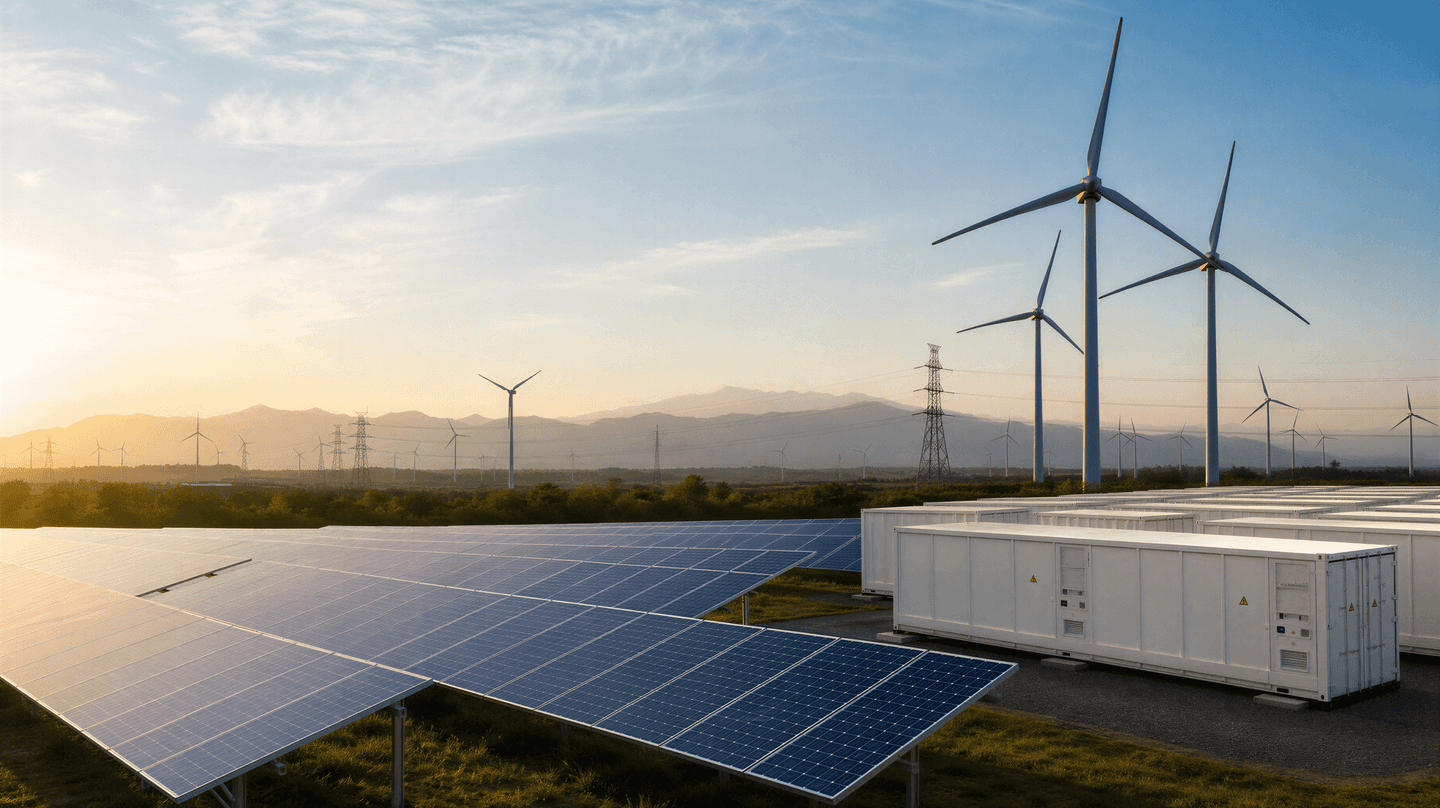
The same plan provides for 174 GW of energy storage capacity, equivalent to 888 GWh. That comprises 80 GW/321 GWh of Battery Energy Storage Systems (BESS) and 94 GW/567 GWh of Pumped Storage Plants (PSP). Therefore, the CEA’s projected installed capacity of 1,121 GW in 2035-36 would contain a much larger share of resources whose value lies in when they can produce electricity, not merely in how many megawatts they have on paper.
This is why the authority’s resource-adequacy framework matters. Its methodology takes account of demand variation, renewable generation variation and thermal outages. It examines coincident peaks, source-wise capacity credit and separate solar and non-solar peak reserve requirements. In other words, the question is no longer simply whether India has enough nameplate generation. It is whether enough dependable capacity is available at the hours when the system actually needs it.
Capacity Credit Changes the Conversation
Solar and wind capacity cannot be treated as though every installed megawatt is available at the time of the national or state peak. Their contribution to resource adequacy therefore has to be assessed through capacity credit. The CEA’s plan notes that coincident peak demand can differ by month and by utility , and that national peak demand does not necessarily occur at the same time as every distribution utility’s peak. It also discusses a methodology that separates solar and non-solar hours when assessing capacity contribution.
Procurement is moving from conventional renewable energy supply towards solar-plus-storage, assured peak supply, firm and dispatchable renewable energy and round-the-clock supply
That distinction has practical consequences for procurement. A 1 GW solar project a 1GW resource capable of delivering electricity for four hours during an evening peak are not interchangeable products. Their annual energy output may be substantial in both cases, but their contribution to meeting a stressed system hour is different. Once planners and procurers price that difference, the value of storage and firm renewable output becomes much easier to see.
Storage Turns Renewable Energy into a Time-shifting Resource
Battery storage is the more obvious tool for shifting electricity within the day. Solar power produced during high-generation hours can be stored and discharged during the evening or other periods of system stress. Pumped storage performs a similar function at a different physical and operating scale: water is pumped to an upper reservoir when electricity is available and released through turbines when power is required. The CEA’s roadmap for 100 GW of pumped-storage projects explicitly identifies this role in absorbing surplus renewable generation and supplying power during peak demand.
The pipeline shows that storage is moving beyond policy discussion. A Ministry of Power (MoP) update placed PSP capacity under construction at 15,870 MW as of June 2026, with another 6,580 MW concurred but not yet taken up. For BESS, 15,754 MW was under construction, 11,747 MW had been awarded, and 19,192 MW was under tendering. These figures are not the same as commissioned capacity, but they show the scale of the procurement and construction pipeline now attached to storage.
The government is also using financial support to bring down the initial cost barrier for batteries. MoP has recorded a September 2023 viability-gap-funding programme for 13.22 GWh of BESS with ₹3,760 crore of support, followed by a June 2025 programme for another 30 GWh with ₹5,400 crore of support through the Power System Development Fund.
The Market is Beginning to Buy Availability
The clearest change is visible in procurement design. Renewable tenders are increasingly specifying the service required from the generator instead of buying renewable energy only as an undifferentiated annual commodity. Solar Energy Corporation of India’s (SECI) 2026 tender portfolio includes a 1,000 MW Firm and Dispatchable Renewable Energy Round-the-Clock procurement, and its tender results also list a 6,000 MWh assured-peak procurement comprising 1,500 MW for four ISTS-connected renewable projects with energy storage.
Satluj Jal Vidyut Nigam’s (SJVN) award record provides an early price signal for this product. For its 1,500 MW, four-hour assured-peak procurement, the successful bids were in a narrow range of ₹6.75 per kWh. The figure should not be read as a benchmark for ordinary solar power. It is the price discovered for a specified availability product that combines renewable generation with storage and a four-hour peak-delivery obligation.
The progression is important. Procurement is moving from conventional renewable energy supply towards solar-plus-storage, assured peak supply, firm and dispatchable renewable energy and round-the-clock supply. Central Electricity Regulatory Commission (CERC) proceeding in 2026 include SJVN’s petition for adoption of tariff discovered for a 1,200 MW firm and dispatchable round-the-clock renewable procurement. The commercial question is therefore shifting from “What is the tariff for renewable electricity?” to “What does dependable renewable electricity cost at the required time?”

The entire chain, from renewable resource and storage to the inter-state transmission system and the receiving demand centre, has to be available when the contracted power is required
Transmission is the Other Half of Dispatchability
Storage solves a timing problem. Transmission solves a location problem. Renewable resources are concentrated unevenly across the country, while demand is spread across industrial and urban centres. A system that adds generation without building the network to move it will face congestion, curtailment or both.
The CEA’s transmission planning for integrating more than 900 GW of non-fossil capacity by 2035-36 provides the scale of the task. The plan envisages about 1,37,500 circuit km of transmission lines and 8,27,600 MVA of substation capacity, with an estimated investment of about ₹7.93 lakh crore. The CEA’s power-system planning work also explicitly covers renewable energy integration, associated transmission for hydro and pumped storage, and the Green Energy Corridor.
For dispatchable renewables, this matters because a project cannot be considered firm merely because it has a storage unit at the generating site. The entire chain, from renewable resource and storage to the inter-state transmission system and the receiving demand centre, has to be available when the contracted power is required.
Resource Adequacy is Becoming a State-level Issue
India’s national resources adequacy plan cannot by itself determine what state needs. Distribution utilities are required to prepare long-term resources adequacy plans covering a ten-year horizon, with CEA validation and oversight. The reason is straightforward: peak demand is local, and its timing varies. A state with a large evening industrial load has a different adequacy problem from one whose demand is dominated by daytime commercial or agricultural consumption.
The CEA’s resources adequacy repository now includes plans for a growing number of states and utilities, including Bihar, Gujarat, Maharashtra, Delhi, Andhra Pradesh, Tamil Nadu, Madhya Pradesh, Telangana, Kerala, Karnataka, Himachal Pradesh, Rajasthan. This creates a second layer of renewable procurement. Developers will increasingly have to respond not only to national renewable targets but to state-specific capacity requirements, peak periods, transmission availability and contracted supply obligations.
Tamil Nadu illustrates the direction of travel. Its earlier CEA resources adequacy plan included storage in the contracted-capacity mix and projected a substantial increase in storage requirements over the planning period. The newer state-level planning exercise reinforces the broader point: renewable capacity additions are being considered alongside the dependable capacity needed to serve the state’s peak demand.
Thermal Power is Still Part of the Reliability Equation
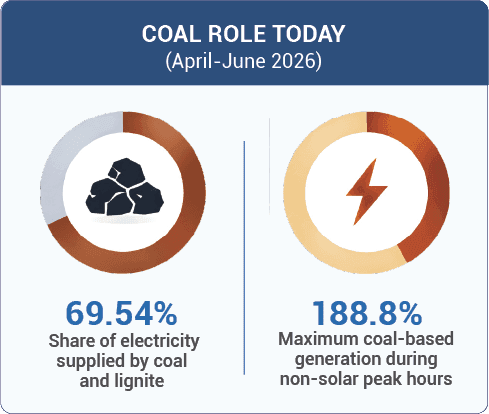
A system built aro und dispatchable renewables will not eliminate the need for conventional generation overnight. Government data make that clear. A July 2026 press statement by the government noted that coal and lignite-based capacity was about 230.8 GW and accounted for 69.54 percent of electricity supplied during April-June 2026. During non-solar peak-demand hours, coal-based plants supplied a maximum of about 188.8 GW. The same release noted that commissioned storage—2,669 MW of BESS and 7,426 MW of PSP—was being used to supplement thermal generation during non-solar hours.
The CEA’s own long-term mix retains 315 GW of coal capacity in 2035-36. That does not mean renewable growth has stalled. It means the power system is being planned as a portfolio in which different technologies perform different jobs. Solar and wind supply large volumes of low-cost energy when resources are available; storage shifts some of that energy; hydro and gas provide flexibility where available; and coal remains a major source of dependable generation during periods when the system cannot rely on variable renewable output.
The Economics of Availability
The harder question is who pays for reliability. Energy-only pricing does not necessarily provide sufficient revenue for a resource that is valuable because it can sit idle for long periods and then deliver a large block of electricity during a few critical hours. Storage has the same problem in reverse: its value depends on the spread between charging and discharging periods, as well as on capacity and ancillary-service requirements.
That is why procurement contracts matter. An assured-peak or firm-dispatchable contract can create a revenue stream for the storage capacity required to meet the delivery obligation. Viability gap funding can reduce the upfront capital burden. Resource adequacy planning can create longer-term demand visibility. Transmission planning can prevent a generation asset from being stranded behind network constraints.
Energy-only pricing does not necessarily provide sufficient revenue for a resource that is valuable because it can sit idle for long periods and then deliver a large block of electricity during a few critical hours
The ₹6.74-6.75/kWh discovered in SJVN’s assured-peak procurement is therefore useful as a market signal, not as a universal tariff. It puts a number around one form of dependable renewable supply, but the eventual cost to consumers will depend on contract structure, utilisation, storage degradation, transmission charges, balancing requirements and the extent to which the system can use the same asset for other services.
The Execution Gap Will Decide the Next Phase
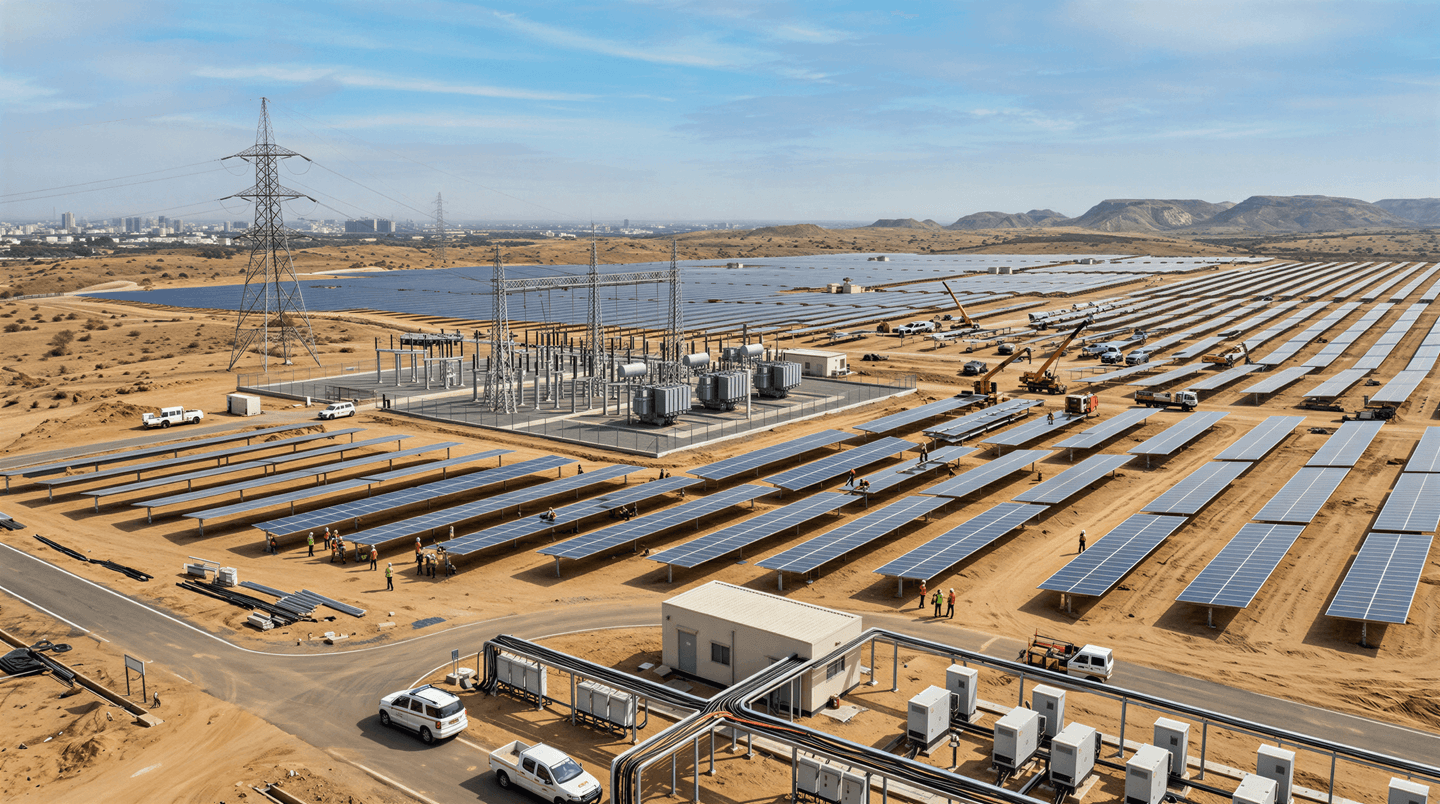
The scale of planned capacity is no longer the main uncertainty. Delivery is. As of June 2026, MoP reported 1,47,720 MW of renewable capacity under construction, including 1,19,580 MW of solar and hybrid-solar capacity and 27,720 MW of wind and hybrid-wind capacity. Another 47,830 MW was at the planning stage. On the conventional side, 47,545 MW of thermal capacity was under construction, while 12,973 MW of hydro capacity was under construction. These numbers underline how much infrastructure has to move from award and construction to commissioning and reliable operation.
Storage has its own execution risks: land and water availability for PSPs, environment and forest clearances where applicable, evacuation infrastructure, battery supply chains, financing, equipment delivery and the development of operating markets for ancillary services. Transmission projects face their own land, right-of-way and construction constraints. A resource-adequacy plan can identify what the system needs; it cannot by itself ensure that every project arrives on schedule.
The harder task is to turn a large variable generation fleet into a resource that the grid can count on during the hours that matter most
That is why the next phase of India’s renewable transition will be judged less by the headline capacity it can deliver. The system will need better forecasting, stronger transmission, more storage, carefully designed contracts and a clearer allocation of the cost of reliability.
From Megawatts to Availability
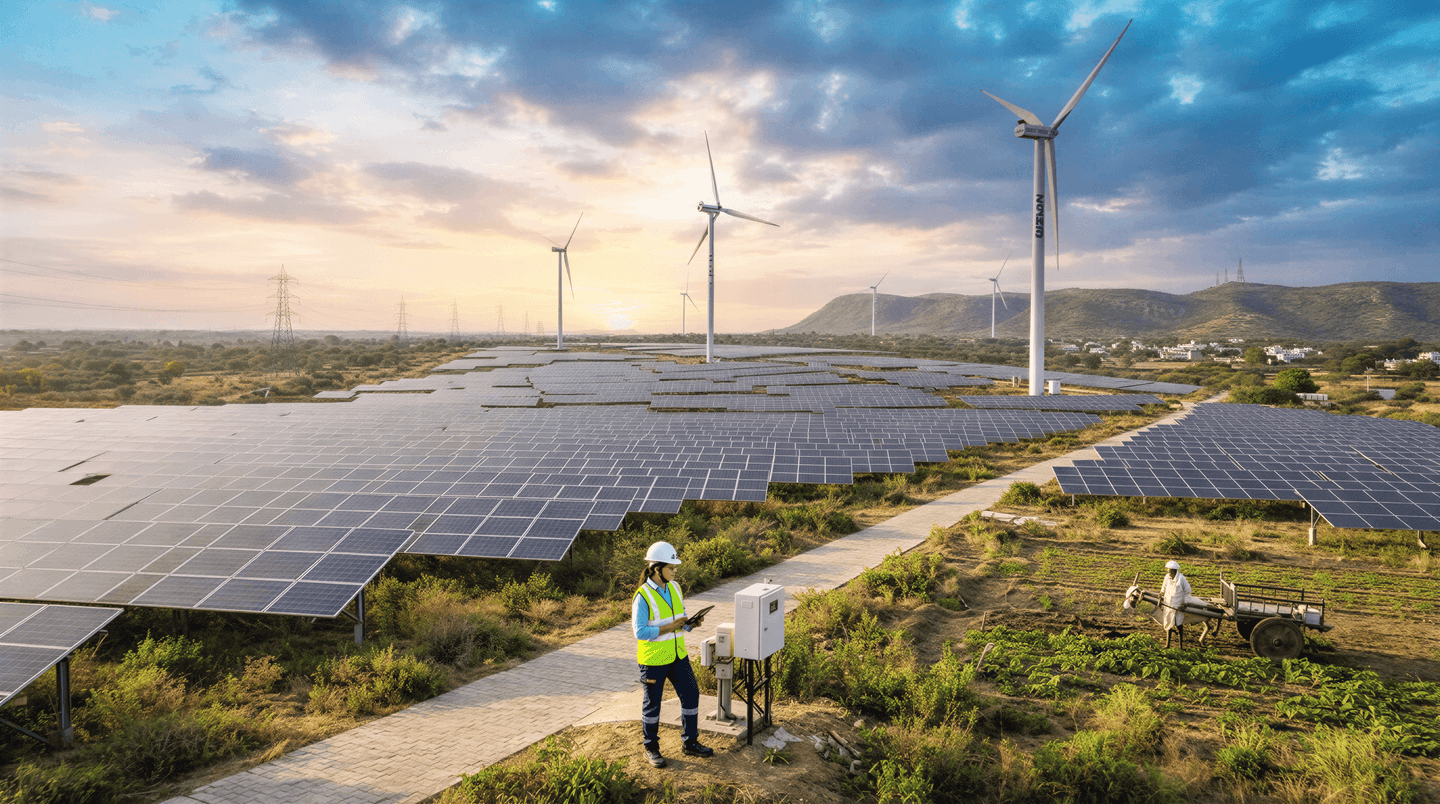
India has already demonstrated that it can add renewable capacity at scale. The harder task is to turn a large variable generation fleet into a resource that the grid can count on during the hours that matter most. The CEA’s resource-adequacy framework, the expansion of storage, the transmission build-out and the emergence of assured-peak and firm-dispatchable procurement all point in the same direction.
The measure of progress is therefore changing. A gigawatt of solar tells the system how much generating equipment exists. A gigawatt backed by four hours of storage, a firm delivery obligation and an available transmission path tells the system something more useful: how much power can be counted on, and when. That is the standard India’s renewable build-out will increasingly have to meet.