The Capacity Building Programme on Variable Renewable Energy (VRE) Integration convened senior officials from Karnataka’s energy departments, transmission and distribution companies, procurement agencies and renewable energy bodies alongside representatives from Danish energy institutions.
Supported by Karnataka Government’s Department of Energy and organised by the Energy & Climate Initiatives Society (ENCIS) and Denmark’s Ministry of Foreign Affairs, the discussions at the day-long programme held in Bengaluru on February 18 were anchored in a shared concern: how to operate a power system reliably when renewable energy becomes a dominant share of the energy mix, across seasons, demand cycles and contingencies.
The programme combined Karnataka’s current system realities with Denmark’s five-decade transition journey, creating a structured exchange on grid stability, market design, storage, regulatory frameworks and institutional coordination.
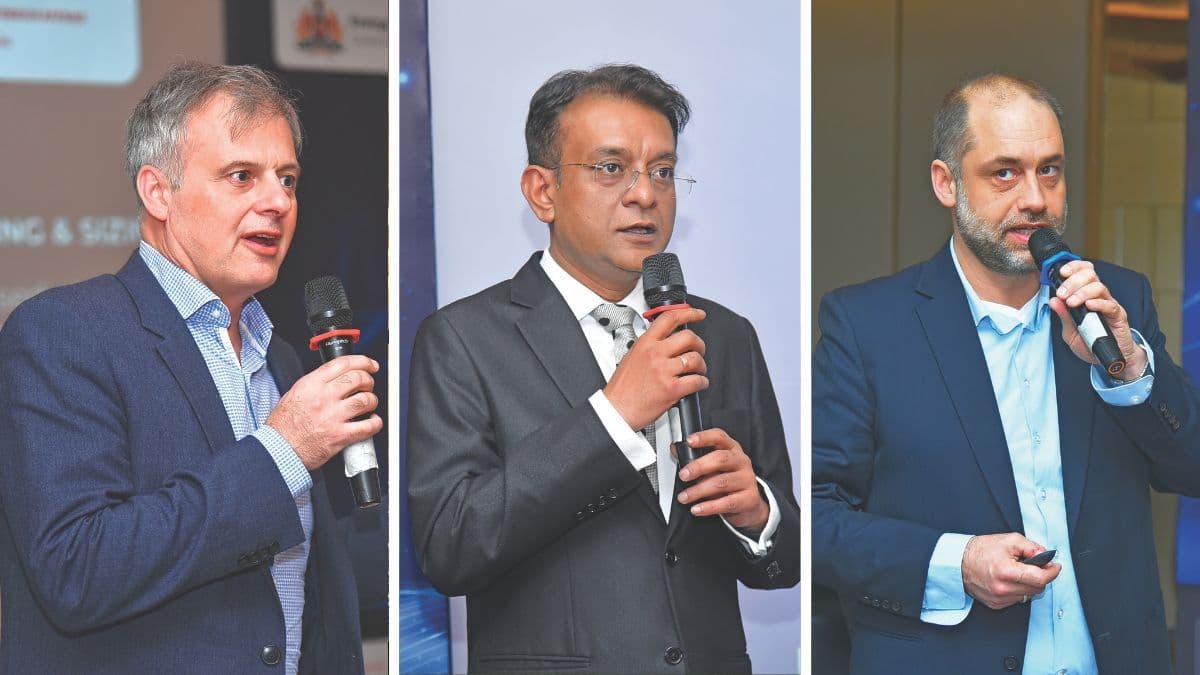
Delivering the welcome address, Abhishek Bhatnagar, Director General, ENCIS, acknowledged the presence and support of the Energy Department, the Government of Karnataka, along with associated generation, transmission, distribution and renewable energy entities. He stated that Karnataka’s participation reflected its intent to lead as India’s power system evolves towards becoming cleaner, leaner and more complex.
Bhatnagar observed that the scale-up of renewable energy raises a fundamental operational question: whether the grid can be run with confidence as renewables form an increasing share of the energy mix across seasons and contingencies. He noted that variable renewable energy integration requires ensuring that clean systems remain secure, flexible and affordable.
In his opening remarks, Dr Rasmus Alex Wendt, Energy Counsellor at the Danish Embassy in New Delhi stated that energy cooperation constitutes a key pillar of India–Denmark Green Strategic Partnership and noted that it is due for renewal during the year.
Dr Wendt outlined four active areas of collaboration between Denmark and India: offshore wind, forecasting and modelling, grid integration, and in-depth cooperation with the state of Tamil Nadu on offshore wind. He said that the engagement, which has been ongoing for several years, has been extended and reflects the long-term nature of the bilateral cooperation.
Setting the technical context for the workshop, Andreas Sejr Andersen, Advisor, Centre for Global Cooperation, the Danish Energy Agency referred to Denmark’s energy transition, which began during the oil crisis of the 1970s when the country was heavily dependent on oil. He noted that the initial driver of Denmark’s transition was energy security and cost considerations, rather than climate objectives.
Andersen stated that over time Denmark scaled up wind and later solar capacity, gaining operational experience in integrating renewable energy into the grid.
Referring to international assessments, he underscored the importance of international collaboration in achieving climate neutrality and managing high shares of renewable energy in national power systems.
The technical sessions were further supported by Thomas Capral Henriksen, Director, Grid Analysis & Asset Management, Green Power Denmark, and Jasmin Mehmedalic, Chief Advisor, Grid Operations, Green Power Denmark.
Karnataka’s Renewable Capacity and System Evolution
Karnataka is currently managing approximately 9,500 MW of solar and 7,000 MW of wind, taking total renewable capacity to around 16,500 MW within an overall installed capacity of roughly 36,500 MW. Peak demand stands at about 19,000 MW and is projected to increase to nearly 25,000 MW by 2029–30. At the same time, an additional 19,000 MW of generation capacity is planned by the end of the decade.
This trajectory implies that installed capacity may significantly exceed projected peak demand, raising complex operational questions regarding surplus management, storage adequacy and commercial optimisation. System operators highlighted voltage control issues arising from reactive power imbalances and the inherent variability of solar and wind generation.
Sudden cloud cover can cause rapid drops in solar output, requiring immediate ramp-up from flexible sources. Karnataka has relied heavily on hydro generation, particularly fast-ramping stations, to maintain peak balance. Thermal units, by contrast, exhibit slower ramping capability and lower operational flexibility.
Battery Energy Storage Systems (BESS) have been awarded at multiple substations, including an initial 500 MW with 1,000 MWh capacity, with further expansion planned. Pumped storage projects are also being envisaged to absorb surplus renewable output during solar peaks and release power during evening demand spikes. However, the commercial viability of storage remains a concern, particularly given the need for multiple charge–discharge cycles to ensure financial sustainability.
Procurement Strategy and Resource Adequacy
Power procurement and optimisation responsibilities lie with PCKL, which functions as the special purpose vehicle for ESCOMs. The agency undertakes resource adequacy planning, load forecasting using AI-based tools, and market purchases to address deficit conditions. It has entered into agreements for new thermal capacity, pumped hydro storage and central generating station allocations, while also actively participating in short-term markets.
Two structural challenges were identified: the high variability of renewable generation and insufficient storage capacity. Participants emphasised the need to better understand integration costs in monetary terms, particularly in rupees per kilowatt-hour, as renewable penetration increases.
Denmark’s Historical Transition: From Oil Dependence to Renewable Leadership
Denmark’s energy transition began in response to the 1970s oil crisis, when the country was dependent on oil for approximately 90 percent of its energy needs. The initial driver was energy security and cost, rather than climate considerations. Over time, policy orientation shifted towards decarbonisation and climate neutrality.
The country installed the world’s first grid-connected wind turbine in 1976 and gradually scaled up wind capacity over subsequent decades. Electricity market liberalisation in 1999 introduced structural reforms separating generation, transmission and distribution functions. In the mid-2000s, negative pricing was introduced in the day-ahead market, reflecting periods of renewable surplus.
Today, Denmark sources more than 65 percent of its electricity from wind and solar. Total installed capacity stands at around 18 GW against a peak load of roughly 6 GW. Interconnector capacity of approximately 7.5 GW connects Denmark to neighbouring European countries, allowing both import during deficits and export during surplus conditions.
Security of supply is reported at 99.994 percent, corresponding to an average annual outage duration of roughly 24 to 30 minutes per consumer. Most outages occur at the distribution level and are not related to capacity shortages.
Market Design, Price Signals and Flexibility
Denmark operates a marginal pricing system in the day-ahead market, where generators bid based on variable cost and the market clears at the marginal plant. Increased renewable penetration shifts the merit order, lowering prices during periods of high wind and solar output. However, negative prices have been observed during surplus periods, while gas crises have triggered price spikes when gas-fired plants became marginal generators.
Financial markets play a critical role in hedging price risks and securing long-term financing for capital-intensive renewable projects. However, liquidity constraints have limited long-duration hedging, prompting greater reliance on instruments such as Contracts for Difference and Power Purchase Agreements to support investment certainty. Flexibility is central to Denmark’s system operation. Thermal plants are capable of rapid ramping and low technical minimum operation, largely driven by market incentives rather than prescriptive regulation. Demand-side flexibility is also utilised, particularly in district heating systems, where electric heat pumps and storage respond to price signals. Trading intervals have been reduced to fifteen minutes, increasing responsiveness to short-term fluctuations.
Regulatory Architecture and Institutional Coordination
Denmark’s institutional framework separates infrastructure from market operations. The Transmission System Operator manages high-voltage networks, while approximately 35 Distribution System Operators manage lower voltage levels.
Revenue caps are determined in five-year regulatory cycles, providing economic certainty while incentivising efficiency improvements. Automatic adjustments are built into the system to account for increases in meters and transformers resulting from electrification.Structured coordination mechanisms exist between the TSO and DSOs, covering both grid operations and market facilitation.
The entities are required to act as neutral market facilitators, ensuring fair and transparent access to the network while enabling competitive energy trading.
Stages of Renewable Integration and Resource Adequacy
The programme referenced the International Energy Agency’s six-stage framework of renewable integration. Denmark is assessed to be in Stage 5, characterised by extended periods of renewable surplus. India is expected to move from Stage 2 to Stage 3 in the coming years, a transition in which wind and solar begin to determine overall system operations rather than merely supplement conventional generation.
Denmark’s resource adequacy assessments have indicated potential future hours where load may not be fully met without intervention, prompting consideration of capacity mechanisms within the European framework. Policymakers are evaluating the trade-off between investment costs and the economic cost of outages.
The programme underscored that renewable integration extends far beyond capacity addition. Karnataka’s rapid expansion is bringing forward operational realities involving voltage management, ramping constraints, storage economics and market optimisation. Denmark’s experience demonstrates that successful integration requires sustained evolution of market design, regulatory certainty, institutional coordination and cross-border flexibility.
For Karnataka, the coming transition from moderate renewable penetration to system-determining renewable dominance will necessitate structural reforms alongside infrastructure expansion. The Danish experience illustrates that while high renewable systems can maintain reliability and affordability, achieving this balance requires long-term institutional alignment, adaptable regulation and consistent market signals.
The dialogue therefore served as a strategic reflection on the next phase of Karnataka’s grid transformation, grounded in both present challenges and international operational experience.