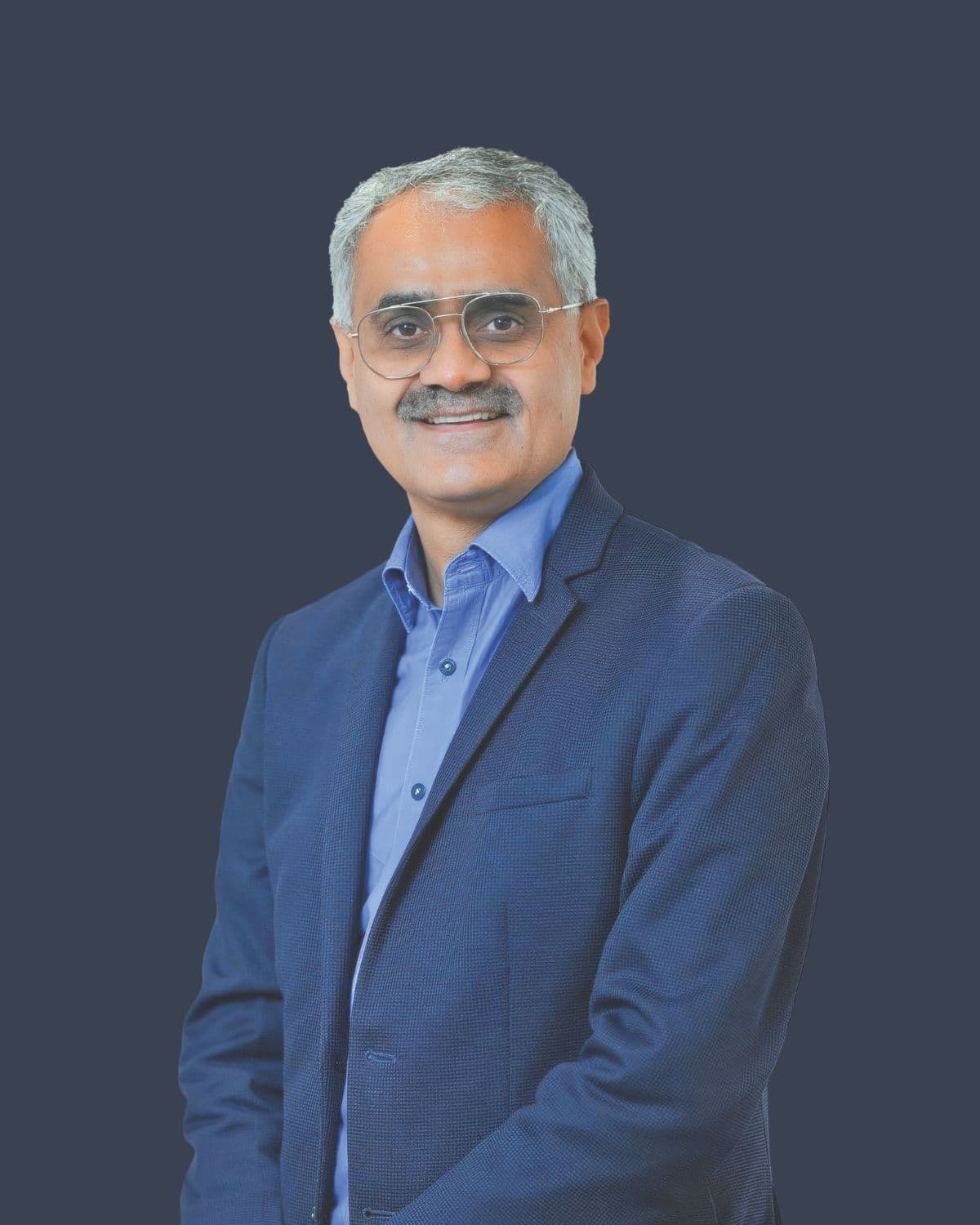
As India advances towards 500 GW of renewable capacity, transmission infrastructure is emerging as the critical backbone of the energy transition. Arun Sharma, CEO, Resonia Ltd, sat down for an interview with ENERGDIVE to discuss execution priorities, regulatory coordination, productivity benchmarks, and the role of technology in sustaining clean energy growth.
Resonia operates at the intersection of solar project execution and technology integration. From this vantage point where do you see the biggest gaps between innovation and large-scale on-ground deployment?
As transmission developers, the framework in which we operate, I think the Government of India has done a fantastic job of creating a Public Private Partnership (PPP) model through tariff based competitive bidding. The country is seeing massive growth in transmission and, if I have to tell you some numbers, we are at about five lakh circuit kilometres of transmission line in the country. This has to go all the way to seven lakh circuit kilometres by 2030.
Doing this massive expansion is the need of the hour because 500 GW of renewable energy has to come on grid through the expansion of the transmission network. A generating station is typically completed in 18 to 20 months. However, creating a transmission asset, whether it is a 300, 400, or 500 km transmission line, typically takes 30 to 35 months and sometimes even 36 months.
Unless we align these two timelines, the pace of the generating project and the pace of transmission, we will continue to see assets that have been completed on the generation side but are unable to deliver power to the consumer. Therefore, bridging this gap can only happen through technology.
Our endeavour to reduce the per day manday required for every kilometer of line from the current level of about 1,100 to 1,500 mandays to less than 1,000. If we look at data from other countries, most western countries operate at less than 500 mandays per kilometer of transmission line. This has to drastically come down in India, if we want to achieve that kind of massive expansion in transmission lines.
To achieve this, multiple measures are being implemented. Drones are being extensively utilised for shifting material. They are also being used for pulling conductors and the platina associated with them. Route planning requires significant innovation. We must identify the most optimum routes that avoid forests, mining areas, and densely populated habitation. These are areas where Artificial Intelligence (AI) can assist and where technology can play a major role.
Further, when maintaining projects over a 35 year life cycle, diagnostics become extremely crucial. We operate projects in snow areas, deserts, forests, and creek regions. It is very important to continuously monitor the condition of these assets, and that is where AI can truly support us.
Based on your experience, where have digital tools, automation, or data driven processes delivered the most tangible improvements in solar project timelines, costs or risk management?
Software application tools have significantly helped us in the Operations and Maintenance (O&M) space. When you operate transmission lines over a long duration, your availability targets are around 99.7 percent, because the grid operates 24 hours a day, seven days a week, 365 days a year. This leaves us with very little time, usually not more than a day, for maintenance. Therefore, AI driven diagnostic tools play a critical role in ensuring the grid continues to operate reliably at all times.
Can you illustrate with any example?
For instance, during drone patrolling, it becomes much easier to identify potential faults before they escalate. Drones equipped with thermos vision technology help us detect insulators that are developing hot spots. These hot spots indicate stress and can eventually lead to failure or tripping of the line. Early detection allows us to intervene before a breakdown occurs. These solutions are now widely deployed.
Another example relates to fault detection on long transmission lines. On a line that may stretch several hundred kilometres, identifying the exact location of a fault is often challenging. An earth fault can occur anywhere along the alignment, and unless the precise location is determined, restoration can be delayed.
By using a traveling wave fault analytic system, which relies on high-speed data processing and signal analysis, we are able to pinpoint the exact fault location. This enables field teams to quickly reach the affected site and restore operations. As a result, we are able to maintain very high availability levels across our transmission assets.
As solar projects expand across geographies, what execution capabilities are the hardest for companies to scale consistently and how could shared platforms or global collaboration help address this challenge?
I think technologically or material wise, the panels, the inverters, and the cables are the easy part of the problem. Scaling up the other piece, which is more difficult, is buying the land parcel. That is the most difficult part because in India the land holdings are small. If you have to buy 100 acres of land, there will be a thousand people. There could be litigations. There could be somebody willing to sell and somebody not willing to sell.
Second is connecting these solar plants to the grid. Unless we have a robust electrical transmission network in the country, the generating people will suffer. We are seeing some curtailment in Rajasthan and Gujarat as I speak. So getting them onto the grid is the second biggest challenge.
And third is the whole deviation settlement mechanism. The government is doing a lot. I can tell you that they are very open to innovative solutions and have done a lot to ensure that these solar plants come on track and continue to earn their revenues. The deviation settlement mechanism is important because you have to forecast how much you will generate, and those forecasts depend on weather monitoring and weather forecasting. Since those tools are not very perfect, the entire onus comes on the generating companies to predict how much they are going to generate, which is not very easy. So the deviation settlement mechanism is something the government is working on. I think these are the areas that have to be addressed, and these are being addressed at different levels.
From an industry perspective, what kinds of standardisation, whether in data documentation or process, would most help developers and solution providers improve bankability and accelerated access to finance?
Access to finance has been relatively better in the country. People have started understanding the whole ecosystem of generation, renewable generation and transmission. Power Finance Corporation (PFC) and Rural Electrification Corporation (REC) and many other companies are at the forefront of it. So bankability, I do not think, is a problem because the whole sector is strongly supported by the government.
If you look at the transmission sector, it is a Net Present Value Tariff (NVT) based system whereby you get paid by a central pool for the next 35 years once you achieve commercial operations and the Commercial Operation Date (COD) is declared. So it is a very automatic system and a very robust one. It is almost Triple A rated because most assets, when they operate for say six months, attain a Triple A kind of rating. So the best of finances are available here.
Internal Rate of Return (IRR) can take a hit because if the time duration increases, then the cost of interest, the Interest During Construction (IDC), increases and that can lead to a loss of IRR. Changes in guidelines or regulations can also impact the cost and therefore affect IRR. That is where banks can be more careful.
I can also tell you that Non Performing Assets (NPA) are lowest in the power sector today. If you leave the distribution companies, the sector is doing really well. Timelines have to be controlled through technology, faster approvals and state government support on the ground because compensation and Right of Way (ROW) clearance require state support. If we look at all this, I think transmission assets find easy finance.
Drawing on your experience in India’s solar ecosystem, what strengths does the country already offer to the global solar deployment and what gaps still need to be addressed to play a larger international role? India added 45 to 50 GW of renewable capacity in the current financial year, which is a big achievement. India is among the fastest to reach 250 GW of renewable capacity. We are already at about 50 percent of our installed capacity coming from renewables. These are big numbers, achieved four to five years ahead of schedule as per the Paris Accord, which is really significant. I am pretty happy that we are part of this revolution.
Second is the way the government is currently working. The bid process coordinators, the Central Electricity Authority (CEA), the Ministry of Power (MoP), and the PFC are working in an integrated manner. This is quite unique to the country. It has pushed progress on the ground and has also debottlenecked many issues.
The third point I would highlight is the way the Hon’ble Prime Minister reviews projects every month through the Pro Active Governance and Timely Implementation (PRAGATI) portal. In these meetings, projects of about₹500 to ₹600 crore are reviewed. This is a big game changer because cross-collaboration issues or approval delays often get resolved at that level, preventing project delays. Some states have also taken a cue from this. Rajasthan has introduced a programme called UNNATI. Maharashtra has established a Chief Minister war room. If states adopt what the Hon’ble Prime Minister is doing at the central level, the pace can increase significantly.
Finally, if the Global Capability Center (GCC) vision were to succeed as a global platform for collaboration and scaling solar, what practical value should industry players like Resonia see over the next five years?
We see significant value in this. Our experience of rapidly adding renewable capacity and integrating it into the grid has demonstrated that the model works.
In the next two to three years, India is likely to have around 400 GW of renewable capacity connected to the grid. The ecosystem that has enabled this, including regulatory frameworks, bidding mechanisms, financing structures, and transmission planning, can serve as a practical model for other countries seeking to scale renewable energy in their own markets.
The entire ecosystem in India offers important lessons. This includes the way bids are managed, the way funding is structured, and the regulatory framework, including the Central Electricity Regulatory Commission (CERC), the Appellate Tribunal for Electricity (APTEL), and the State Electricity Regulatory Commissions (SERC) at the state level, besides as the way transmission planning is happening.
There is a great deal that other countries can learn from this model. In India, transmission lines are typically executed within 24 to 30 months. In many other countries, similar projects can take several years, sometimes even a decade.
As a country, we have been able to handle this process effectively. Going forward, the focus should be on continuously improving governance, strengthening processes, and integrating new technologies so that execution does not become a bottleneck. That is how I see the path ahead.