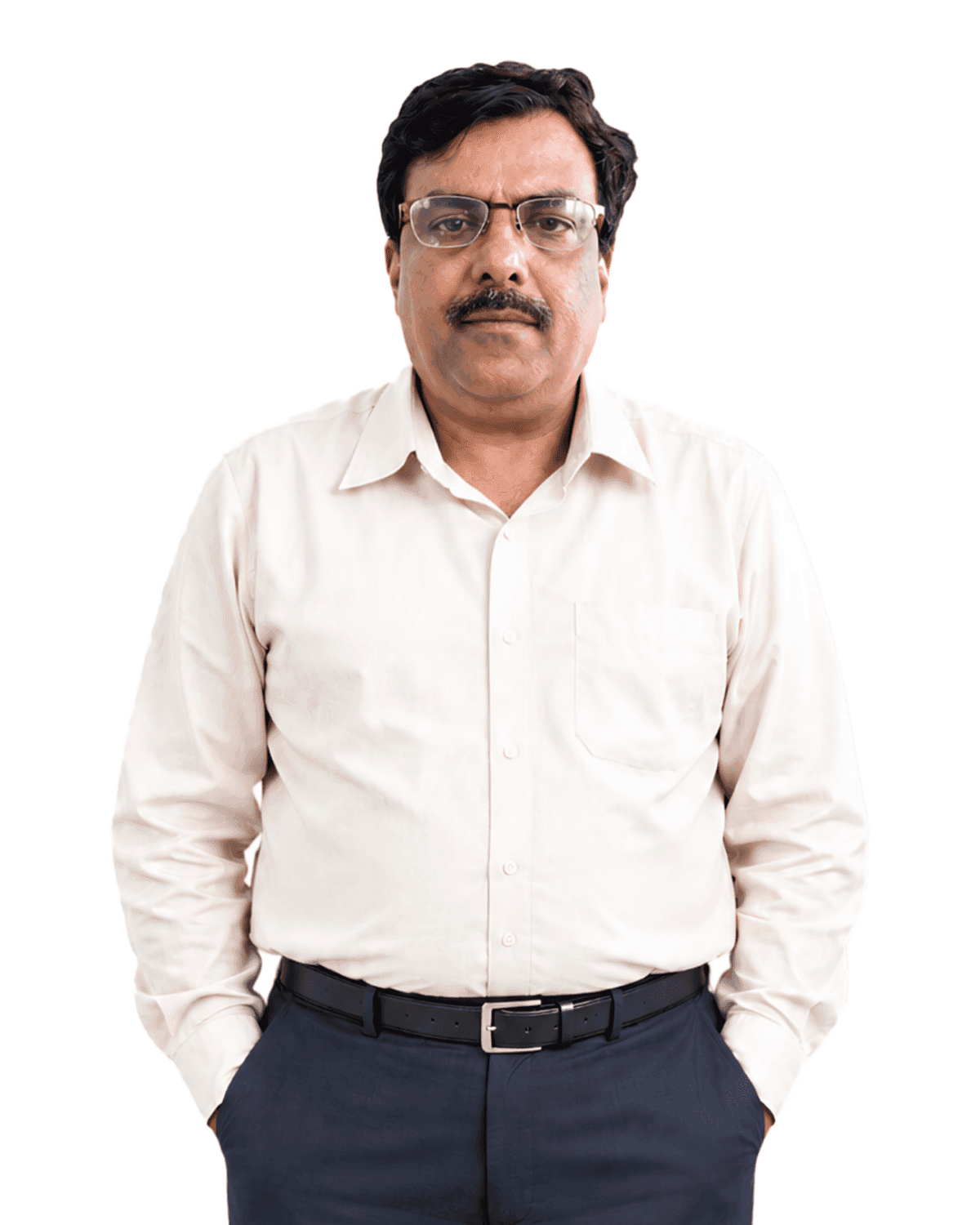
Catalysts are emerging as critical enablers of refinery efficiency, cleaner fuels and the energy transition. In an interview with ENERGDIVE, Chandrasekhar N, Executive Director (Co-ordination Refineries), Bharat Petroleum Corporation Ltd (BPCL), discusses how catalyst innovation is reshaping refining amid shifting crude supplies, tougher operating conditions and Net Zero ambitions. He outlines BPCL’s work on advanced catalysts and biofuels, and explains why catalyst performance could determine refinery profitability beyond 2035.
Q: As refiners and petrochemical producers pursue Net Zero goals, how is catalyst innovation evolving from a process-efficiency tool to a strategic enabler of sustainable fuels, circular feedstocks and low-carbon molecules?
A: Yeah, it is a very, very relevant question for the present situation that is prevailing in the country and in the industry as a whole. See, it is time now to consider the catalyst as part of the feed. You know, we give prominence to the feed quality and quantity, but today, unless the catalyst is there, which is performing to your expectations and requirements, the whole process will go for a toss. So the innovation in catalysts is happening across the industry, and BPCL is also doing a lot of research in catalyst.
We are developing our own isodevaxing catalyst and enzymes for biofuels. We are also developing a process for Sustainable Aviation Fuel (SAF). So the catalyst journey continues, and every day we can see innovations coming in catalysts, and catalysts are going to be the future. Whoever has got a better catalyst is going to win the game.
Q: The industry is increasingly processing heavier crudes, renewable feed stocks and recycled material. What are the biggest catalyst challenges and opportunities emerging from this shift?
A: The present political situation in the Middle East and Russia has given several opportunities and there are also lot of learnings from it. The opportunities are that we continue to get crude and process it, while supplying fuel and Liquefied Petroleum Gas (LPG) to the common man in India.
So that sustenance is there. BPCL, as a refinery group, has now processed more than 100 types of crudes. So experimenting with crudes and deriving the best out of these crudes is not new to BPCL, and BPCL has been doing it very efficiently. We were probably the first to process Urals crude in India. We have also processed some amount of Venezuelan crude now, and we do hope that once the strait opens the Iranian crude will start flowing.
"The beauty of the catalyst is that it is designed for a particular window and if you are operating within that window, you know you get the results and the catalyst life is also there"
So this is a continuous story. But what happens is that, coming to the second part of your question that puts a lot of stress and strain on the catalyst because all the impurities in this crude get settled on the catalyst, and the catalyst activity gets lower and lower as we are process different types of feed.
See, the beauty of the catalyst is that it is designed for a particular window and if you are operating within that window, you know you get the results and the catalyst life is also there. Catalyst is expensive, mind it. So if you are pushing the catalyst out of the window, you lose its activity strength. So, coming back to my first question, we now require a catalyst which is able to operate in a wider window and is also be strong enough to last for three, five or seven years, as the case may be.
Q: How can advances in catalyst design, regeneration and life cycle management improve both refinery economics and environmental performance while supporting circular economy objectives?
A: Yes. See, typically, a catalyst is purchased or selected for a particular window in mind, say, three or four years, depending on how the processes are developing. So, more impurities will put more load on this catalyst. One should be very clear about what sort of crudes are going to be processed for the next three or five years.
We always keep a margin, and the recent geopolitical situation has also made us to think outside the box. We also give very stringent specifications for the catalyst now, and the catalyst manufacturers are also striving their best to give the best catalyst for our requirements.
So, once a catalyst enters a reactor, it is expected to perform for the life. Now, if you are regenerating the catalyst, either you have to do it in situ, or you have to take it out. In both cases, what happens is there is a cost and a time. If you are doing it in situ, it means that you are losing out on throughput, and if you are taking it out, you must have a new batch ready. So, this cycle has to be optimised, and the more efficiently you do the better your gross refining margin.
Q: With growing interest in hydrogen, SAF, renewable diesel and carbon utilisation pathways, which catalytic technologies do you believe will have the greatest commercial impact over the next decade?
A: There is no single answer to this question. That is the challenge that the industry has thrown to the catalyst manufacturers. We have posed this question to all the leading manufacturers: give me a catalyst which has got a better operating window, withstand more severe conditions and can last for probably, I do not say a lifetime, but at least minimum cycle length that we normally ask for. So, the catalyst which is able to meet all the requirements is the best catalyst and the catalyst manufacturers, all of them, wherever they are in the world or India, are trying their best to meet this requirement.
Q: Catalysts are often described as the hidden enablers of industrial transformation. What breakthrough in catalysis would you significantly accelerate to energy transition?
A: One important enabler in all this is the cost. If you are able to bring down the cost of catalyst by using materials that is available within the country. For example, India is rich in thorium now, but how do we utilise that? So, we have to find more materials within the country which will be the raw material for the catalyst. The raw catalyst made of materials like platinum, tungsten and all you know exotic materials which are always costly. So we need to make catalyst with materials other than these materials that can perform the same role. That would be the breakthrough.
Q: What role will advanced chemistry and catalyst technologies play in shaping the refining and petrochemical industry in 2035.
A: We need to have a catalyst that is robust, economical and can see a better variation in the feed quality and quantity. Suppose the catalyst is designed for 100 tonnes of feed, what it will do with 120 tonnes and how much flexibility it has. So, catalyst is the ingredient which is going to decide how the refining industry is going to be profitable 2035 onwards.