Madhya Pradesh is not known as the country’s largest solar state by installed capacity. That distinction belongs elsewhere. As of August 31 this year, it had 6,592.12 MW of installed solar capacity, with a total renewable capacity, including large hydro, at 12,796.74 MW, as per the Ministry of New and Renewable Energy (MNRE). Rajasthan had 44,370.37 MW of solar and Gujarat 34.879.88 MW at the same point.
Therefore, the more interesting question is not how quickly Madhya Pradesh can climb a solar-capacity table, but it is what happens when a state with substantial solar resources begins designing generation, demand, transmission and storage as parts of the same electricity system.
The shift is already visible. Rewa provided the template, Chhatarpur and Morena are extending the utility-scale model, Omkareshwar is taking solar onto water and procurement plans are pairing solar with batteries and pump storage. And the state’s demand profile is making the timing of renewable electricity increasingly important.
Rewa: the Beginning, not the Destination
Madhya Pradesh emerged as a promising destination for utility-scale solar with the setting up of the 750 MW Rewa Ultra Mega Solar Project (RUMSP). Fully commissioned in July 2020, RUMSL supplies both Madhya Pradesh Power Management Company Ltd (MPPMCL) and Delhi Metro Rail Corporation (DMRC). The project describes it as the first case in India in which renewable power was scheduled outside its region to an inter-state open access customer.
That mattered beyond the project’s 750 MW capacity. Rewa demonstrated that a large solar park could be structured around land aggregation, transmission infrastructure and an offtake model extending beyond the immediate state utility. Madhya Pradesh is now trying to replicate that architecture at a considerably larger geographical scale. RUMSL lists 1,500 MW Chhatarpur Solar Park and a 1,400 MW Morena Solar Park among its upcoming Projects.
MPPMCL describes Madhya Pradesh’s demand as seasonal, with higher requirements during winter and significant agricultural consumption during the Rabi period
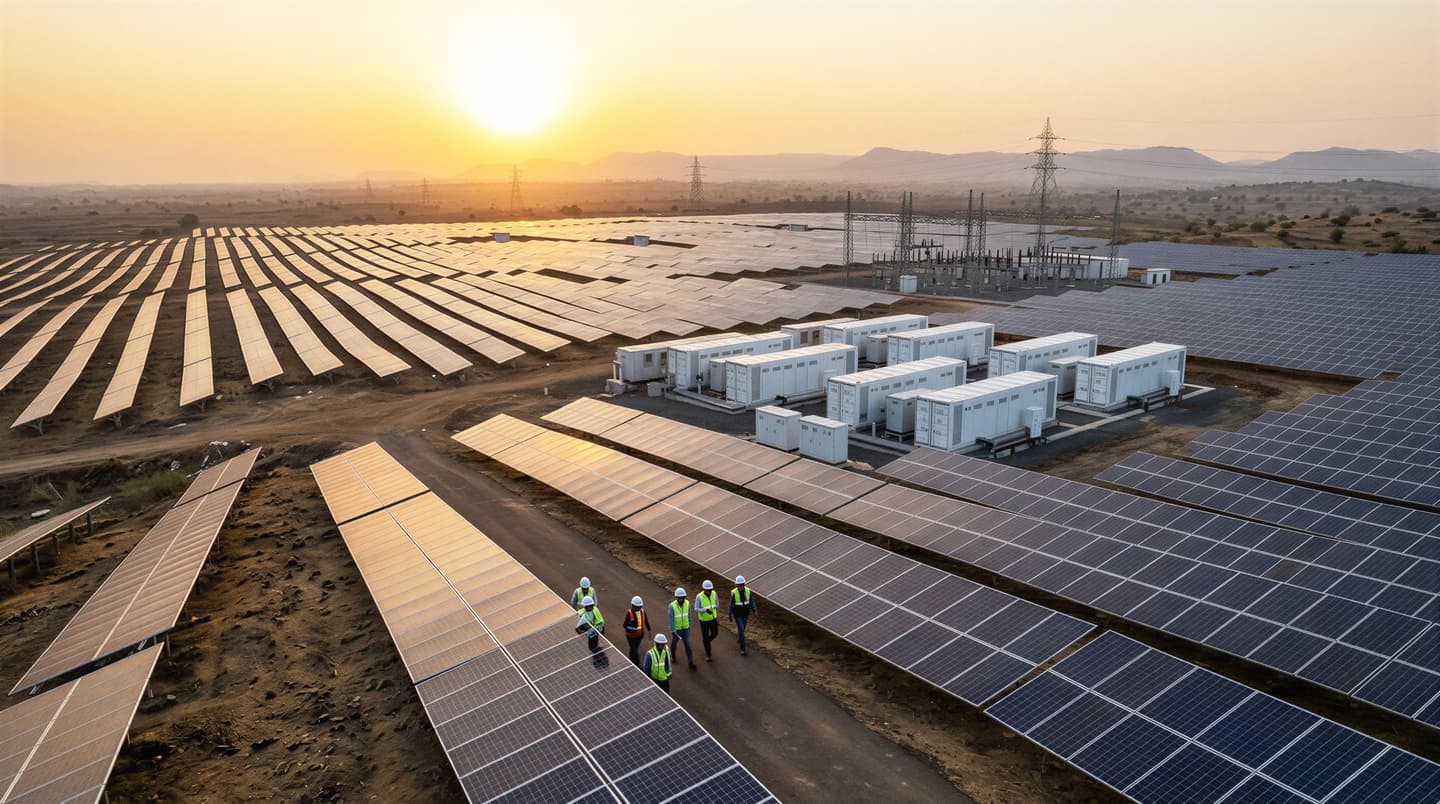
However, those details need to be read carefully. They represent planned park capacities, not capacities already commissioned. At Morena, the first phase is much more specific: a 600 MW solar project with a 440 MW BESS is being taken through the state’s regulatory and procurement process. This matters because the Morena proposition is no longer simply about adding solar megawatts.
The Demand Curve Changes the Solar Equation
The state’s electricity demand profile makes that distinction particularly important. An April 2026 procurement document issued by MPPMCL describes Madhya Pradesh’s demand as seasonal, with higher requirements during winter and significant agricultural consumption during the Rabi period. In other words, the state’s electricity requirement does not necessarily coincide neatly with the hours in which solar generation is strongest. That has consequences for procurement. The same document sets out requirements through 2036–37 for 10,526 MW of solar, 3,900 MW of wind, 6,500 MW of four-hour BESS and 3,334 MW of six-hour pumped storage.
These are procurement planning requirements, not commissioned capacity or a list of projects already awarded. But the combination is significant. The state is not planning a system in which solar capacity simply replaces one block of conventional generation, but a portfolio in which variable renewable generation is accompanied by resources capable of shifting electricity across the day. That is a different proposition from adding solar alone.
Morena is Where the Proposition Changes
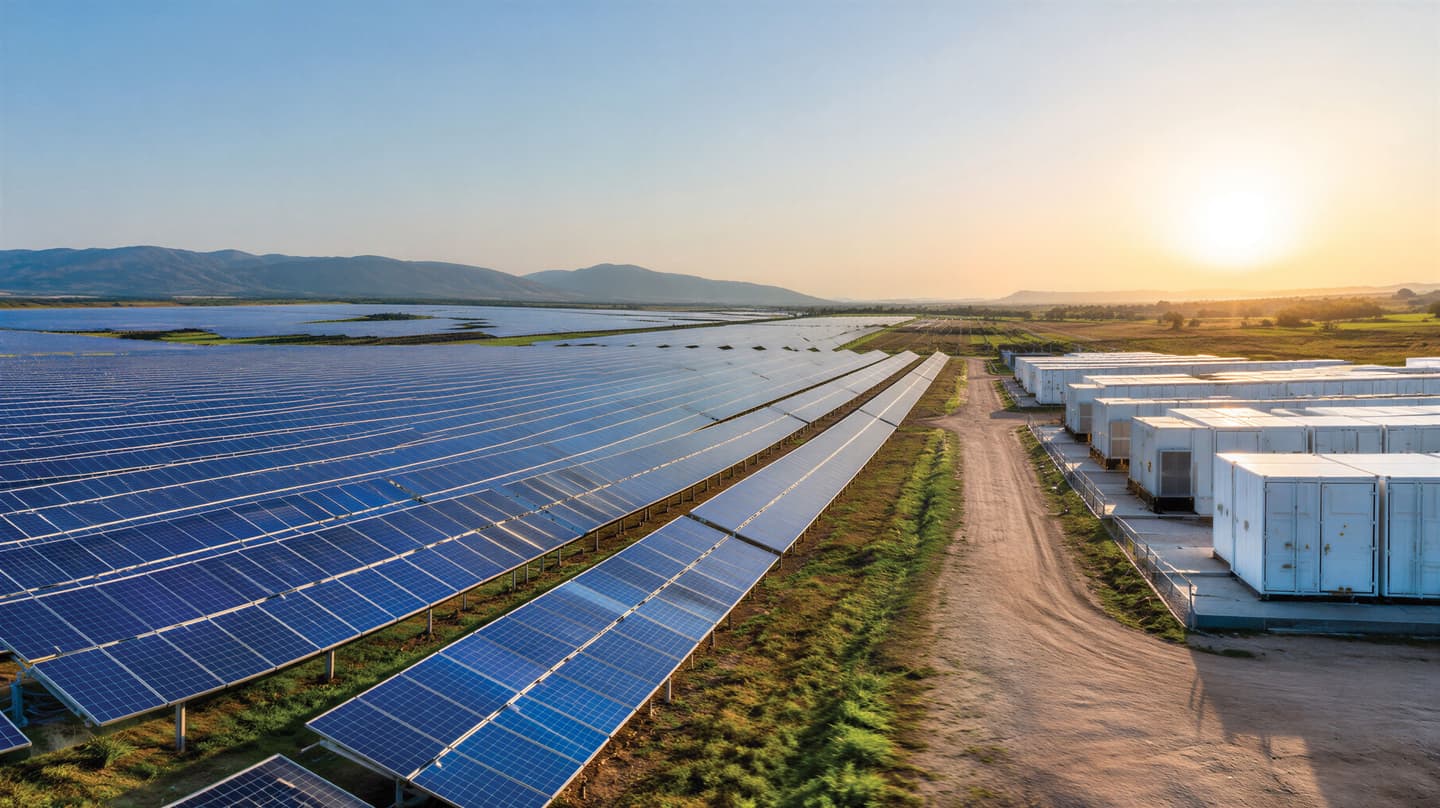
Morena provides perhaps the clearest example. RUMSL identifies the park at 14,000 MW, but the first phase is being developed around a 600 MW solar project with BESS. These numbers describe different characteristics of the system and should not be treated as interchangeable. MW describes the power capacity that can be delivered at a given moment. MWh describes the amount of energy that can be supplied over time.
The distinction is important because the purpose of the project is not simply to make solar available, but to make renewable electricity available during a specified period when the system needs it. That is a much closer approximation of firm or time-shaped renewable procurement than conventional solar-only capacity.
Transmission Cannot Arrive After the Solar
A solar park is only as useful as the network that can evacuate its electricity. Morena illustrates the point again. Central Transmission Utility of India (CTUI) has been progressing the transmission system for evacuation of power from renewable energy projects in Morena SEZ with 2,500 MW identified for phase I.
The timing of the two pieces of infrastructure makes the issue more concrete. MPERC records a December 2027 commissioning schedule for the first 600 MW phase, while CTUIL’s transmission status information places anticipated completion of associated phase-I transmission in May 2028.
The dates underline a practical constraint in renewable development, which underscores that generation and evacuation cannot be treated as independent construction programmes. A solar project can reach mechanical completion and remain commercially constrained if the network required to move its output is not ready.
Omkareshwar Broadens the Geography
The state’s next expansion is not confined to land. RUMSL lists a 600 MW Omkareshwar Floating Solar Park in Khandwa district. The project is being developed with technical and financial assistance from the World Bank, while POWERGRID has been identified for project management consultancy for internal evacuation and the Khandwa ISTS substation for external evacuation.
Floating solar does not remove the engineering challenges associated with large renewable projects, but changes the physical equation
The project also involves hydrographic, topographic and geotechnical surveys alongside environmental and social screening. Floating solar does not remove the engineering challenges associated with large renewable projects, but changes the physical equation: electricity generation can be located on an existing water body rather than requiring an equivalent expanse of land. This makes Omkareshwar relevant not only as another solar project but as an example of how Madhya Pradesh is widening the geography available for renewable generation.
Storage is Moving into Procurement Plan
Storage is becoming the other half of the equation. Madhya Pradesh’s 2025 Pumped Hydro Storage Scheme provides a framework for developing pumped storage projects and cites around 7 GW of on-river pumped-storage potential in the state.
CEA now lists a separate resource adequacy plan for Madhya Pradesh up to 2035–36. The state’s regulatory proceedings also refer to resource adequacy planning extending into the FY2036–37 horizon
An earlier CEA resource adequacy assessment for Madhya Pradesh covering 2024–25 to 2034–35 had estimated a requirement of 12 GW of four-hour energy storage by 2034–35. That figure should not be presented as the latest CEA forecast.
CEA now lists a separate resource adequacy plan for Madhya Pradesh up to 2035–36. The state’s regulatory proceedings also refer to resource adequacy planning extending into the FY2036–37 horizon. The direction is nevertheless clear, which spells out that storage is moving from being an optional addition to renewable projects towards becoming part of the state’s resource-planning architecture.
Central Procurement Adds Another Layer
Madhya Pradesh is also using central procurement mechanisms to expand its renewable and storage options. In February 2025, the Solar Energy Corporation of India (SECI) signed an MoU with the Government of Madhya Pradesh covering a 200 MW solar project in Dhar and a 1,000 MW battery storage project.
The Dahar project forms part of a proposed 500 MW, 25-year arrangement with MPPMCL under which SECI would supply electricity to the state. SECI also proposed phased investment of around ₹2,500 crore for renewable energy development in Madhya Pradesh.
Again, these figures describe an agreement and proposed development framework, not commissioned capacity. That distinction becomes increasingly important as the state’s renewable pipeline grows from announcements, procurement requirements, awarded capacity, construction and operational capacity.
The Real Test is Execution
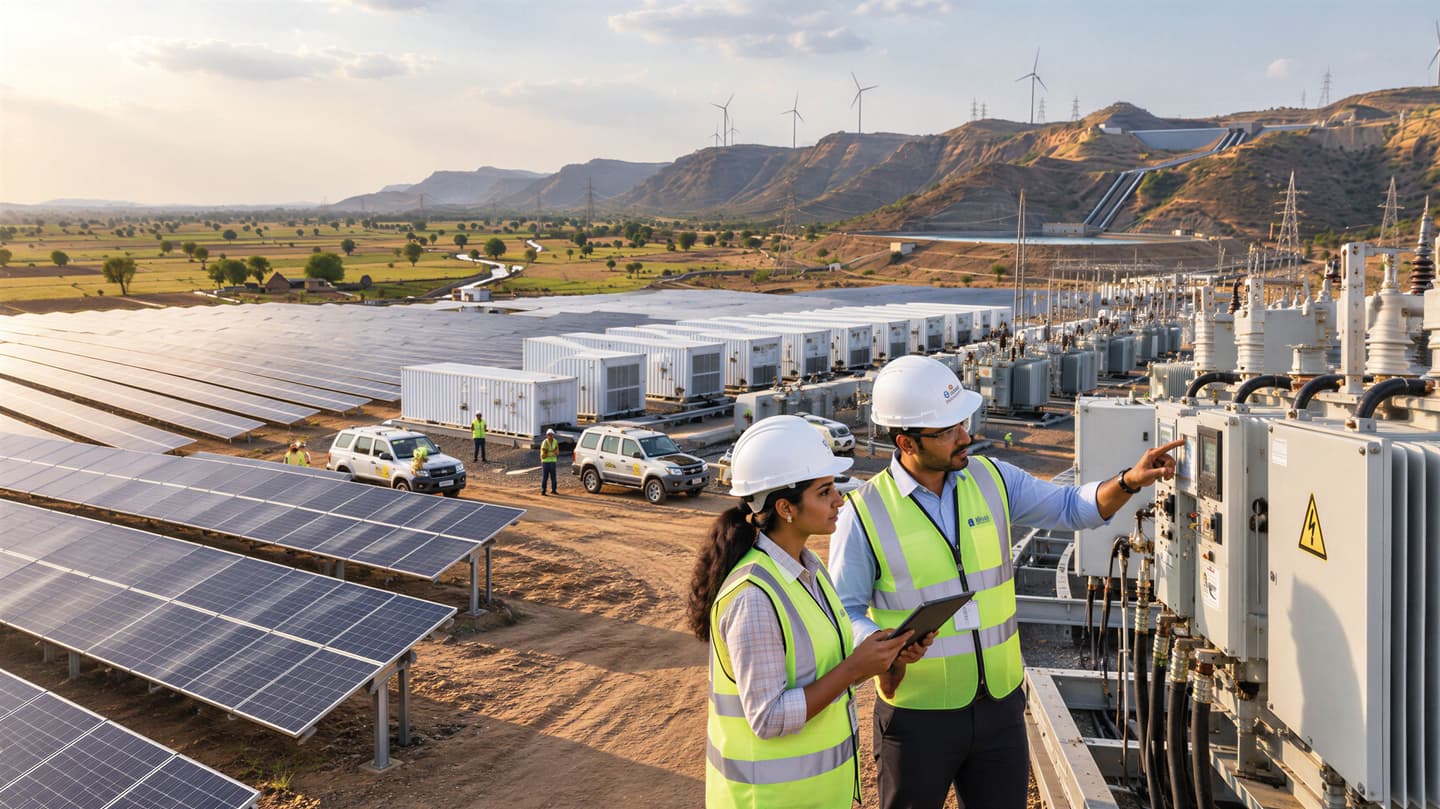
Madhya Pradesh now has most of the ingredients required for a much larger renewable system: utility-scale solar parks, a large land-based central geographical positioning, and an expanding transmission network, floating solar, battery storage, and pumped storage potential. The harder question is whether these pieces arrive in the correct sequence. Land must be available when projects need it, transmission must be synchronised with generation, storage must be available when renewable output needs to be shifted, prepayment contracts must create bankable offtake, and the state’s demand profile must be reflected in how renewable power is scheduled and procured.
The next phase of Madhya Pradesh’s energy transition will... be less about how solar megawatts can be installed on paper, but how many of those megawatts can be evacuated, shifted and delivered when the system moves them.
The next phase of Madhya Pradesh’s energy transition will therefore be less about how solar megawatts can be installed on paper, but how many of those megawatts can be evacuated, shifted and delivered when the system moves them.
Madhya Pradesh is not Rajasthan or Gujarat in solar capacity, and it does not need to be. Its more consequential story is the attempt to connect generation with the rest of the power system: seasonal demand, transmission, batteries, pump storage and procurement. Rewa showed that Madhya Pradesh could host large-scale solar, Chhatarpur and Morena are testing how far that model can expand, Omkareshwar is testing another physical form of solar development, Morena’s solar-plus-storage model is testing whether renewable generation can be shaped around peak requirements. That is why Madhya Pradesh matters. The state’s next renewable milestone should not be measured only in gigawatts added, but in the ability to generate renewable electricity, execute it, store it when necessary and deliver it at the hour it is required. That is the more difficult test and the more consequential one for India’s next phase of power sector expansion.
The Future Fleet will be More Complicated than the Solar Fleet
The MPPMCL procurement requirements illustrate what that future system could look like.
The table represents requirements identified in MPPMCL’s procurement planning document. Its importance lies in the mix. Solar and wind remain central, but batteries and pump storage appear alongside them. Conventional generation remains part of the procurement picture. The system being planned is therefore neither a simple solar replacement programme nor a straightforward one-for-one substitution for fossil generation. It is a more complicated portfolio built around availability, timing and flexibility.