Kerala is scaling its energy transition within the limits of its existing power system. Demand is rising steadily, even as internal generation remains constrained and reliant on hydropower. In response, the state is expanding distributed solar, investing in storage and advancing hydrogen initiatives, alongside continued dependence on external power for reliability.
Projected Demand by 2050
The Draft Kerala Power Policy 2025 (DKPP) sets out the scale of the challenge. Even under the Business as Usual (BAU) scenario, the peak hour demand in FY 2030-31 is projected to reach 7,000 MW, with an anticipated shortage of about 2,600 MW during evening peak hours. The shortage in energy content is about 15,000 MU, which is also very significant. Total electricity demand under BAU is expected to rise to 38,000 MU by 2030, 52,000 MU by 2040 and 71,000 MU by 2050. These projections establish a clear trajectory: demand growth will continue to outpace internal capacity additions, requiring a combination of local generation, storage and external procurement.
An Evolving Energy Mix
The state’s internal generation is anchored in hydropower operated by the Kerala State Electricity Board (KSEB), which forms the dominant share of in-state electricity supply. This provides a relatively low-emission base. But, output varies with rainfall and reservoir levels and expansion potential is constrained by geography. Other renewable sources remain limited in scale. Wind power contributes marginally due to land constraints. The solar capacity is around 2.22 GW with a focus on largely distributed rooftop installations rather than large, land-intensive utility-scale projects. Initiatives such as the KSEB-led Soura scheme, supported by PM Surya Ghar: Muft Bijli Yojana, have driven this decentralised model.
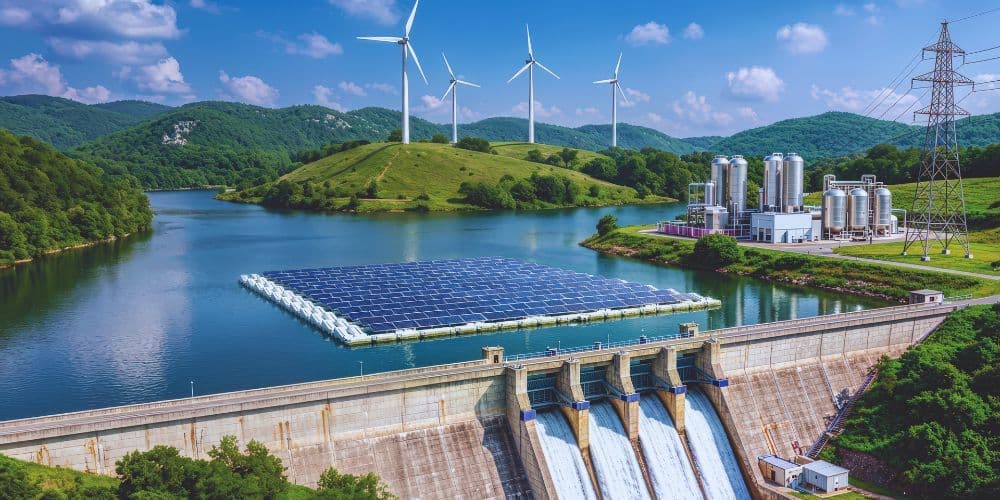
Kerala has also identified emerging technologies such as floating solar, leveraging its reservoirs and backwaters and Battery Energy Storage Systems (BESS), as part of its future energy mix, though deployment remains at an early stage. The state’s approved Draft Floating Solar Guidelines targets capacity addition, supported by floating solar’s higher generation efficiency of 5–10 percent due to the water’s cooling effect. Parallelly, KSEB plans to add around 3,000 MWh of storage capacity by 2030 to integrate more renewable energy into the grid. To maintain reliability, Kerala supplements internal generation through electricity procured from the national grid. The resulting system combines hydropower as a base, distributed solar as a supplement, limited wind capacity and external procurement as a balancing mechanism, defining the structure within which the transition is unfolding.
A Supportive Regulatory Frameworks for System Integration
The expansion of distributed energy is supported by regulatory mechanisms notified by the Kerala State Electricity Regulatory Commission, including net metering regulations, tariff frameworks and periodic resource adequacy planning. These ensure that renewable integration remains aligned with grid stability and financial viability. This is complemented by demand-side management and energy efficiency programmes led by the Energy Management Centre Kerala, which focus on reducing consumption alongside supply expansion.
An Accelerated Timeline to Achieve Net Zero
Kerala’s policy direction is anchored in a long-term vision articulated in the DKPP 2025, which aims to meet the entire electricity requirement from renewable sources by 2040 and achieve carbon neutrality by 2050, as outlined in the State Action Plan on Climate Change (SAPCC 2.0). While the target aligns with broader national objectives under the National Green Hydrogen Mission and renewable energy targets under the Union Ministry of New and Renewable Energy, Kerala has set a more accelerated timeline than India’s Net Zero target of 2070. The policy identifies renewable energy, storage and hydrogen as interconnected pillars, signalling a shift towards integrated energy system planning.
Hydrogen Policy as a New Energy Layer
Extending the transition beyond electricity, the Kerala Green Hydrogen Policy (Draft, 2025) outlines the development of hydrogen across industrial, transport and maritime sectors. The draft policy particularly targets hard-to-abate industries such as fertilisers, refining, and shipping, where electrification remains limited. It positions hydrogen not only as an energy carrier but also as an industrial feedstock and a means of storing and transporting renewable energy, enabling applications beyond the limits of the existing power system.
The draft policy also signals a shift towards building a hydrogen and ammonia ecosystem linked to ports and industrial clusters, emphasising export potential and value-chain development within the state. Execution has begun through pilot initiatives. Hydrogen Valley projects, including an innovation cluster with an outlay of ₹133 crore, represent early-stage deployment efforts focused on demonstration and technology validation.
To enable this shift, the state has introduced a mix of financial and operational incentives, including electricity duty exemptions, transmission charge waivers and capital support mechanisms, alongside efforts to reduce hydrogen production costs through policy support. These are complemented by provisions such as open access, renewable energy banking and incentives linked to electrolyser deployment.
Despite the emergence of new energy pathways, electricity remains the foundation of the transition. Green hydrogen production depends on renewable power, linking it closely to Kerala’s electricity system, including both grid-based and captive renewable sources.
As hydrogen and other energy pathways scale, electricity demand is expected to increase further, reinforcing the importance of reliability, grid integration, and system balancing within an already import-dependent system.