The global power sector is undergoing a transformation that extends far beyond new fuels and hardware. The shift towards high-penetration renewables, distributed assets and digital operations has created an environment where every decision from forecasting to maintenance depends on the quality, security and interpretation of data. As organisations deploy Artificial Intelligence (AI), Machine Learning (ML) and digital twins across solar, wind and thermal systems, it is increasingly evident that technology alone cannot determine the sector’s future. Instead, progress will rely on what industry leaders describe as a unified intelligence model, where human judgment and machine computation reinforce one another to deliver reliability, resilience and strategic clarity.
The Data-rich, Insight-poor Paradox
For years, the energy sector has generated abundant operational data but has struggled to convert it into actionable intelligence. As Akshaya Kumar Patel, Chief Information Security Officer and General Manager, IT & Communications, NTPC Ltd, noted, the sector remains less digitally integrated than Western markets, largely because many Indian power plants still run on legacy systems that are not fully networked.
This unintended isolation has historically limited exposure to cyber threats, but it also means vast data reservoirs from fuel handling to asset performance remain under utilised. Patel explained that AI and ML are essential not only for predictive maintenance in boilers and turbines but also for strategic functions: fuel planning, spares optimisation and inventory efficiency.
“Reducing inventory even by 10–15 percent is a substantial gain,” Patel said, highlighting the financial and operational implications of data-driven planning.
Digital Twins as the New Engineering Backbone
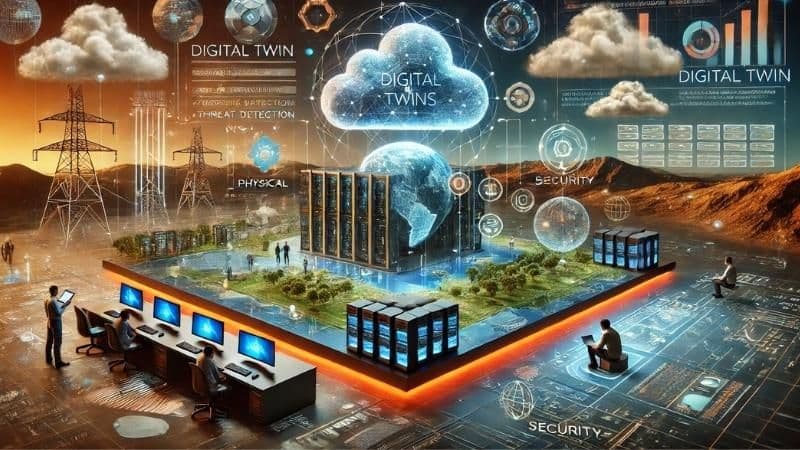
Digital Twins, real-time virtual replicas of physical systems, are becoming indispensable for renewable energy operators managing geographically distributed assets. In wind power, where component failures can immobilise multi-megawatt turbines, digital replicas offer unprecedented visibility.
Sunil Nair, Group CIO and Sr VP, Suzlon Group, underscored that forecasting and performance modelling have long been part of wind operations, but digital twin sophistication has now expanded into project execution, manufacturing and service fleets.
From blade defect detection in factories to satellite-based construction monitoring, the technology is moving beyond simulation into enterprise productivity. “Digital twins succeed only when engineered around specific outcomes, higher uptime, faster maintenance or safer operations,” Nair said. If poorly designed, they risk becoming mere visual models with no operational usefulness.
He also pointed to the next evolutionary step: agentic AI. These AI models, trained on historical alerts and sensor patterns, could autonomously resolve standard turbine issues, offloading repetitive diagnostics from field engineers and accelerating response times. While such automation raises questions about future workforce roles, Nair believes it will create new technical competencies rather than outrightly displace jobs.
Solar Power’s Cyber-physical Tightrope
As utility-scale solar and hybrid plants proliferate, the power system’s dependency on accurate forecasting and continuous telemetry intensifies. Solar irradiance and wind speed remain inherently unpredictable, placing significantly greater pressure on data integrity and cyber protection.
Sonia Swami, Head, IT & Digital, O2 Power, warned that renewable assets transmit large volumes of data from inverters, SCADA (supervisory control and data acquisition) systems, weather sensors and grid interfaces, making them attractive cyber targets.
“AI can generate exceptional insight only if the data entering the system is accurate, authenticated and ethically sourced,” Swami emphasised. Without rigorous validation, AI-generated forecasts or control recommendations could mislead grid operators or undermine dispatch decisions.
Swami described the importance of layered safeguards such as unidirectional security gateways, enhanced OT (operational technology) monitoring and anomaly-detection algorithms. The industry’s shift towards smart grids will further necessitate cybersecurity embedded at plant, portfolio and grid-interaction levels.
AI Needs Domain Knowledge as Much as Data
Contrary to the belief that energy analytics can function on data alone, industry leaders maintain that domain expertise remains indispensable. Swati Tiwari, MD, Arcturus Business Solutions Pvt Ltd, noted that understanding the physics of energy systems is crucial for building meaningful AI models. “AI contributes perhaps 40 to 50 percent of the solution. The rest depends on how well we understand the data and the operational context behind it,” she said.
Her teams often combine AI with workforce-enabling tools to support technicians with varying levels of training. This “augmented learning” helps standardise performance, ensure safety and drive consistency across dispersed sites.
Tiwari also noted that startups benefit from rising AI adoption because companies across energy, manufacturing and utilities now view digitalisation as foundational rather than optional. But she cautions against the assumption that every process needs AI. The value lies in calibrating technology to real problems, not in meeting organisational peer pressure.
Cybersecurity: The Silent Determinant of Operational Resilience
If data is the fuel for AI, cybersecurity is its containment system. A breach—whether through data poisoning, sensor compromise or disrupted communications—can misguide AI models or cause catastrophic operational decisions.
Vinod Sharma, Head, IT & Cybersecurity, Hero Future Energies, argued that attackers have no biases or assumptions, unlike organisations that often overlook fundamentals. “We keep adding layers of security, but sometimes ignore the basic principles. Hackers exploit what we fail to revisit,” Sharma said.
He highlighted how digital twins and AI-driven breach simulations can test real-world vulnerabilities long before an incident occurs. Predictive cyber-response is now as vital as predictive maintenance in rotating machinery.
Sharma also cautioned that as AI becomes more autonomous, safeguarding the algorithms themselves, “security of AI” is emerging as a critical frontier. With improper controls, AI systems could act on manipulated inputs, amplifying risk instead of reducing it.
The Path Forward: Towards Unified Intelligence
What emerges across thermal, wind, solar and hybrid systems is a shared recognition: the future belongs neither to machines alone nor to human expertise operating in isolation. The energy sector’s next leap depends on what several leaders implicitly described as unified intelligence, the synthesis of human judgment and artificial computation.
India’s expanding renewable share, rising grid variability, and intensifying cyber exposure demand systems that learn continuously, adapt instantly and operate securely. Digital twins provide the structural backbone for such systems. AI and ML convert data into foresight. Cybersecurity shields the intelligence layer from manipulation. And domain experts ensure that technology remains grounded in engineering reality.
As energy companies digitise their asset bases and adopt predictive, prescriptive and autonomous technologies, the challenge is not technological capability but organisational readiness. The sector must cultivate talent that is conversant both in domain fundamentals and in the digital tools that redefine them.
India’s energy transition is no longer just a shift in fuels—it is a transformation in intelligence. Those who harness unified intelligence will shape the reliability, security and sustainability of India’s power future.
This article is adapted from a panel discussion on ‘Digital Twins, AI & Cybersecurity for GenCos’ at Powergen India 2025.