India’s power sector has entered a structurally new phase. Installed capacity has reached approximately 500.89 GW, with non-fossil sources at 256.09 GW, marginally exceeding fossil capacity. National energy and peak deficits have narrowed to nearly zero, even as peak demand has crossed 229 GW.
Industry observers describe this moment as the end of the scarcity era. But they caution that eliminating deficits is only the first milestone. The more complex test lies ahead: managing volatility, integrating variable renewables, and sustaining reliability in a grid that is becoming progressively inverter-dominated and decentralised. With peak demand projected to rise toward 366 GW by the early 2030s, policymakers and grid operators are increasingly aligned around one conclusion: the next phase will be defined not by megawatts added, but by how intelligently the system is operated.
Flexibility becomes the Core Economic Signal
According to sector experts involved in system planning, the transition from capacity expansion to flexibility optimisation is already underway. Pumped storage capacity, currently around 4.7 GW, is targeted to rise to nearly 57 GW by 2032. Battery energy storage systems are moving from pilot deployments to structured procurement, supported by viability gap funding for 13 GWh and an additional pipeline of roughly 30 GWh.
These signals point towards a structural shift in market design. As renewable penetration deepens, revenue pools will increasingly reward ramping capability, ancillary services and dispatchable hybrid portfolios rather than standalone energy generation. Market participants suggest that by 2030, renewable projects without storage integration or hybrid design could face tighter margins as price discovery begins to reflect system balancing costs more accurately.
Coal’s Evolving Role in a Renewable-dominant Grid
Coal continues to anchor the system, contributing roughly 73 percent of generation, while plant load factors remain broadly in the 60–65 percent range. However, power sector experts emphasise that coal’s role is changing.
Rather than functioning purely as baseload, thermal assets are being repositioned as flexible balancing resources. Technical minimum loads are expected to move from around 55 percent towards 40 percent, with faster ramping capability to support solar and wind integration.
Industry observers caution that coal’s long-term economics will increasingly depend on structured flexibility compensation and capacity-linked remuneration mechanisms. Assets unable to adapt may see declining utilisation in the 2030–2035 window. Coal, in this context, becomes less a dominance strategy and more a reliability insurance mechanism.
Transmission: The Emerging Constraint
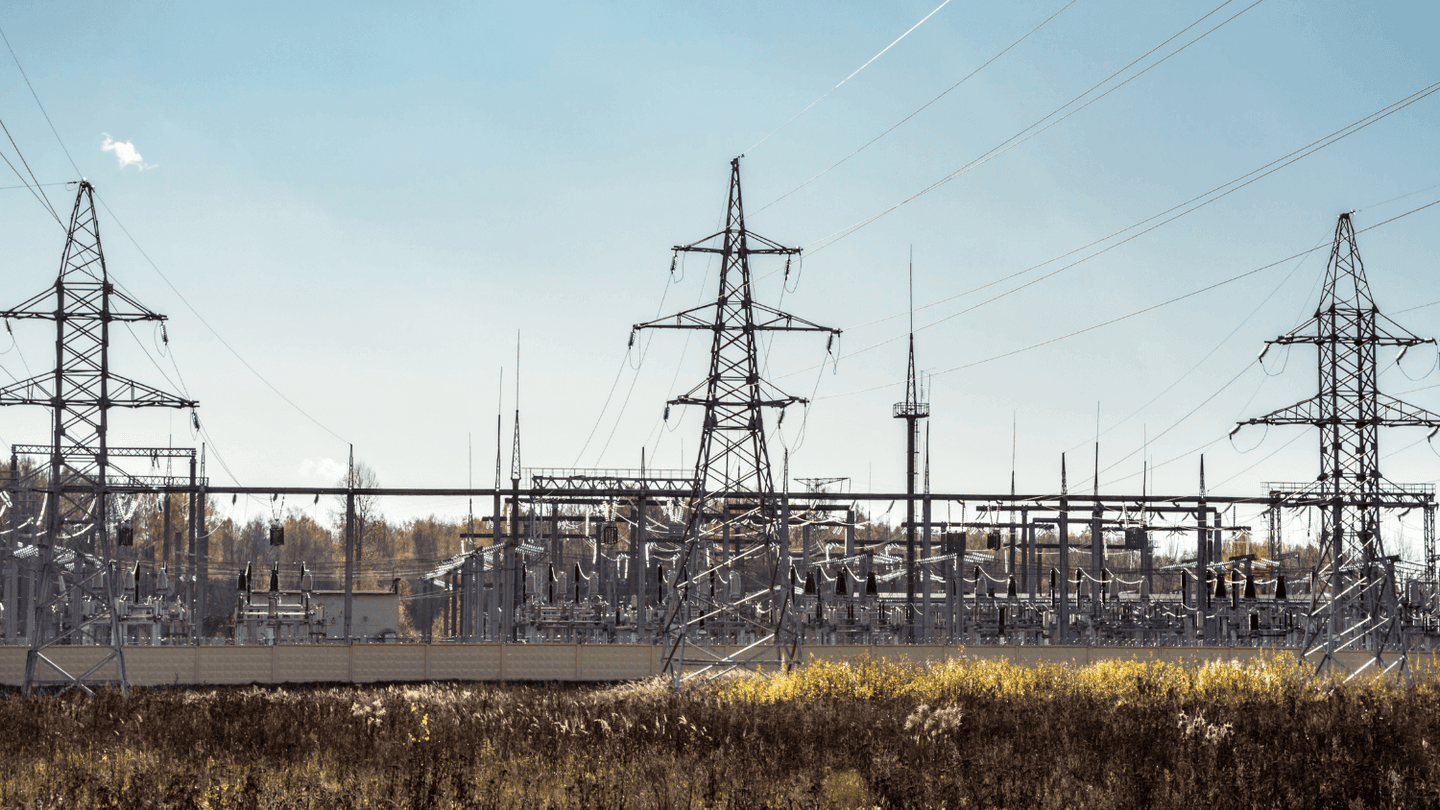
Capacity addition has exceeded planned targets, reflecting strong commissioning momentum across renewables and selective thermal support. Yet grid planners observe that evacuation infrastructure may become the next bottleneck. HVDC manufacturing lead times of five to six years and the need for expanded 765 kV corridors introduce structural execution risk. Industry experts underline that transmission planning must move ahead of generation pipelines rather than respond to congestion retrospectively. The experts also note that long-term framework contracts and manufacturing localisation could determine whether India’s renewable ambition remains synchronised with its evacuation capability.
Distribution Reform: The Decisive Investment Variable
While Aggregate Technical and Commercial losses have declined significantly over the past decade, experts acknowledge that financial fragility persists in several states. Approximately 4.76 crore smart meters have been deployed under the national programme, laying the groundwork for time-of-day pricing and demand-side management.
However, market participants highlight that 44 GW of renewable capacity awaiting power purchase agreements reflects deeper structural issues. They increasingly differentiate between reform-driven states advancing digitalisation and payment discipline, and those constrained by legacy governance challenges. Investor confidence, they argue, will hinge on predictable offtake frameworks and credible payment security mechanisms. Distribution reform remains the single most important determinant of capital velocity in the sector.
Digitalisation as Infrastructure Intelligence
Leaders and technology experts repeatedly emphasise that digitalisation is no longer optional. The evolution toward Distributed Energy Resource Management System (DERMS), Advanced Distribution Management System (ADMS), predictive maintenance, digital twins and interoperable data platforms signals a systemic redesign. Sector experts argue that in a grid increasingly dominated by inverter-based resources, real-time visibility and cyber-secure IT/OT convergence become foundational to stability. Utilities that embed artificial intelligence into forecasting and asset management are expected to demonstrate lower outage durations and reduced curtailment.
Industry observers increasingly refer to this shift as the move toward infrastructure intelligence, a grid that transmits not only electrons but also data, resilience and operational foresight.
Nuclear as a Long-term Stability Hedge
The roadmap targeting approximately 100 GW of nuclear capacity by 2047 remains central to long-term system firmness. Given gestation timelines of 12–13 years, policy experts emphasise the need for early site preparation, fleet-mode deployment and diversified participation. Energy economists note that while nuclear will not materially alter the 2030 balance, it may become decisive in the 2040s, particularly if total installed capacity moves toward 2,000 GW and solar alone approaches four-digit gigawatt scale. In that scenario, nuclear provides low-carbon stability in a deeply electrified economy.
Industry observers broadly agree that India’s power transition has moved beyond ambition. The coming decade will be defined by execution depth, institutional coordination and system intelligence. Flexibility will determine pricing power, transmission will determine expansion speed, distribution reform will determine capital confidence, digitalisation will determine resilience, and nuclear will determine long-term firmness.
With sustained policy coherence, regulatory clarity and manufacturing scale, India’s power system could expand beyond 2,000 GW by mid-century, supported by deeper renewable integration, storage deployment and grid modernisation.
The next chapter of India’s energy story is no longer about eliminating shortage. It is about delivering certainty in an increasingly complex system.