A 100 GW nuclear fleet sounds like a number designed for a distant horizon. It is not. Nuclear plants routinely take more than a decade to move from conception to commissioning. That makes 2047 considerably closer than the calendar suggests. Decisions on sites, reactor designs, financing, manufacturing capacity, fuel, regulation and manpower cannot wait for the 2040s. They have to be made now.
That was the underlying message running through NuclearX's inaugural forum at Bharat Electricity Powergen India and Indian Utility Week 2026.
India currently has a nuclear capacity of about 9 GW, and nuclear power contributes roughly 3 percent of electricity generation. The stated national objective is 100 GW by 2047. The government's roadmap discussed at the session envisages around 22 GW by 2031-32, with Nuclear Power Corporation of India Ltd expected to take the fleet to roughly 50-54 GW through a standardised programme of 700 MW Pressurised Heavy Water Reactors (PHWR). The remaining capacity is expected to involve public-sector companies, states, private companies and joint ventures. That last part matters. India is no longer talking only about adding reactors. It is beginning to talk about building an industry around them.
From Strategic Asset to Industrial Sector
For decades, India's nuclear establishment operated largely as a strategic preserve of the state. The country's relative isolation from international nuclear commerce after 1974 reinforced an intensely domestic approach to technology development and supply chains. That effort produced considerable indigenous capability, particularly around PHWRs. The proposed expansion changes the economics and institutional architecture.
The country’s relative isolation from international nuclear commerce after 1974 reinforced an intensely domestic approach to technology development and supply chains
The Shanti Act, as described during the session, is intended to open the civilian nuclear sector to private and international participation and replace the earlier legislative framework governing atomic energy and nuclear liability. The rules were still under stakeholder consultation at the time of the discussion, with private-sector investors waiting for greater clarity before making substantial commitments. The distinction is important. Opening a sector legally does not automatically create projects that banks are willing to finance.
For investors, the more consequential questions are whether regulatory decisions are predictable, construction periods can be shortened, fuel will be available, and an Indian manufacturing base can deliver components in the required quantities. These were identified explicitly as conditions for improving investor confidence.
The Arithmetic is Unforgiving
The scale of capital required puts the proposal in a different category from India's earlier nuclear programmes. One estimate presented at the session put the requirement for 100 GW at around $200 billion-$228 billion, or close to ₹20 lakh crore. Current planned nuclear investment was described as only a small fraction of that figure. That creates an obvious financing problem.
Nuclear projects require substantial capital long before they generate revenue. Their construction periods are lengthy, while their operating lives are measured in decades. Financing costs accumulated during construction can materially affect the eventual tariff.
This is why the discussion moved beyond conventional project finance into green bonds, green loans, blended finance and infrastructure classification. Participants also called for a review of existing green-finance frameworks to determine whether nuclear projects could gain access to such pools of capital. But cheaper finance alone will not rescue a project that takes 13 years to reach operation.
Time May be the Biggest Constraint
The Central Electricity Authority's (CEA) Chairperson, Ghanshyam Prasad, put one of the most difficult numbers on the table: nuclear projects in India have typically taken more than 10 years from conceptualisation to completion. He contrasted that with roughly four to five years for coal-based projects. More strikingly, he said regulatory approvals can currently take six to seven years, followed by another six to seven years of construction. His target is to bring the combined period below 10 years, ideally towards seven or eight. That is not a minor administrative improvement. It is central to the arithmetic of 100 GW.
India already has a 700 MW indigenous PHWR design that can be replicated in fleet mode
If each reactor remains a bespoke undertaking, the programme will struggle under its own weight. Standardisation, therefore, emerges as one of the less glamorous but more important pieces of the strategy. India already has a 700 MW indigenous PHWR design that can be replicated in fleet mode. The CEA sees this as a route to faster deployment, while similar standardisation will be needed for other reactor technologies. The ambition, in effect, is to stop treating every nuclear plant as a one-off engineering project.
The Manufacturing Question
A reactor programme of this size is also a manufacturing programme. India has strengths in heavy forgings, plant systems and components. But the capability is uneven across the nuclear value chain. A presentation at the session identified gaps in areas, including fuel-cycle capabilities, enrichment-related technologies and some reactor technologies. That unevenness could become a bottleneck.
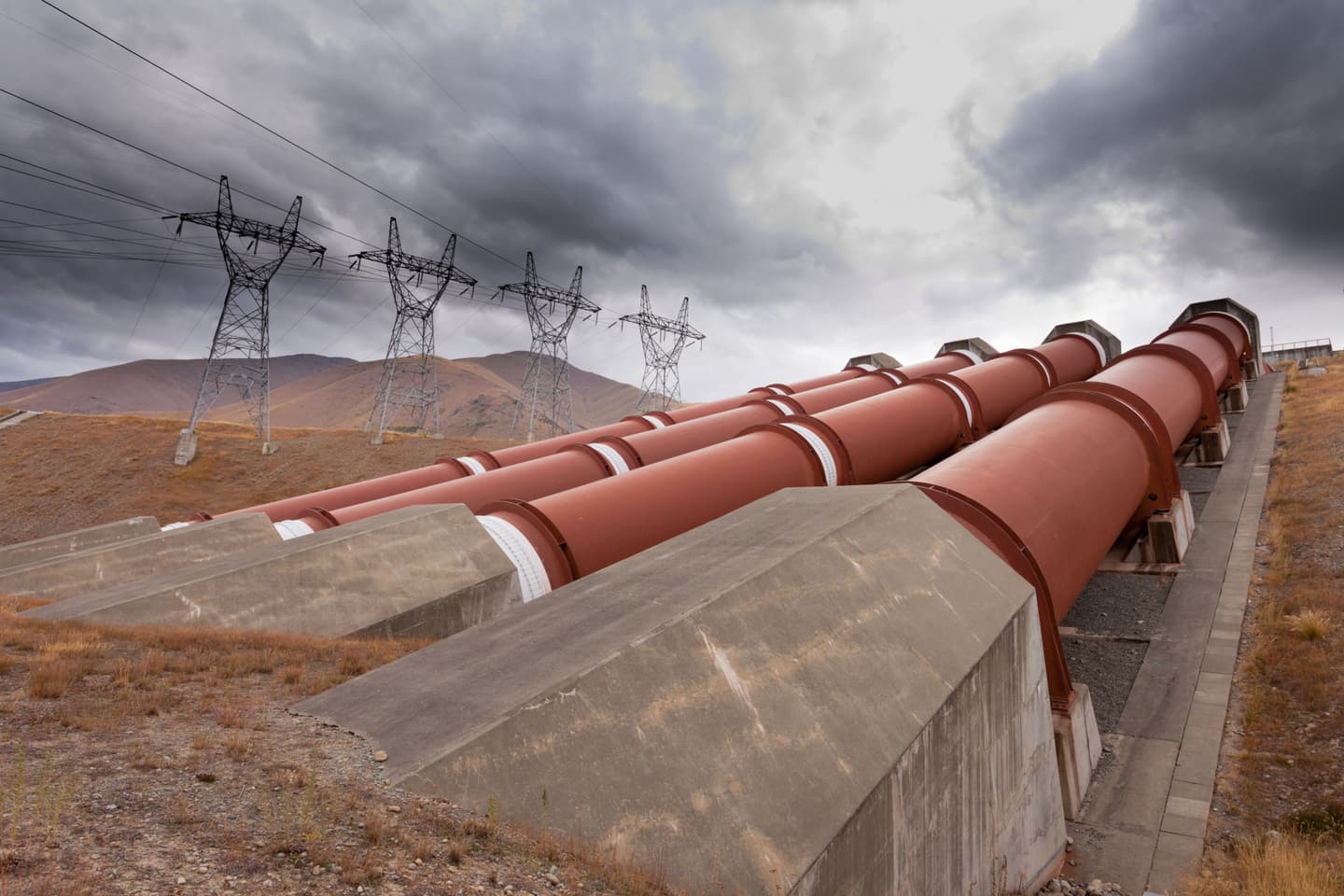
The CEA's experience with pumped-storage hydro was cited as a warning. India increased the number of manufacturers in that segment, but manufacturing capacity still has to grow rapidly enough to match the planned build-out. A similar problem could emerge in nuclear if reactor deployment accelerates faster than the domestic equipment industry can respond. The implication is straightforward: reactor orders cannot be separated from orders for the factories, forgings, components, testing facilities and skilled suppliers that sit behind them.
The Workforce Nobody can Manufacture Overnight
There is another constraint that cannot be solved by importing equipment. India does not yet have enough people trained for a nuclear industry expanding at the proposed rate. NITI Aayog's Member Abhay Karandikar pointed to shortages across the education and training system, noting that many universities and technical institutions do not currently offer nuclear programmes at diploma, undergraduate or postgraduate levels. A government committee has been constituted to prepare a capacity-development roadmap covering manufacturing, operations and research and development.
For a 100 GW programme, public communication cannot be an afterthought
The shortage is already being felt by companies entering the sector. The CEA chairperson said private companies were reporting difficulty finding appropriately skilled nuclear manpower, with retired personnel from existing nuclear and engineering organisations often filling the gap.
That model cannot support a 100 GW industry. A large nuclear programme requires engineers, operators, safety specialists, welders, inspectors, project managers, regulators, lawyers, financiers and a deep bench of specialised suppliers. Training them is measured in years, not quarters.
Sites Could become a Political Question
Finding locations for dozens of reactors is another matter. The CEA is already working with states and site-selection committees to identify workable locations. One possibility under consideration is whether sites associated with ageing thermal plants could eventually be repurposed for nuclear facilities.
Yet site selection is not simply an engineering exercise. The strategic character of nuclear power historically provided a certain degree of public acceptance. That equation changes when nuclear plants are proposed close to industrial clusters and populated areas.
Ambassador (Retd) Rakesh Sood pointed to the importance of public acceptance, safety assurance and cost competitiveness if nuclear plants are eventually expected to replace captive thermal generation at steel, cement and aluminium facilities. The experience of Kudankulam illustrates how public opposition can complicate nuclear deployment even when the underlying technology is established. For a 100 GW programme, public communication cannot be an afterthought.
Nuclear's Case is Stronger because Electricity Demand is Changing
The argument for nuclear is not being made in the same electricity system India had a decade ago. Data centres, artificial intelligence, green hydrogen and electric mobility are creating new sources of electricity demand. India's data-centre capacity was described at the session as roughly 1.7-1.8 GW today, with an ambition to reach about 10 GW by 2032. Globally, data-centre electricity demand is also expected to rise sharply.
Green hydrogen illustrates the complication particularly well. Producing hydrogen through electrolysis requires large amounts of electricity. The session highlighted how the electricity requirement itself becomes a major component of the economics of green hydrogen and ammonia.
Nuclear has an advantage that goes beyond its share of the generation mix. It can provide continuous electricity while also supplying heat and steam for industrial applications
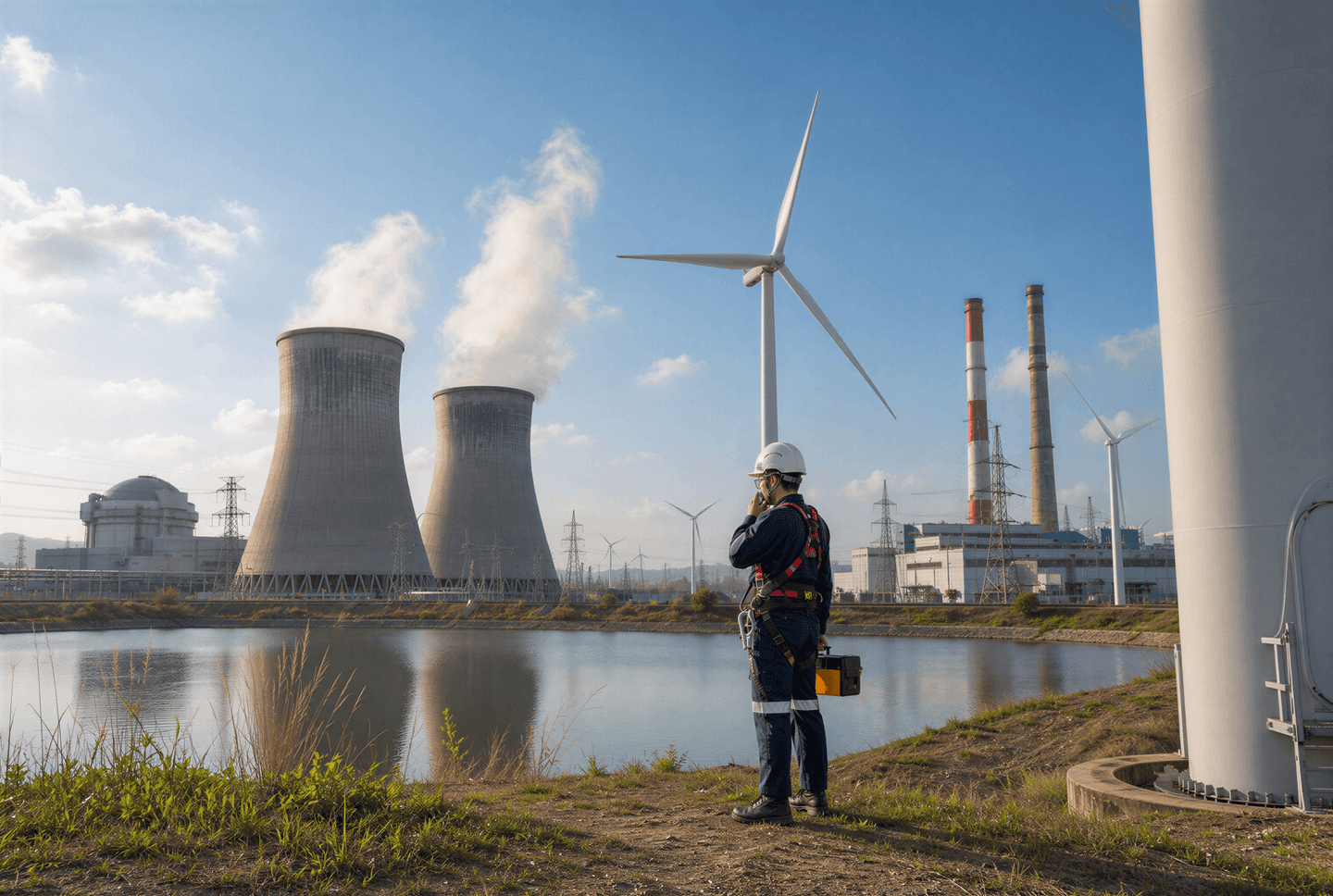
This is where nuclear has an advantage that goes beyond its share of the generation mix. It can provide continuous electricity while also supplying heat and steam for industrial applications. The World Nuclear Association's Director General Sama Bilbao Y Leon pointed to potential uses ranging from district heating and industrial processes to hydrogen, ammonia, synthetic fuels and other applications.
The Grid Cannot Run on Capacity Charts Alone
There is, however, a trap in treating renewable and nuclear power as competing technologies. The more useful question is how they work together. India has crossed the point where renewable capacity forms more than half of installed generation capacity, according to figures cited during the session. Yet renewable generation remains substantially lower as a share of actual electricity produced because solar and wind output varies with time and weather.
That variability places greater value on firm generation and storage. The CEA Chairperson highlighted the loss of grid inertia as renewable penetration rises, particularly citing experience in Gujarat and Rajasthan. Nuclear and pumped-storage hydro can provide different pieces of the balancing requirement, while storage capacity will have to expand substantially alongside renewable generation. The emerging electricity system therefore looks less like a contest between technologies and more like an exercise in assembling a reliable portfolio.
A 100 GW target requires repeatability: repeatable designs, repeatable approvals, repeatable procurement, repeatable construction processes and a supplier base capable of supporting multiple units simultaneousl
Small Reactors: Promise, but Not Yet a Shortcut
Small modular reactors have attracted considerable attention because they potentially offer factory production, modular deployment and applications outside conventional utility-scale generation. The session cited possibilities including industrial heat, desalination, remote power and captive generation. India is also pursuing its own SMR development. But SMRs should not be mistaken for an immediately available mass-market answer.
Globally, several dozen designs are under development, yet the session noted that the technology architecture has not settled and that certification remains a major step.
India therefore faces a balancing act: deploy its mature 700 MW PHWR technology at scale while developing or evaluating newer reactor designs without creating another layer of technological dependence.
The Real Test: Can India Build a Programme, Not Just Projects?
Perhaps the most important phrase from the discussion was the shift from individual projects to a sustained programme. That distinction captures the scale of the challenge.
A project can survive delays, redesigns and supply-chain disruptions. A national programme cannot do so indefinitely. A 100 GW target requires repeatability: repeatable designs, repeatable approvals, repeatable procurement, repeatable construction processes and a supplier base capable of supporting multiple units simultaneously.
The 100 GW nuclear target is therefore less a reactor-counting exercise than an industrial stress test
It also requires financing structures designed for nuclear's unusual cash-flow profile, a regulatory system capable of handling new technologies, sites secured well ahead of construction, and a workforce that grows with the industry rather than behind it.
India has already demonstrated that policy can alter the pace of infrastructure development. The rapid expansion of pumped-storage projects was offered during the session as an example of what can happen when policy, private investment, site identification and implementation mechanisms begin moving in the same direction. Nuclear will have to reproduce that institutional momentum while carrying a far heavier safety and capital burden.
The 100 GW nuclear target is therefore less a reactor-counting exercise than an industrial stress test. India has a foundation: an established PHWR programme, heavy-engineering capability, an experienced nuclear establishment and a growing policy push towards wider participation. It also has a compelling demand story, from rising electricity consumption to data centres, hydrogen and industrial decarbonisation. What it does not yet have at the required scale is equally clear: enough capital, manufacturing depth, trained personnel, sites, regulatory speed and tested pathways for newer technologies.
The next phase will reveal whether the 100 GW figure becomes a fleet on the ground or remains an impressive line in a policy document. The first reactors will matter. But the greater test will be what happens after the first few. Can India build the second reactor faster than the first, the tenth faster than the second, and the fiftieth without compromising safety? That is where the 2047 target will ultimately be won or lost.