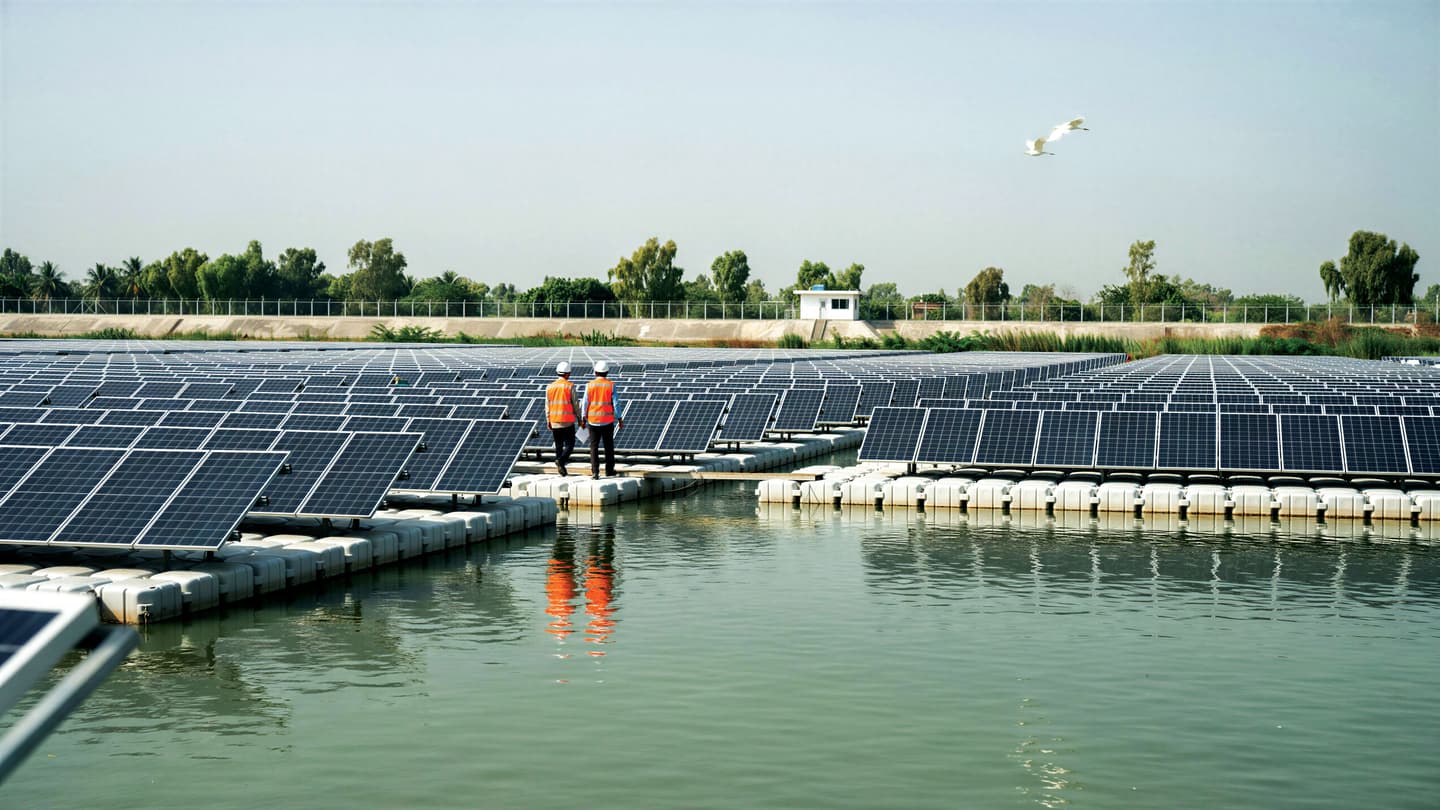
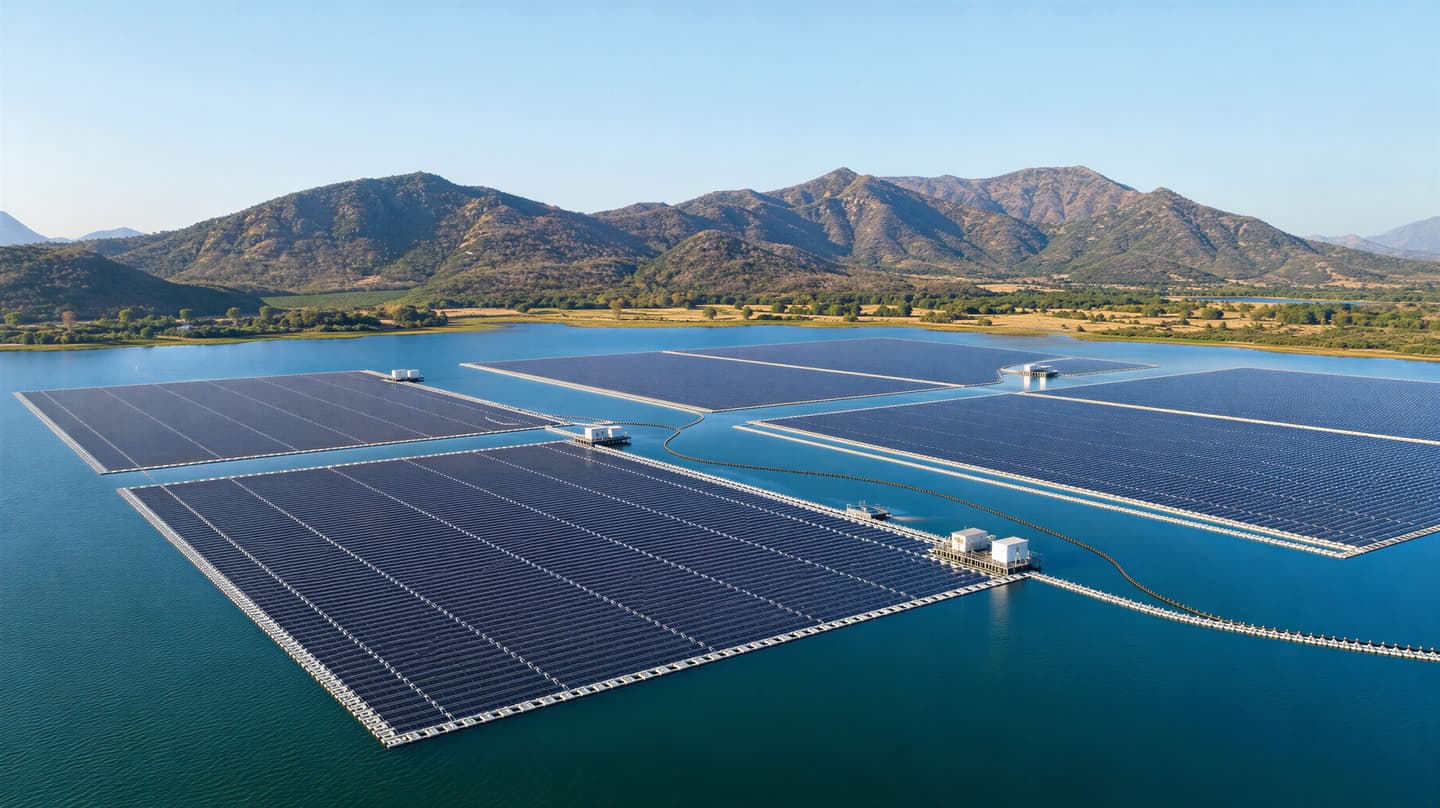
The rapid scale-up of solar photovoltaic (PV) capacity is central to achieving global and national climate and energy transition goals. While ground-mounted solar PV has expanded significantly, land availability has emerged as a critical constraint, particularly in densely populated regions and areas with competing land uses. Floating Solar Photovoltaics (FSPV), which involve deploying solar PV systems on water bodies and ponds, offer a strategic solution by enabling large-scale solar deployment without adding pressure on land resources.
The report ‘Solar PV Potential of India (Floating Solar)’ by National Institute of Solar Energy (NISE), the Ministry of New and Renewable Energy, the Government of India, June 2026, presents a comprehensive, data-driven assessment of India’s FSPV potential.

Globally, FSPV has become a rapidly expanding segment of the solar sector, led by countries such as China, India, South Korea, and Japan, with cumulative installed capacity of around 9.6 GW by 2024 and annual additions of about 1–1.2 GW. Growth has been concentrated in the Asia-Pacific region due to land constraints, supportive policies, and the availability of water bodies.
International experience indicates that even partial utilisation of reservoir surfaces can unlock significant solar potential, alongside co-benefits such as reduced evaporation and enhanced PV efficiency due to water-induced cooling.
India’s floating solar potential exhibits clear regional variations driven primarily by the availability and size of reservoirs, hydrological infrastructure, and the extent of feasible reservoir surface
In this context, the report highlights the need for a systematic assessment framework to enable evidence-based policymaking, infrastructure planning, and investment decisions, while ensuring environmental sustainability, grid integration, and long-term operational reliability.
Geospatial Assessment
The study adopts a rigorous geospatial methodology, integrating high-quality national and global datasets to evaluate floating solar feasibility across India. The key parameters considered include the presence and size of water bodies, year-round water availability (seasonality), bathymetry (water depth), solar irradiance (Global Horizontal Irradiance), and proximity to supporting infrastructure such as road networks and transmission substations. The report adopted clearly defined thresholds of the parameters, such as minimum waterbody area, depth range, GHI levels, and infrastructure proximity, to ensure that identified sites are realistic and implementable at scale.
A 102.18 GWp Potential
Based on this integrated assessment, the study estimated India’s total floating solar potential at approximately 102.18 GWp, subject to the constraint that only 20 percent of the reservoir area be used. The potential is unevenly distributed across states, with particularly high concentrations in Maharashtra, Madhya Pradesh, Karnataka, Odisha, Telangana, and Gujarat, reflecting the availability of large, technically suitable reservoirs and inland water bodies. Smaller and shallow water bodies have been deliberately excluded to avoid overestimation and to align the results with practical deployment considerations.
The findings highlight floating solar as a significant and scalable complement to ground-mounted PV in India’s renewable energy portfolio. By optimising the use of underutilised water surfaces, floating solar can help overcome land constraints, enhance energy security, support water conservation objectives, and accelerate progress toward national renewable energy and climate targets. The assessment provides a strong analytical foundation for policymakers, developers, and financial institutions to prioritise sites, design targeted interventions, and mainstream floating solar within India’s long-term clean energy strategy.
National Landscape & Regional Trends
India’s floating solar potential exhibits clear regional variations driven primarily by the availability and size of reservoirs, hydrological infrastructure, and the extent of feasible reservoir surface that can be utilised for solar deployment.
Western and Central India Lead
Western and central India emerge as the leading contributors, with Maharashtra (16.28 GWp) and Madhya Pradesh (14.89 GWp) together accounting for around 38 percent of the national potential. Their large multipurpose reservoirs and extensive irrigation infrastructure enable significant floating solar deployment opportunities.
Southern and Eastern States Show Strong Potential
Southern and eastern states demonstrate strong potential, particularly Karnataka (13.69 GWp) and Odisha (12.81 GWp), followed by Telangana (10.72 GWp). These states benefit from a high density of medium-to-large reservoirs associated with irrigation and hydropower projects.
Moderate Potential
Moderate potential is observed in states such as Gujarat (6.32 GWp), Rajasthan (3.36 GWp), Tamil Nadu (3.34 GWp), Jharkhand (2.81 GWp), Chhattisgarh (2.73 GWp), and Kerala (2.22 GWp), where reservoir availability supports floating solar development but at relatively smaller scales compared to the leading states.
Lower Potential
Northern and Himalayan regions, including exhibit comparatively lower potential despite the presence of reservoirs, primarily due to terrain constraints, smaller feasible reservoir surface areas, and environmental considerations. Northeast states and smaller administrative regions contribute only marginally to the national potential owing to limited reservoir surface area and smaller water bodies suitable for floating solar installations.
The assessment indicates that India possesses a substantial floating solar potential of about 102.18 GWp, distributed across a wide range of states with varying hydrological and geographical conditions.