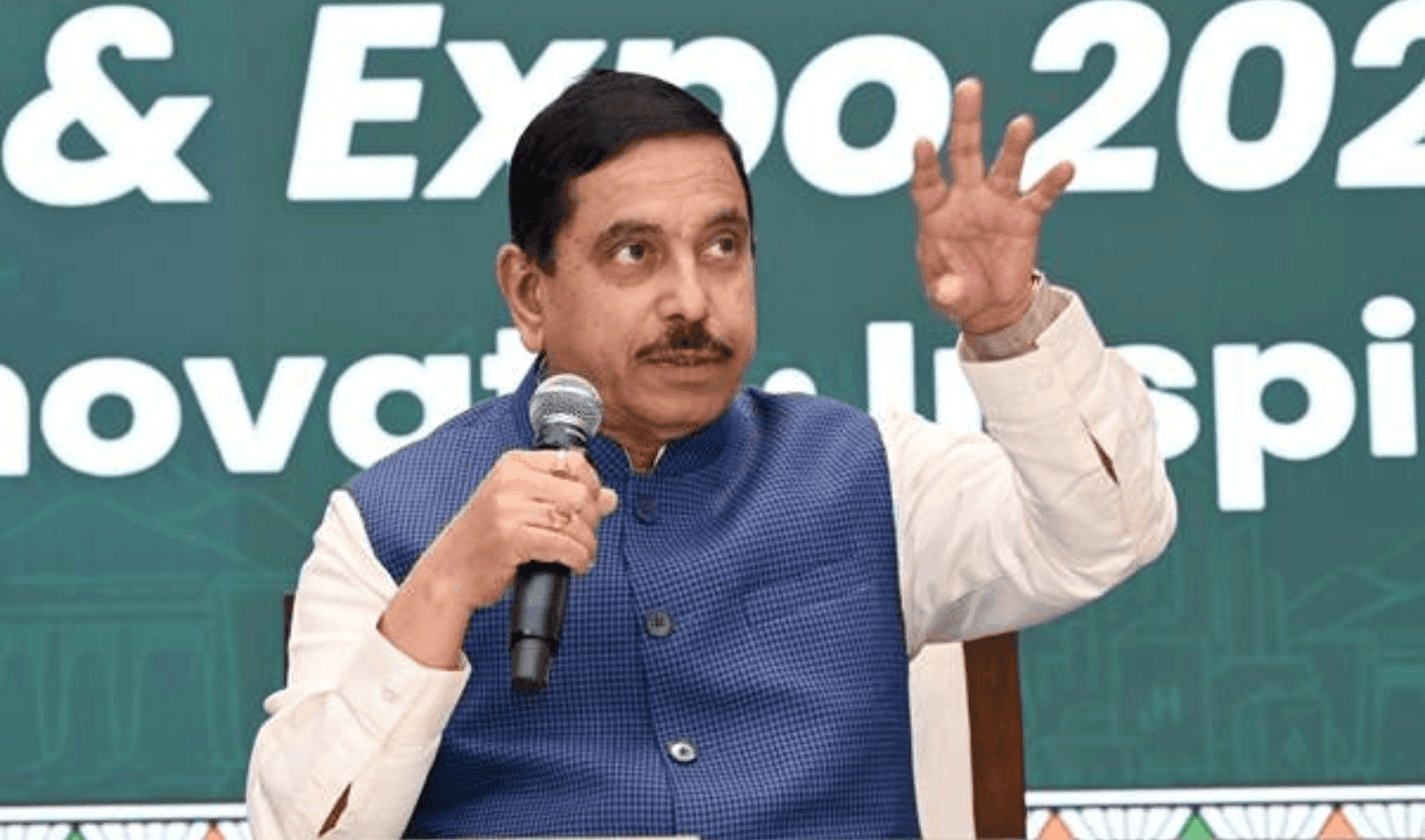
India's renewable energy sector has attracted investments of more than ₹15 lakh crore over the past decade, including nearly ₹6 lakh crore in the last two years, Union Minister for New and Renewable Energy Pralhad Joshi said at the conclusion of the Bharat Renewable Energy Summit (BRE Summit) 2026 in New Delhi.
Joshi said India would require an estimated $220 billion in investment to achieve its target of 500 GW of non-fossil fuel-based energy capacity. The summit, held from November 2 to 5 at Bharat Mandapam, brought together more than 75,000 visitors from 135 countries, over 400 exhibitors and more than 627 speakers across 113 sessions. It also saw participation from 32 international ministers, six chief ministers and 10 state energy ministers.
The Union Cabinet has approved a viability gap funding outlay of ₹14,500 crore for the development of 92 GWh of grid-scale energy storage capacity. The proposed capacity includes 60 GWh of pumped storage projects, 30 GWh of battery energy storage systems and 2 GWh of alternative storage technologies.
Joshi said utility-scale solar power generation costs in India had fallen to $30-35 per MWh, among the lowest globally. He added that renewable energy had helped the country save more than USD 100 billion in fossil fuel imports.
India auctioned 15 GW of hybrid renewable energy projects in 2025, taking cumulative capacity to 64 GW, according to the minister. Average tariffs for such projects during 2023-25 were around USD 45 per MWh, approximately 20 percent below the average cost of coal-based power.
India's solar module manufacturing capacity has crossed 225 GW, making the country the world's second-largest solar module manufacturer. Distributed solar capacity for self-consumption is expected to exceed 100 GW by 2030.
The summit also saw the Solar Energy Corporation of India (SECI) and Power2X sign a memorandum of understanding for green molecule supply and offtake. The first tranche has the potential to support the supply of 300,000 tonnes of green methanol annually.
The International Solar Alliance proposed a $200 million Africa Solar Facility to support solar deployment across the continent. The alliance also outlined initiatives involving one million solar pumps globally and a platform for small island developing states, with a target of up to 500 MW of solar capacity by 2030.
The event also saw the launch of the ISA Academy and the Global Capability Centre - SHINE, alongside the signing of 10 memoranda of understanding and framework agreements. A total of 37 reports, assessments, guidebooks and platforms were released during the summit.