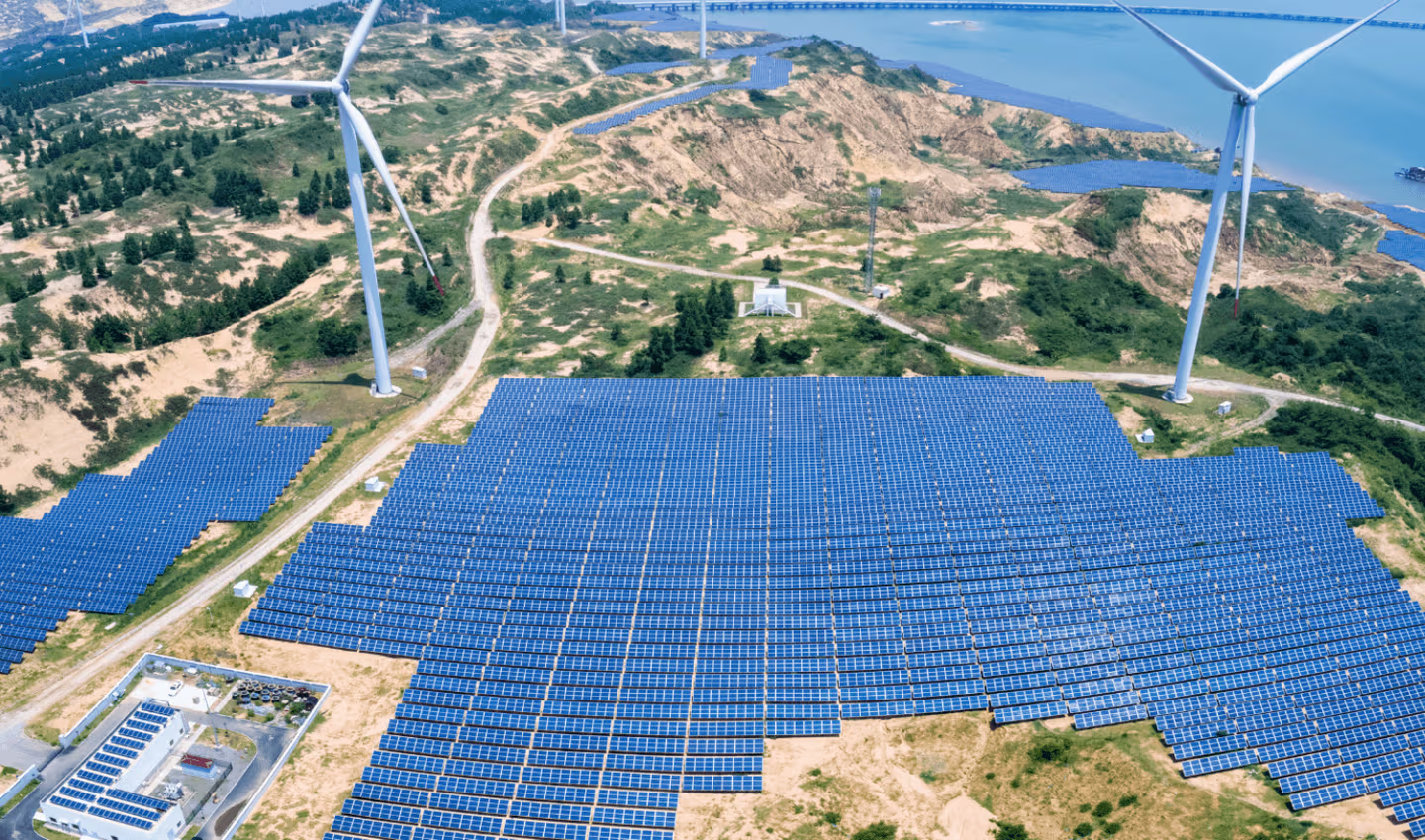
India has emerged as the world’s third largest country in installed renewable energy capacity, as per a new report by Morgan Stanley.
According to the report, the country’s renewable energy transition will help reduce external dependence. However, it adds that its success will depend on how quickly the India localises critical segments such as solar cells, wafers and polysilicon.
According to data from the Ministry of New and Renewable Energy, domestic solar module capacity has nearly doubled, from 38 GW in March 2024 to 74 GW in March 2025. Solar cell capacity has also increased from 9 GW to 25 GW.
The report also says that India still relies heavily on imports for key upstream components. In FY 2025, India imported around 35 million solar modules worth about $1.6 billion, with an estimated 60 to 80 percent sourced from China.
Overall, non-fossil fuel capacity in India has now crossed 50 percent of total installed capacity, reaching 262.7 GW. Solar and wind energy account for the bulk of recent additions.
The development underscores India’s push towards renewable energy adoption as it strives to power its economy with clean energy and significantly reduce imported oil and gas dependence in the future.