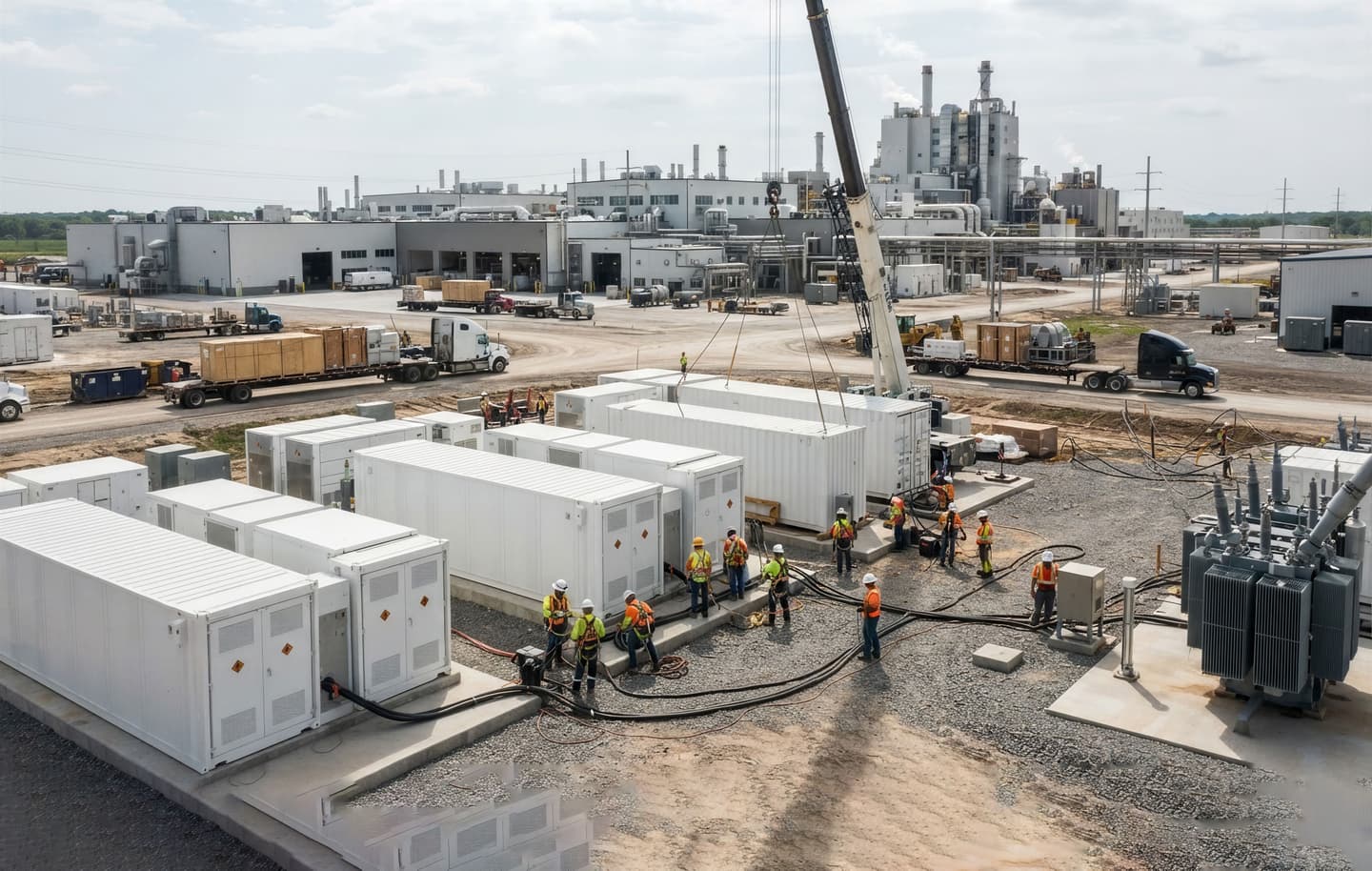
India had 15.75 GW or 42.53 GWh of battery storage under construction as of June 2026, according to the Ministry of Power (MoP), with an additional 11.75 GW or 38.43 GWh awarded and 19.19 GW or 67.57 GWh at the tendering stage. The deployment pipeline will need to expand and accelerate substantially. The National Electricity Plan (NEP) calls for 47.24 GW or 236.22 GWh of storage by 2031–32, an investment MoP pegs at roughly ₹3.49 lakh crore.
Against that demand, Wood Mackenzie estimates that the country commissioned only 2 GWh of cell manufacturing capacity this year vis-à-vis a 260 GWh demand pipeline from competitive tenders. Manufacturers have announced over 226 GWh of additional capacity through 2035, but the research firm analyses that India is still 10 to 15 years away from a cell industry that can compete globally without support. No one in this market doubts more factories will be announced, but the compelling question is whether the ones already on paper can deliver cells at a price and volume that survive due diligence.
Awarded Capacity to Operating Capacity
The government’s Production Linked Incentive (PLI) scheme for advanced chemistry cells (ACC) dates to May 2021, with ₹18,100 crore committed to build 50 GWh of domestic ACC manufacturing capacity, as per the Ministry of Heavy Industries. The scheme also covers an additional 5 GWh of niche ACC technologies.
Four companies have been awarded 40 GWh combined. Installed capacity, by the ministry’s own counts, sits at 1 GWh. Most ACC demand in India is still met largely through imports, the ministry says. It also notes that these four PLI beneficiaries use technology developed in-house.
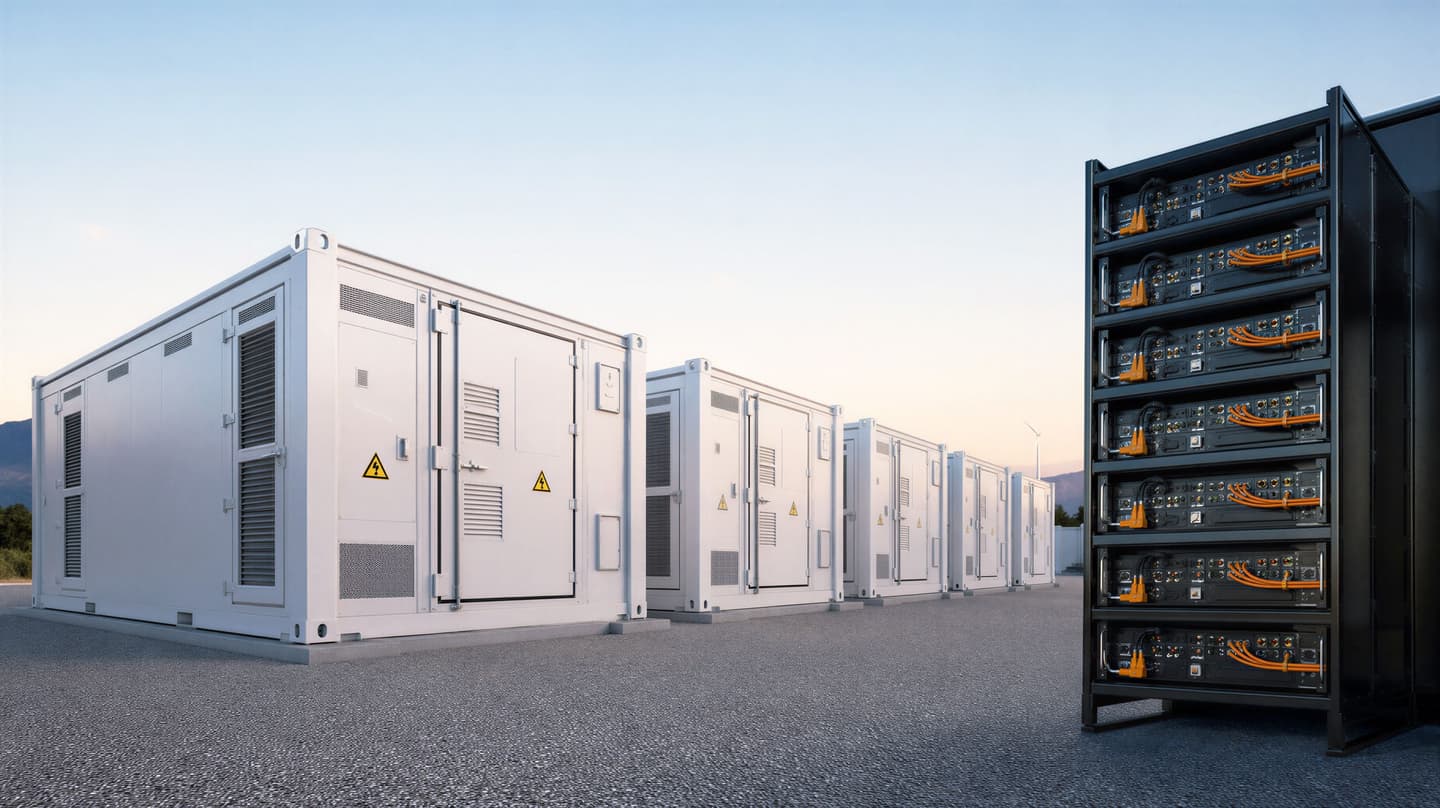
Manufacturers have announced over 226 GWh of additional capacity through 2035
Wood Mackenzie sees the wider industry differently, describing Indian battery makers as heavily reliant on Chinese and Korean licensors for their technology. That is a statement about the sector broadly; it does not necessarily contradict what the four PLI companies say about themselves, but it is worth flagging that the two pictures do not fully align. Either way, an award on paper is not a shipment and a gigawatt-hour of cells actually being produced and shipped month after month.
The Pipeline Has to Prove Itself
JMK Research and Institute of Energy Economics and Financial Analysis (IEEFA) reported that while 3.16 GW of energy storage capacity was tendered in August 2026 alone, which is entirely through standalone Battery Energy Storage System (BESS), 556 MWh was commissioned during the month. The four-hour configuration accounted for about 87 percent of monthly tenders, according to their September EnergyWatts update.
Duration is not a footnote here, as a four-hour battery needs double the energy capacity of a two-hour system at the same power rating, so counting gigawatts of projects is less than counting gigawatt-hours of cells required and actually produced. Money keeps flowing towards deployment regardless. The ministry lists 13.22 GWh of storage under implementation backed by ₹3,760 crore in budgetary support with an additional ₹5,400 crore from the power system development fund earmarked to support 30 GWh.
Import will Remain Part of the Equation
Imported cells are likely to remain an important supply option while domestic capacity scales up. JMK Research and IEEFA reported Chinese Lithium Iron Phosphate (LFP) cell prices at about $53.57 kWh in September 2026, while landed Indian LFP cell costs remained 14 to 23 percent above China prices.
However, cell price is only one component of BESS economics. Projects also carry costs for power conversion equipment, thermal management, battery containers and racks, energy management systems, civil works, EPC, O&M, and augmentation.
A higher Indian cell price, therefore, does not translate directly into the same percentage increase in the total project cost. Wood Mackenzie estimates that locally manufactured cells could initially cost 25 to 40 percent more than imported cells due to limited scale, financing costs and an underdeveloped supplier ecosystem. Therefore, localisation may deliver supply-chain resilience before it delivers cost leadership for developers.
The Missing Links are Upstream
China supplies 85 to 98 percent of global capacity across major battery supply chain components, including cathodes, anodes, separators and electrolytes, as per Wood Mackenzie estimates. Indian battery manufacturers will likely keep sourcing the imported inputs for at least the next two to five years, and deeper refining capabilities could take more than a decade.
At least 10 manufacturers outside the PLI scheme had announced roughly 178 GWh of cell manufacturing capacity for the next five years
The government’s localisation push is reaching beyond cells too. In February this year, the Ministry of Heavy Industry said that at least 10 manufacturers outside the PLI scheme had announced roughly 178 GWh of cell manufacturing capacity for the next five years. The ministry also says that the PLI programme has raised demand for domestic production of cathode active materials, anode active materials, foils and battery recycling units. While the pipeline is substantial, the unresolved question is how much of it will reach commercial production.
The Next Test
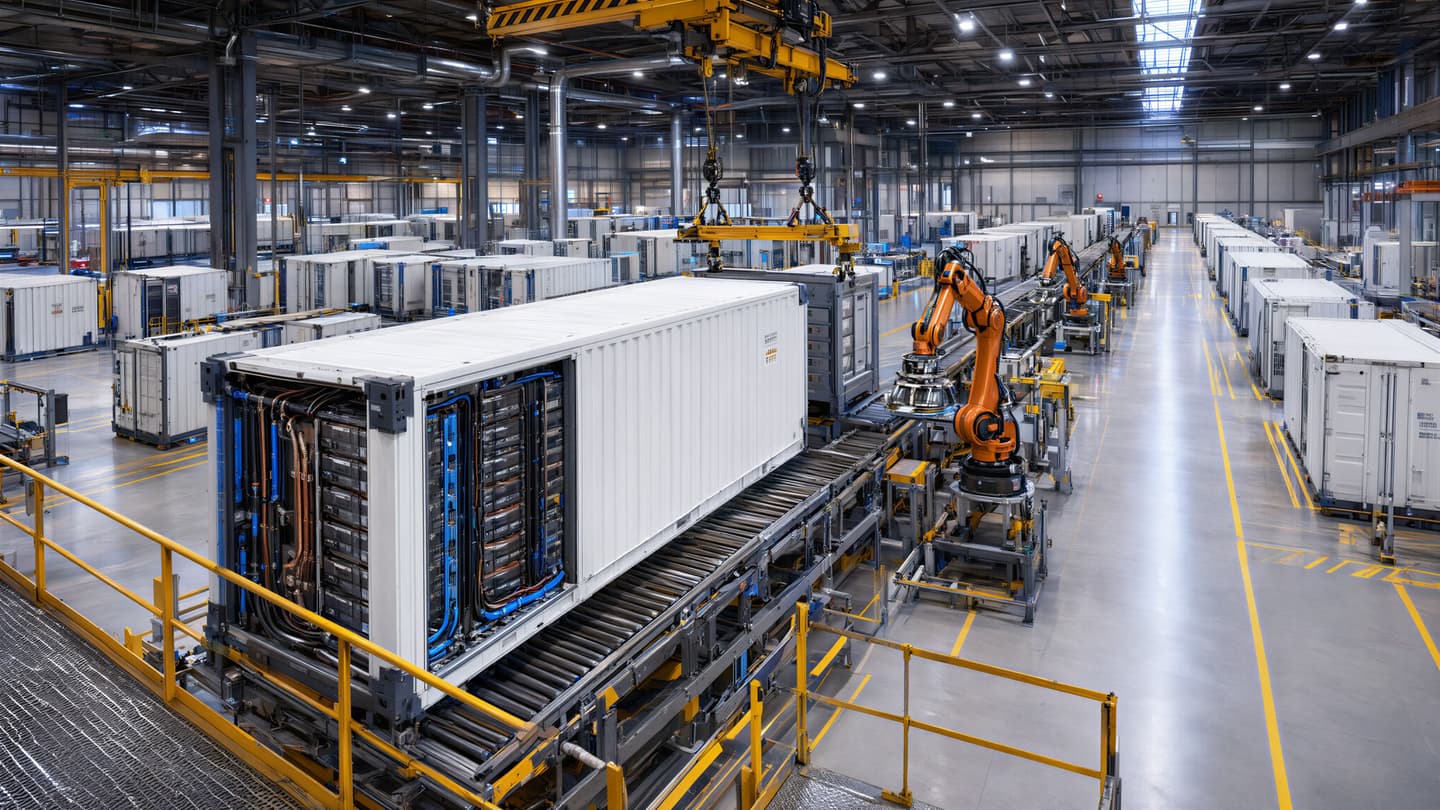
In July 2026, the Ministry of Heavy Industries issued a global tender for 10 GWh of cumulative ACC manufacturing specifically earmarked for grid-scale stationary storage under the PLI ACC scheme. The RPF was issued on July 15 this year, and the deadline for bids is October 13, 2026. The move ties manufacturing policy more directly to the storage market. It also provides another test of whether policy backed capacity can move through the chain from award to investment, construction, commissioning and sustained commercial production.
What Developers Need to Price in
For developers entering procurement, battery prices, foreign exchange, logistics, duties, delivery schedules, degradation and augmentation all need to be tested in project modules. Lenders will need to examine the cell supplier’s production record, chemistry, warranty, balance sheet and contractual protection against non delivery.
The presence of an Indian factory does not by itself make batteries bankable. India has the storage demand, policy support and a substantial manufacturing pipeline. What it has to demonstrate is the conversion of that pipeline into commercial, competitive and financeable cell supply. For the next phase of India's storage market, that conversion will be the measure of whether the battery supply chain is ready.