Renewable energy was almost on the periphery of India’s energy landscape over a decade ago. In 2014, the country’s installed capacity of renewable energy, except large hydro, was around 35.85 GW, with solar at 2.82 GW and wind largely confined to a few coastal and southern states.
Coal dominated planning and dispatch, power shortages were routine and the grid had been designed around large, centralised thermal stations and not for variable generation from solar and wind. Renewables existed, however, not yet system shaping.
Evidently, it is constraint, not ambition, that made scale unavoidable. Prior to 2014, the country’s power system neither had the resilience to experiment with gradualism nor the luxury of time. The demand was on the rise, finances were stretched and coal-based capacity additions were slowing.
Imperatively, renewables had to grow swiftly to matter, or else run the risk of remaining on the periphery. Therefore, it was not a policy preference but the sole viable strategy.
Why India Chose Scale First
India did not scale up renewable energy when its power system was ready, but prepared itself for a renewable scale-up. By November 2025, the country’s cumulative renewable capacity, including large hydro, reached 253.96 GW. Besides, renewable capacity excluding large hydro increased from 35.85 GW in 2014 to 203.61GW in November 2025. Notably, non-fossil sources from renewables and nuclear contributed 51.55 percent of all-India installed power capacity at the same time.
Remarkably, renewable sources even met over half of the nation’s power demand on at least one day in July 2025, when they claimed their highest-ever share in electricity generation. The scale was able to cater to the rising power demand driven by urbanisation, industrial growth, data centres, and cooling needs.
This shift did not happen by chance; it had to be designed. With a slew of auctions, long-term contracts, and centralised procurement, scale was achieved. The 25-year contracts instil confidence in investors about predictable revenue over a long duration. This allowed renewable projects to be financed like highways and airports.
Making these contracts bankable, the Solar Energy Corporation of India (SECI) stood between developers and state utilities, signing back-to-back agreements and ensuring predictable cash flows even when distribution companies (DISCOM) were financially weak.
At the project level, the twin bottlenecks of land acquisition and grid connectivity are solved by solar parks, providing ready-to-build sites with transmission in place. Besides, the waiver of interstate transmission charges turned renewable-rich states into national suppliers.
When Scale became Irreversible
A decisive inflexion point arrived in the financial year 2024–25 when India added 29.52 GW of renewable capacity in a single year, reaching a total installed capacity of 220.10 GW by March 2025. The momentum continued in 2025 with 44.51 GW additions by November alone. This is about double the additions registered during the same period of the previous year.
Before 2014, renewable projects were typically developed in isolation. The developers arranged land, grid access and financing on their own. This often stretched execution timelines unpredictably, limiting scale by the absence of systems, not ambition.
That began to change. The institutions, infrastructure, and markets were created in parallel with capacity. Visibly, acceleration was achieved to narrow the gap between a ward and commissioning.
For instance, Rajasthan’s Bhadla Solar Park and Karnataka’s Pavagada Solar Park, awarded between 2015 and 2017, could reach full capacity in three to five years. However, newer mega projects such as Gujarat’s Khavda Renewable Energy Park, awarded post 2022, began delivering their first gigawatt of solar power within two years. This is with additional solar and wind capacity coming online in 2024–25.
This timeline compression reflected a system that had drawn lessons to build at scale. The new system, where land, evacuation, finance and procurement moved together rather than sequentially, turning renewable energy from a project-by-project effort into an industrial process.
Coinciding with this phase was the tenure of Pralhad Venkatesh Joshi. In June 2024, Joshi was appointed as the Union Minister for New and Renewable Energy. From the outset, Joshi upheld the mandate of the Modi government to frame renewable energy as a system rather than treating it as a standalone sector.
To enable renewable system function at scale, he was cognizant of the fact that the sector requires transmission, storage, manufacturing depth, skilled manpower, and institutional coordination. He emphasised not only capacity additions but also ensuring that the system could carry it.
Under Joshi’s tenure, the focus of the Ministry of New and Renewable Energy (MNRE) shifted consequently from generating megawatts to absorbing them. Increasingly, tenders bundled storage and peak supply and manufacturing policy was aligned with deployment through the Production Linked Incentive (PLI) scheme.
Also, the Approved List of Modules and Manufacturers (ALMM) scheme, import monitoring and transmission planning moved to the centre of renewable strategy. Clearly, the direction was that after achieving the scale, it had to be reliable.
Scaling Solar and Wind by Design
Arguably, India’s scale-first approach is best represented by solar energy. Solar capacity jumped from 2.82 GW in 2014 to 132.85 GW by November 2025. Also, it crossed the 100-GW milestone in January 2025. What is more, it added 23.83 GW alone of solar capacity in the financial year 2024–25, recording one of the swiftest expansions in history.
India’s renewable growth story remains one of the fastest and most forward-looking in the world, evolving from speed to system strength, from quantity to quality, and from expansion to enduring integration.
At this scale, solar began shaping dispatch behaviour, pricing dynamics, and grid operations. “India’s renewable growth story remains one of the fastest and most forward-looking in the world, evolving from speed to system strength, from quantity to quality, and from expansion to enduring integration,” Joshi has said.
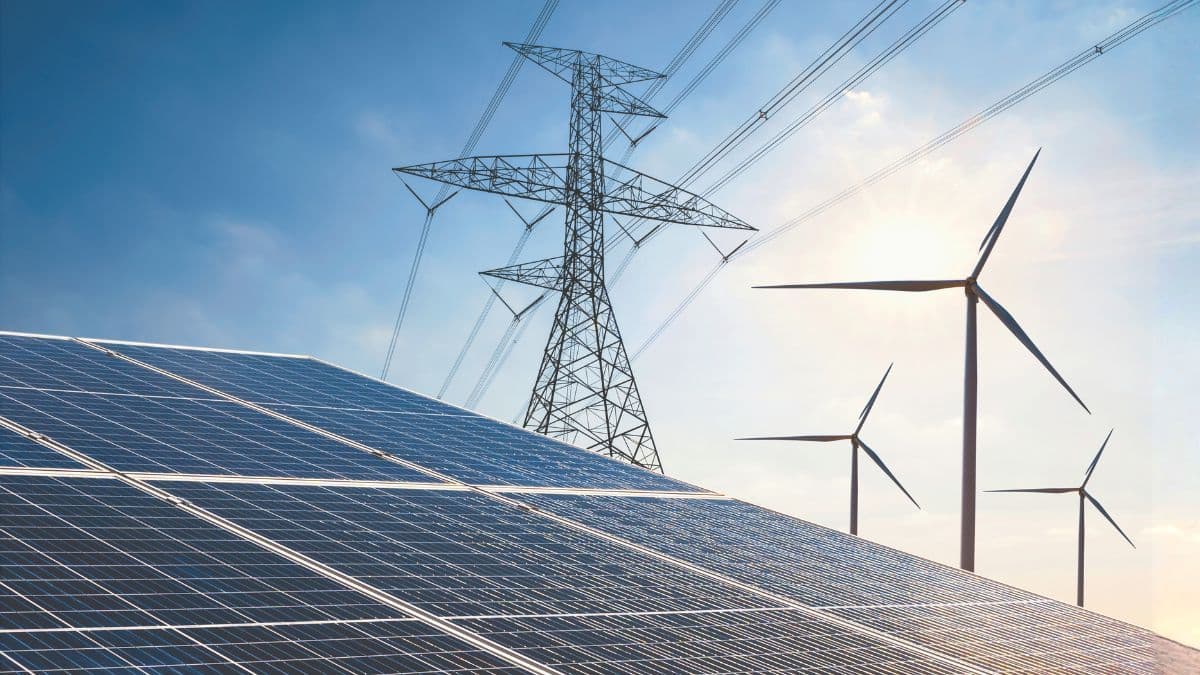
Solar began reshaping the daily rhythm of the grid once solar crossed critical thresholds. Rather than theoretical risks, midday surpluses, evening ramps, and curtailment management became operational challenges. This accelerated the shift towards hybrid projects, time-of-day pricing, and storage integration.
Grid Flexibility from Scale
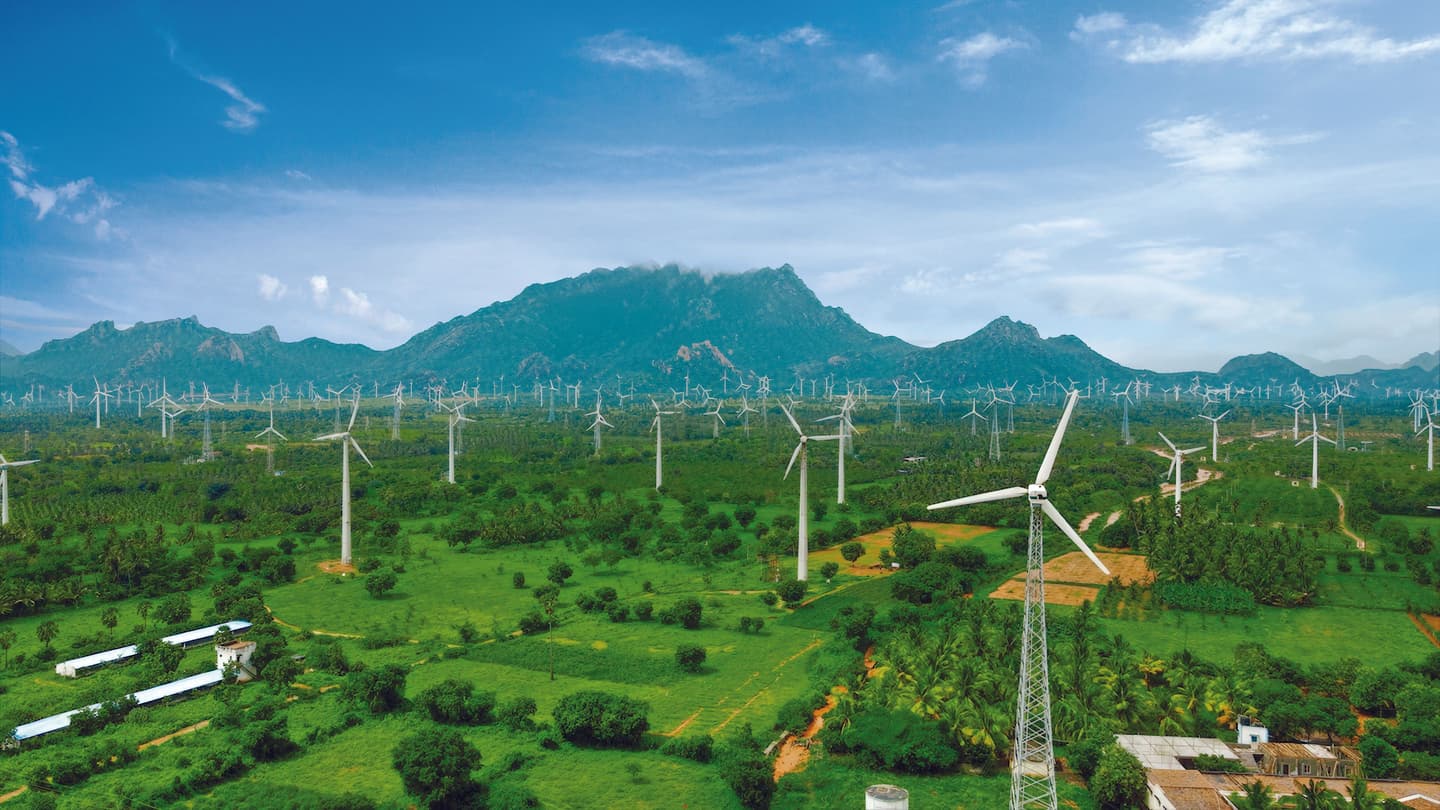
Wind power entered a second growth cycle, with installed wind capacity crossing 50 GW in March 2025 and reaching 53.99 GW by November 2025.
Complementing solar’s diurnal generation profile, wind increasingly found its role in hybrid and round-the-clock configurations. Besides, small hydro with 5.16 GW and bioenergy with 11.61 GW provided reliable local power in different parts of the country, assisting the system as renewable capacity scaled up.
PSUs Anchoring Confidence at Scale
Translating ambition into bankable execution is the Public Sector Undertakings (PSU). While SECI acted as the central market-maker, aggregating demand, conducting transparent auctions and signing power sale agreements that reduced counterparty risk, companies such as NTPC Ltd integrated renewables into legacy portfolios. Where private capital was initially cautious in extending renewables, PSUs such as NHPC Ltd and SJVN Ltd expanded into solar and wind, playing a key role in the renewable energy shift.
Private Enterprise Accelerating the Curve
If PSUs anchored the scale, the private sector accelerated it. Adani Green Energy, ReNew Energy Global, Tata Power Renewable Energy, JSW Energy and ACME Group rapidly expanded their capacity. This slashed tariffs through competitive bidding and pushing into hybrid, storage-linked, and hydrogen-ready projects. Moreover, corporate Power Purchase Agreements (PPA) and captive renewable projects embed clean energy directly into industrial operations, broadening demand beyond utility procurement.
Scale Forcing the Grid to Evolve
Grid design had to change once renewable capacity moved past 200 GW. Transmission moved to the centre of planning. Green Energy Corridors, High Voltage Direct Current (HVDC) links and a ₹2.4-lakh-crore transmission plan for a 500-GW non-fossil system began reshaping evacuation pathways.
Storage shifted from optional to essential. While battery energy storage systems entered procurement frameworks, pumped-storage potential exceeding 180 GW was identified. Joshi has described this as the engineering-intensive phase of India’s renewable journey.
Alongside capacity, grid operations had to change. Forecasting and scheduling reforms improved predictability, and ancillary service markets began valuing flexibility.
General Network Access reforms allowed for time-segmented sharing of transmission corridors. Storage increasingly entered the system not just as backup, but as a grid service.
Key Initiatives Ensuring Reach and Skilling
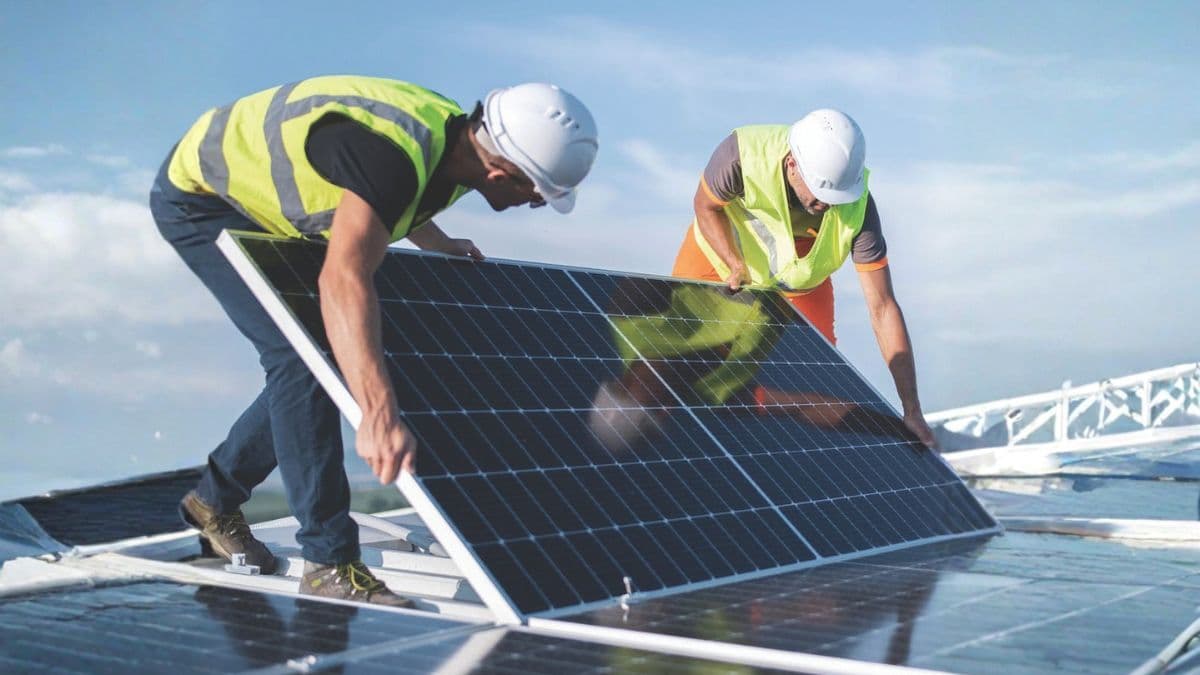
If utility-scale solar gave India scale, distributed renewables gave it depth. Launched in February 2024, PM Surya Ghar: Muft Bijli Yojana (PMSG: MBY) with a total outlay of ₹75,021 crore, aimed to provide rooftop solar systems to one crore households and providing up to 300 units of free electricity every month. The scheme encourages the adoption of renewable energy sources, supporting India’s commitment to reduce its carbon footprint.
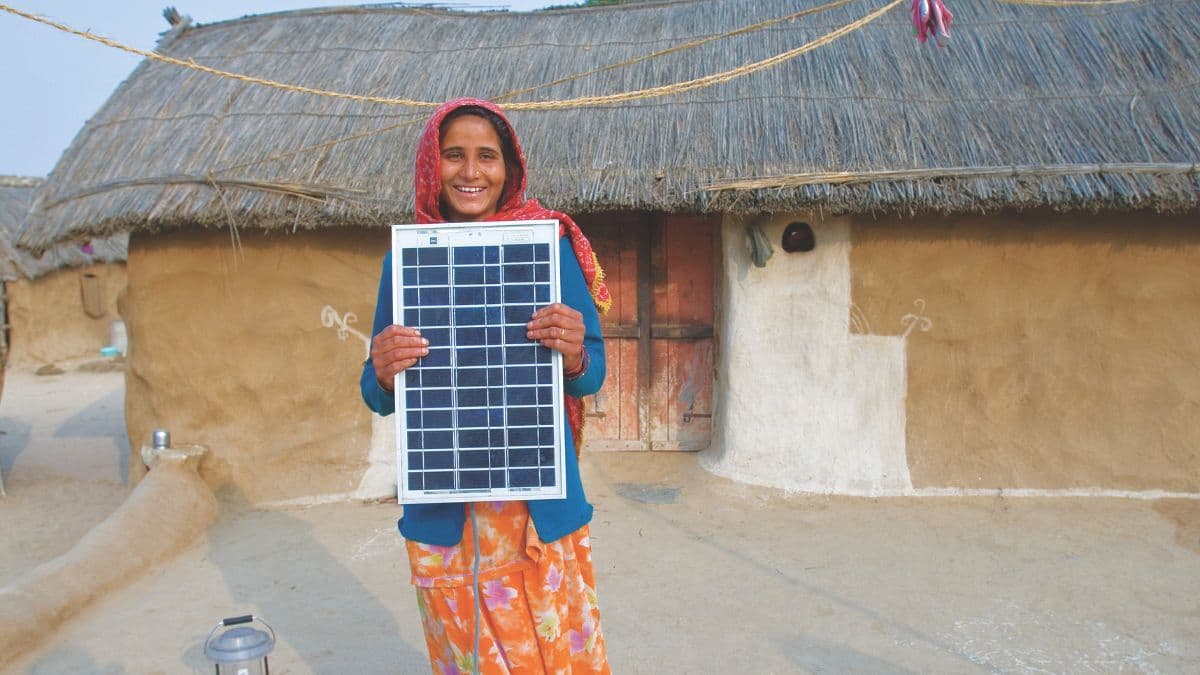
By December 2025, 23.9 lakh households have installed rooftop solar with 7 GW installation capacity of clean energy and ₹13,464.6 crore subsidy release, keeping the scheme on course to achieve its goal.
Complementing household adoption, Pradhan Mantri Kisan Urja Suraksha Evam Utthaan Mahabhiyaan (PM-KUSUM) has driven renewable deployment in the agricultural sector. As of November 2025, cumulatively 667.31 MW of solar power capacity has been installed under Component-A.
Over 9.42 lakh standalone solar agricultural pumps have been installed under Component-B. More than 10.99 lakh grid-connected agricultural pumps have been solarised under Component-C. Notably, 10.2 GW solar capacity has been installed under the scheme, out of which 6.5 GW or around 64 percent have been installed in 2025.
These distributed initiatives not only expand renewables across diverse geographies, including the North-east and other regions where large projects are harder to deploy, but also foster a skilled workforce of solar installers, technicians and service providers.
Besides, household and farm solar deployments create local employment, build familiarity with clean energy systems and embed renewable skills in the broader economy, supporting a long-term, inclusive clean energy transition.
Green Hydrogen Extending Scale Beyond Power
Reshaping the industrial frontier of India’s energy transition is Green Hydrogen. The National Green Hydrogen Mission, launched in 2023, moved from policy to execution by 2025, as incentives were awarded for 4.5 lakh TPA of green hydrogen production capacity and 7.24 lakh TPA of green ammonia supply to fertiliser units at globally competitive prices discovered through SECI-led tenders.
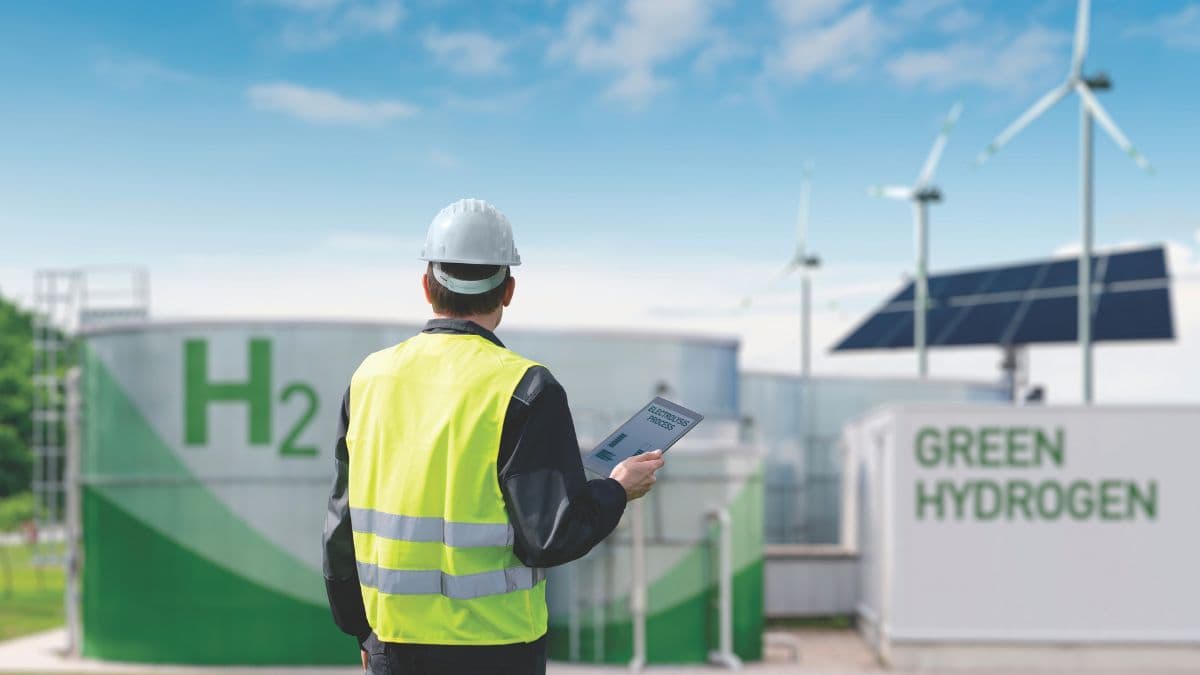
The pilot projects for hydrogen use in refineries, steelmaking, transport, and port bunkering moved the technology from concept to application. Also, standards, certification, and testing facilities were rolled out to anchor long-term market credibility.
Green hydrogen extended renewable scale from the grid into the core of India’s industrial economy by linking renewable generation directly with hard-to-abate sectors. The initiative is seen as a necessary bridge between the 2030 targets and the 2047 Net Zero pathway.
From Scale to Statecraft
By 2026, India had answered the biggest question of its renewable energy journey: Can it build at scale? The answer was a resounding ‘Yes’. What remained was the harder task of making that scale work every day, reliably, affordably and for decades.
Towards 2030 is about making renewable energy dependable. Storage, stronger transmission, hybrid projects and better markets will decide if 500 GW of non-fossil capacity can supply power when it is actually needed, not just when the sun shines or the wind blows.
Looking even further ahead, towards 2047, the groundwork being laid today stretches beyond power generation. Distributed solar, skilled workers, domestic manufacturing and green hydrogen are laying the base for a clean energy economy that can support growth, jobs and energy security for the long term. Renewable energy in India has moved from the edge to the centre of the power system. The challenge now is not building more but making what has been built last.