India’s energy story is often framed as a story of scarcity. For decades, demand grew faster than domestic supply, global price movements travelled quickly into inflation, and energy security was defined largely by how much crude could be sourced and at what cost.
Over the past decade, the Modi government has begun to reconstruct the country’s energy landscape as an integrated system by connecting refining, gas, logistics, clean fuels, overseas assets and diplomacy into a framework designed not merely to withstand volatility but support sustained economic expansion. While Vision 2030 gives this effort near-term shape, planning towards 2047 provides its long horizon.
From Vulnerability to Institutional Preparedness
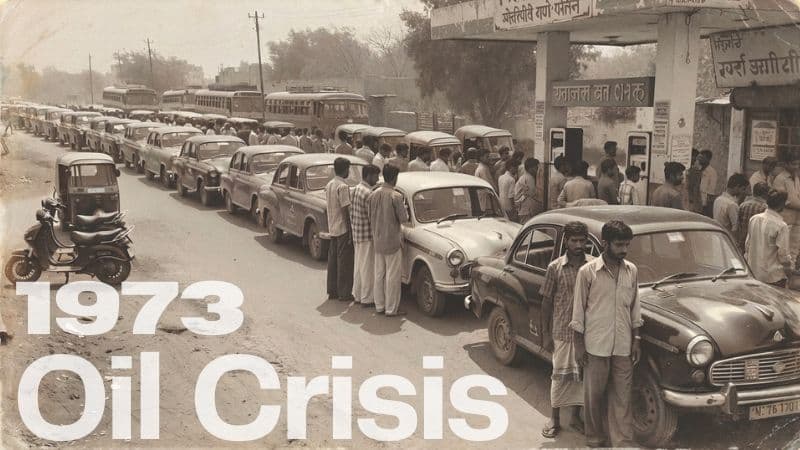
1973 fuel queues became India’s wake-up call leading to diversified imports and strategic crude reserves.
India’s energy security thought process began to shape during the 1973 oil crisis, as unforeseen supply disruption of oil exposed the risks of the country’s import dependence on the commodity. The period witnessed limited domestic production, strained foreign exchange reserves, and energy costs that rapidly became macroeconomic stress. This prompted a gradual response in the form of public sector refining expansion, increased upstream investment and diversification of suppliers.
Going forward, a major institutional shift happened. The government set up strategic crude oil reserves through a Special Purpose Vehicle (SPV), Indian Strategic Petroleum Reserve Ltd (ISPRL). Currently, the country’s cumulative capacity stands at 5.33 MMT in underground crude storage facilities in Visakhapatnam, Mangaluru and Padur.
In July 2021, the government approved increasing the SPR capacity by establishing two additional commercial-cum-strategic petroleum reserve facilities: a 4-MMT Chandikhol and a 2.5-MMT Padur in a publicprivate partnership mode. Moreover, it and Oil Marketing Companies (OMC) keep on reviewing the possibility of expanding storage capacities based on technical and commercial feasibility. Besides, oil public sector undertakings have diversified their crude basket and are procuring crude from countries across geographies to ensure security of supplies and mitigate the risk of dependence on crude oil from a single region. The Middle East, Africa, North America, and South America are among these countries.
Furthermore, to diversify the Liquefied Natural Gas (LNG) import, India added Australia, the US and the UAE as sourcing destinations. In an attempt to ensure uninterrupted supplies and protect from price volatility, the country secured various long-term agreements to procure LNG. These initiatives are in line with Vision 2030, which recognises that a larger economy requires deeper buffers.
Whether it was the period of the global COVID-19 pandemic or geopolitical tensions, there has never been a shortage of petroleum products in India. This has been possible due to the foresight of PM Narendra Modi.
It is this institutional depth that has been tested repeatedly over the past few years. Reflecting on recent global disruptions, Union Minister of Petroleum and Natural Gas Hardeep Singh Puri has observed, “Whether it was the period of the global COVID-19 pandemic or geopolitical tensions, there has never been a shortage of petroleum products in India. This has been possible due to the foresight of PM Narendra Modi.”
Refining as a Strategic decades. Asset, Not Just Capacity
The refining system has emerged as one of the strongest pillars of India’s energy security. With 23 refineries aggregating 258.2 MMTPA capacity, the country is placed among the world’s top five refining nations. Through a combination of new projects and capacity additions, including the HPCL Rajasthan Refinery Ltd and integrated petrochemicals expansions at existing sites, the country aims to reach about 310 MMTPA aligning with ‘Vision 2030’, and scale up to 400–450 MMTPA in the long-term
India’s refinery expansion under Vision 2030 is positioning the country as a global refining hub and a stronger energy security buffer.
When completed, the expanded capability Puri has said will consolidate India’s position among the world’s top three refining hubs, as around 20 percent of existing global refining capacity—over 100 refineries— faces potential closure by 2035. “India stands out as a bright spot, projected to contribute nearly 30–33 percent of global energy demand growth in the coming decades.”
India’s refining bandwidth matters as it is more than meeting domestic fuel demand. The country’s refining capability offers the nation strategic flexibility, as it is configured to process a variety of crude grades, allowing flexibility in sourcing. This capability proved vital after 2022, when crude imports from Russia rose sharply, at times comprising over one-third of India’s total crude imports.
As refineries in India were already configured for processing such crude oil grades, the additional volumes could be absorbed without any fallout on operations or fuel supply, besides reducing crude procurement costs.
Strengthening the downstream was the transition to Bharat Stage (BS) VI fuels across the country in April 2020. The old BS-IV norms capped sulphur content in petrol and diesel at 50 ppm. With the BS-VI regime rollout, that limit was tightened five times to a maximum of 10 ppm. The leapfrog from BS IV to BS VI ensured that Indian fuels are at par with the most stringent global standards implemented in developed economies such as Japan and Europe. This transition called for extensive refinery upgrades. Moreover, the shift involved estimated investments of over ₹30,000 crore across public and private refineries.
However, the transition was executed simultaneously across the country, reinforcing fuel quality, reducing vehicular emissions and improving long-term compatibility with advanced engine technologies.
Setting a sight on the Modi government’s ‘Viksit Bharat 2047’ vision that entails transforming the country into a developed nation by its centenary year of independence, India’s refining is expected to evolve beyond fuels, with higher petrochemical integration, which is already visible at Paradip, Kochi and Panipat. This will align downstream operations with manufacturing, plastics, fibres and speciality chemicals, supporting industrial growth and export competitiveness.
Upstream Reform & the Expansion of Domestic Options
The domestic upstream sector is structurally constrained and strategically vital to India’s energy security, owing to the 1999 New Exploration Licensing Policy (NELP) that significantly relied on the state announced auctions.
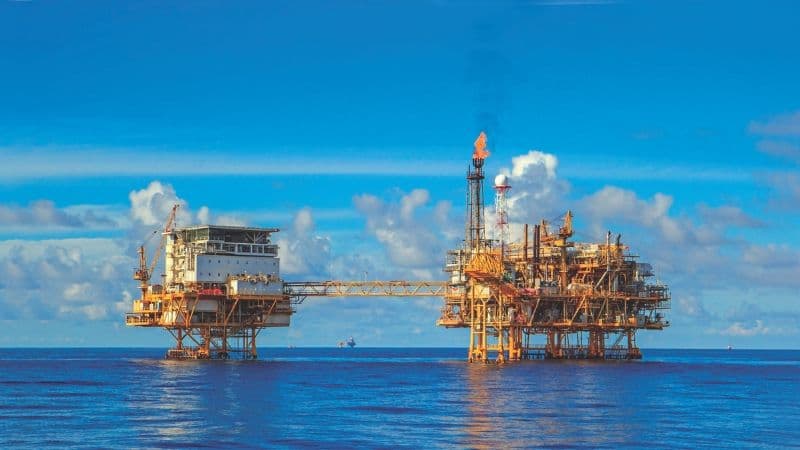
Upstream reforms under HELP and OALP are enabling a more transparent, investor-driven approach to domestic oil and gas exploration.
These auctions faced red tape, were often deferred and met with disputes over cost recovery, attracting limited investment, saw stagnant exploration, and the nation’s dependence on imported crude continued to rise. While that dependence is likely to persist, oil and gas production reform over the last decade brought focus on expanding options, enhancing transparency and lowering execution gridlock instead of rapid self-sufficiency.
A tectonic shift happened when the Modi government introduced the Hydrocarbon Exploration and Licensing Policy (HELP) in 2016, leading to the rollout of the Open Acreage Licensing Policy (OALP). This permitted companies to identify areas of interest to explore at any time of the year. The new policy did away with episodic auctions and advocated an investor-driven model that introduced a revenue sharing contract, removing disputes over cost recovery between operators and the government. Notably, as of the tenth round of bidding for the Exploration and Production (E&P), 202 blocks were awarded across several sedimentary basins covering over 5.73 lakh sq km.
Complementing this was the Discovered Small Fields Policy (DSF) in 2015. The DSF aims to award discovered acreages and monetise the unmonetised discoveries. The policy has various attractive features such as revenue sharing contract model with low regulatory burden and no minimum biddable work programme, prior technical qualification and upfront signature bonus, among others. It widened participation beyond oil and gas majors by enabling smaller entities and consortia for developing fields with limited reserves.
Another consequential step in oil and gas production was the government’s decision to open previously designated ‘No-Go’ offshore areas for exploration. Around 99 percent of the nation’s offshore area, spanning 10 lakh sq km, was unlocked for the activity. This, Puri has said, is a “landmark” development, which has unlocked significant exploration frontiers, especially in deepwater and frontier regions, and has been instrumental in triggering the current momentum in offshore activity. What is more, the National Data Repository (NDR) was launched in June 2017 to empower explorers accessing seismic and well data for ensuring the E&P activities gain momentum.
The ‘Vision 2030’ outlines basin-level area development. This is especially in the gas-rich Krishna-Godavari basin and frontier areas of the Andaman offshore, which shown potential in hydrocarbon after recent exploration activity was carried out. Further by 2047, deeper offshore exploration driven by advances in seismic imaging, subsurface modelling and deepwater drilling capabilities is expected.
Natural Gas as a Transition Fuel
Positioned as a transition fuel, natural gas is capable of supporting the nation’s industrial growth alongside emissions in moderation. Presently, the country’s gas pipeline spans 25,429 km, which is aimed to be extended to about 33,500 km by 2030. This is to create what the government describes as ‘One Nation, One Gas Grid’, connecting gas sources to consumption centres to achieve balanced distribution and a cleaner energy mix. Currently, City Gas Distribution networks cover 307 geographical areas with over 8,428 Compressed Natural Gas (CNG) stations and more than 1.56 crore Piped Natural Gas (PNG) connections, which is expected to expand steadily through the decade
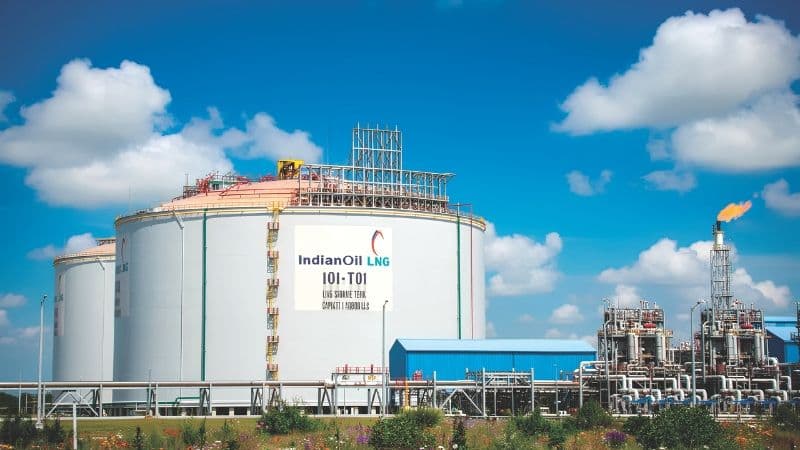
LNG terminals and gas infrastructure are expanding India’s cleaner energy pathway supporting “One Nation, One Gas Grid” and diversified import sourcing.
The country has eight LNG import terminals. It has a regasification capacity of 52.7 MMTPA, which is projected to reach 66.7 MMTPA by 2030. India’s longterm contracts with Qatar, besides supplies from the US and Australia, provide sourcing diversity. By 2047, gas is expected to play a larger role in industrial feedstock use, fertilisers and city energy systems.
Logistics, Storage and the Digital Backbone
India’s energy security relies as much on movement as on supply. A number of petroleum sector assets such as pipelines, terminals, depots and bottling plants, under the PM GatiShakti National Master Plan (PMGS-NMP), have been digitally mapped, as a part of an integrated geospatial database for improving coordination and execution of logistics and energy infrastructure.
Moreover, multimodal logistics are expanding. Petroleum products will be transported using inland waterways, including work-in-progress National Waterway 2 and the Indo-Bangladesh Protocol Route, which will reduce dependence on road transport. For an economy expected to grow significantly by 2047 such integration will be critical. Logist ics efficiency will influence both energy costs and industrial competitiveness.
LPG Movement
LPG remains one of the most politically and economically sensitive fuels in India. About 60 percent of domestic LPG demand is met through imports. LPG prices in the country are linked to its price in the international market (Saudi Contract Price), making global movements directly relevant to household energy costs.
Ujjwala is not just a scheme; it has become a torch of a massive revolution, whose flame has reached every corner of the nation, even remote areas
Access has expanded sharply under the Pradhan Mantri Ujjwala Yojana (PMUY), which has provided 10.35 crore LPG connections. Next, 25 lakh additional LPG connections under the scheme are being released, taking the target to 10.6 crore connections. “Ujjwala is not just a scheme; it has become a torch of a massive revolution, whose flame has reached every corner of the nation, even remote areas,” the union petroleum and natural gas minister has remarked.
Ethanol Blending and Liquid Fuel Diversification
India has achieved liquid fuel diversification with the Ethanol Blending Programme. The government attained 10 percent ethanol blending in petrol in June 2022 ahead of schedule. It reached 20 percent blending in mid2025 against the 2030 target.
Under the amended National Policy on Biofuels in 2022, expanded feedstock options became available. Maize, damaged food grains, and industrial waste, among others were included and have supported higher ethanol production and reduced petrol imports, besides linking energy security with rural incomes. As transport demand grows, ethanol is expected to remain a structural component of India’s liquid fuel strategy. “India’s ethanol journey is unstoppable. This success was made possible through sustained policy reforms such as guaranteed pricing for ethanol, allowing multiple feedstocks, and rapidly expanding distillation capacity across the country,” Puri has stated.
Overseas Assets and Strategic Diversification
The country’s oil and gas assets overseas provide long-term supply stability beyond spot markets. With an equity holding of public sector ONGC Videsh Ltd in assets located in Sakhalin-1, Vankorneft and TaasYuryakh in Russia, as well as projects in Mozambique, Brazil and Vietnam, India enjoys equity oil and gas volumes connected to long-term production instead of spot market availability.
Energy Diplomacy and Maritime Security
One of the key pillars of India’s external relations is energy diplomacy. The country’s energy diplomacy is shaped by the quantum of its import dependence and the need for longterm supply stability of hydrocarbons and gas.
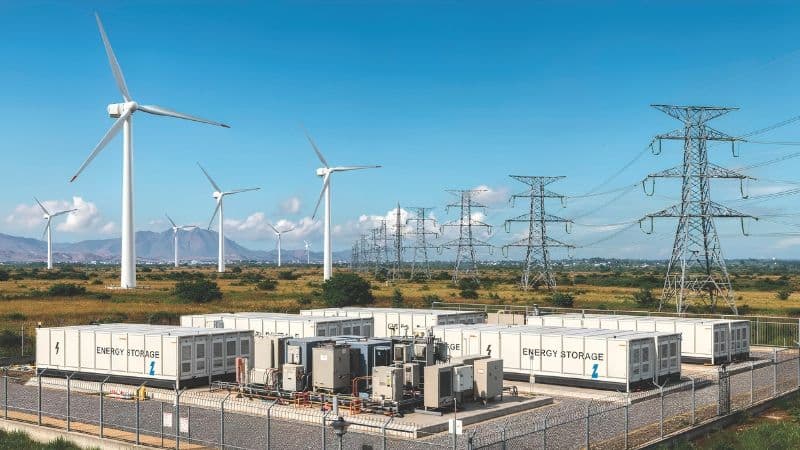
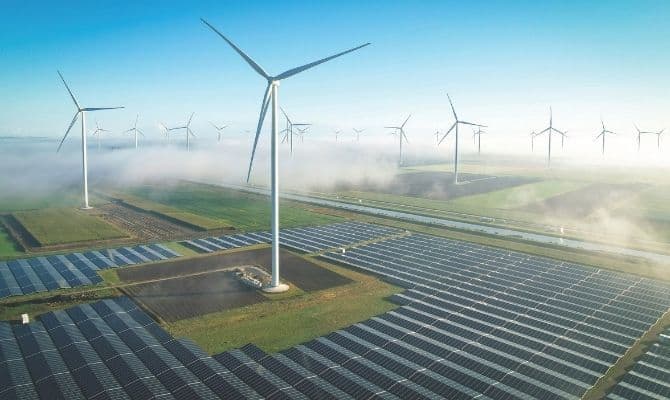
Wind power backed by battery storage strengthens grid stability supporting India’s shift toward a cleaner, more resilient energy system.
Long-standing relationships with oil-producing countries such as the UAE, Iraq and Kuwait continue to be anchored by the sourcing of crude oil. Altogether, these nations comprise a significant share of India’s annual crude imports.
A similar structure followed when it comes to LNG, as long-term contracts with Qatar remain the backbone of the gas imports. However, over the last decade, the government ensured that LNG import from the gulf nations is supplemented by volumes from the US and Australia to diversify the portfolio and attain flexibility in contracts.
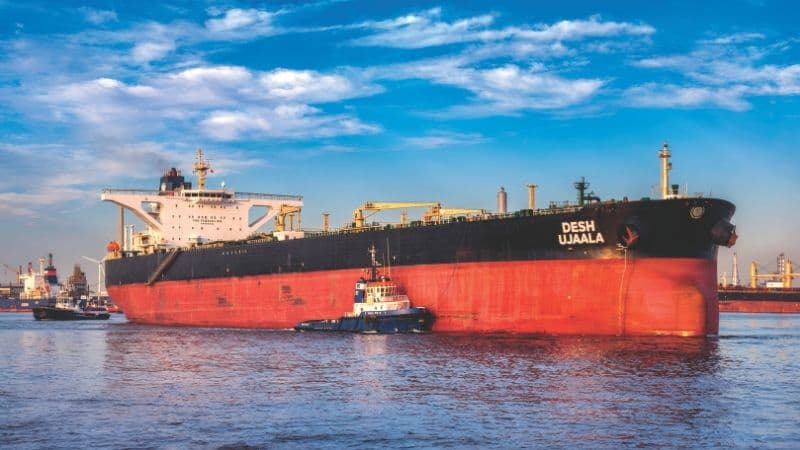
Energy diplomacy depends on secure sea lanes protecting crude and LNG shipments through strategic corridors like Hormuz, Bab-el-Mandeb and the Red Sea.
A hassle-free movement of these energy commodities depends on some maritime corridors. As the majority of India’s crude oil, LPG and LNG imports pass via the Strait of Hormuz, Bab-el-Mandeb and the Red Sea, making these routes is a persistent strategic consideration. India’s diversification of crude and gas sourcing in recent years, reducing over-reliance on any single chokepoint, as underlined by the union minister has been complemented by the country’s growing naval presence and maritime partnerships in the Indian Ocean Region, which is structured to support freedom of navigation and the movement of commercial energy shipments, particularly during periods of regional tension.
The country’s naval presence and maritime partnerships in the Indian Ocean Region are structured to support freedom of navigation and the movement of commercial energy shipments, particularly during periods of regional tension.
Alongside hydrocarbons, India’s clean fuel engagement has expanded through its role in launching and coordinating the Global Biofuels Alliance that seeks to promote ethanol and sustainable biofuels adoption across partner economies.
Clean Fuel as the Next Layer of Security
Clean fuels are now the core to India’s energy security planning. Approved in 2023, the National Green Hydrogen Mission (NGHM) aims to produce 5 MMT of green hydrogen a year by 2030. The NGHM is supported by about 125 GW of new renewable capacity dedicated to green hydrogen production, besides investments to the tune of ₹8 lakh crore-plus. The mission is expected to contribute towards reducing fossil fuel imports by over ₹1 lakh crore and avoiding almost an annual 50 MMT of greenhouse gas emissions by 2030. Notably, the Green Hydrogen Certification Scheme defines standards to align Indian production with global markets. Underlining the import-substitution dimension of the transition, Puri has said that if prices come down, India can adopt green hydrogen on a much larger scale, which will help reduce import dependence.
A similar security logic underpins bioenergy initiatives. The Sustainable Alternative Towards Affordable Transportation (SATAT) scheme introduced in 2018 aims to set up 5,000 Compressed Biogas (CBG) plants to produce 15 MMT per annum. So far, 108 CBG plants have been commissioned, and by 2030, industry observers project more than 1,000 plants.
The country’s approach to energy security has evolved over the decade, as the demands of scale, resilience and long-term planning are the neo guiding parameters, moving away from anxieties of short-term supply. Steadily, India has embedded cleaner fuels into its consumption mix, besides bolstering refining capacity, diversifing crude oil and gas sourcing, and boosting fuel distribution networks. Now, strategic storage, overseas equity assets, pipeline connectivity, ethanol blending, LPG access reforms and emerging clean fuel pathways operate as interlinked components rather than isolated interventions.