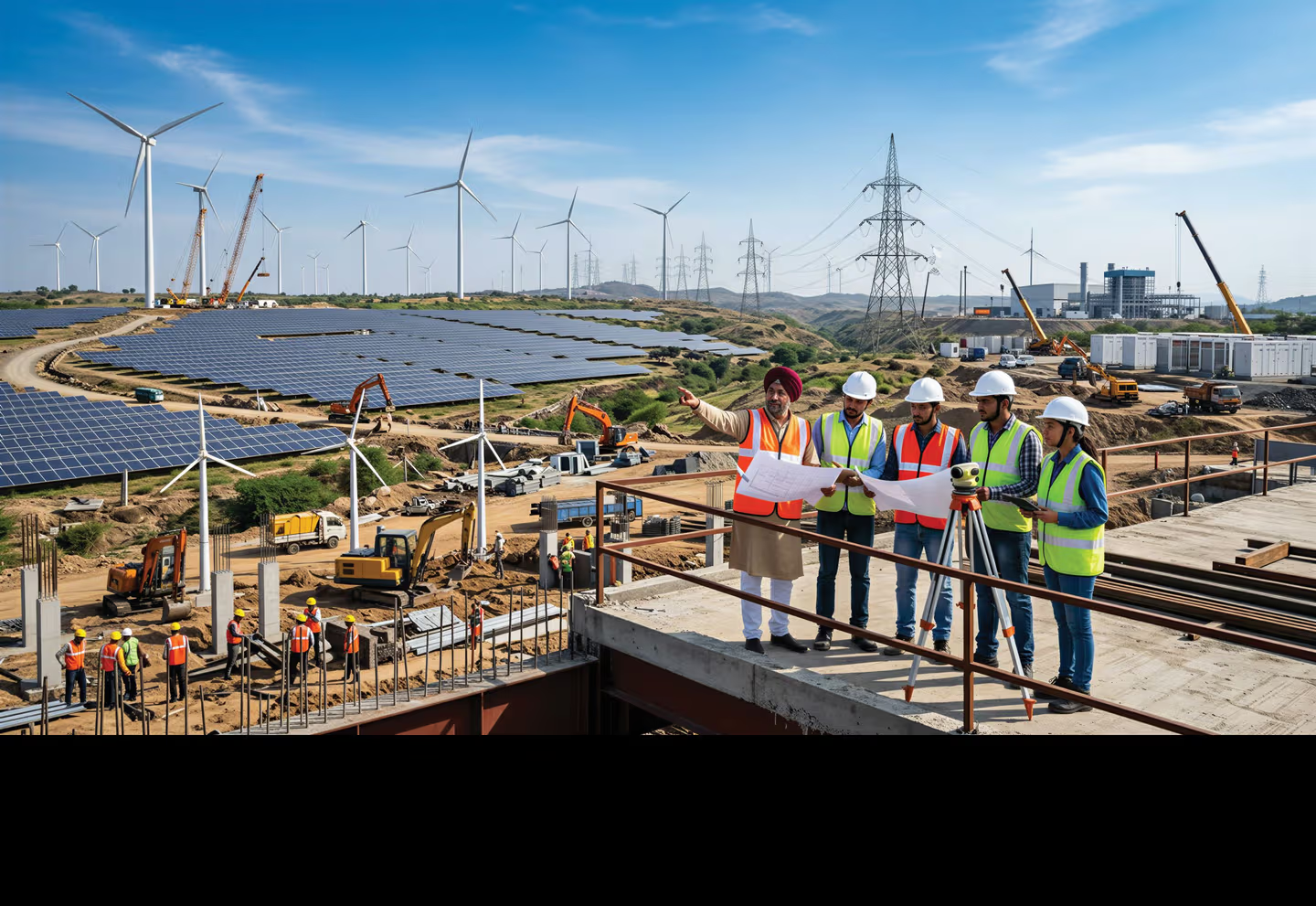
The country’s energy transition has entered a different phase. It had 304.33 GW of installed non-fossil electricity capacity as of August this year, as per the Ministry of New and Renewable Energy (MNRE). This comprised 295.55 GW of renewable energy. Nuclear capacity stood at 8.78 GW, solar at 168.04 GW and wind at 58.52 GW. Between April and August 2026, MNRE also recorded 20.87 GW of renewable capacity addition, which includes 17.78 GW of solar.
However, the scale of generation being built is now only one part of the story as India simultaneously needs transmission corridors, storage, flexible generation, stronger distribution networks and new industrial infrastructure. Electricity demand is rising as cooling expands, electric mobility grows, data centres multiply and industries begin shifting processes towards electrical, hydrogen and other low carbon technologies.
The physical system underneath India’s climate commitments is therefore becoming as important as the commitments themselves. The next phase is not simply about generation, but making generation, transmission, storage, distribution, industry, manufacturing, materials and capital work as one system.
Scripting an Electricity Economy
The Central Electricity Authority’s (CEA) planning points to a substantially larger electricity system. According to its planning, while peak demand is projected at 277.2 GW in 2026–27 and 366.4 GW in 2031–32, electricity requirement is projected to rise from 1,907.8 billion units to 2,473.8 billion units. At the operating level, the system is already approaching the first of those numbers. CEA’s July 2026 Indian Power Sector Performance report recorded peak demand met 270.203 GW, energy supplied of 170.161 billion units and renewable generation of 56.25 billion units.
The new demand is not generated from one sector. Cooling is becoming a major electricity load as incomes rise and air conditioning penetration increases. Electric vehicles (EV) alter both the volume and timing of demand. Data centres create concentrated, highly reliable loads and industrial electrification can create large known recruitments at specific locations.
Particularly, the data centre story is moving quickly. As per the Ministry of Electronics and Information Technology (MeitY), India’s data centre capacity increased from 375 MW in 2020 to about 1,575 MW. The latest government statement citing CEA estimates that data centre power demand will be about 17 GW by 2031–32.
Besides, the increase in AI and high-performance computing is changing the nature of the load. The same government statement notes the adoption of direct-to-chip liquid cooling, adiabatic cooling, immersion cooling and closed-loop liquid cooling systems alongside high-density racks intended to reduce power and water consumption.
These loads have different characteristics. A data centre cannot simply accept intermittent supply without an elaborate reliability architecture. Easy charging can potentially be shifted if tariff structures and charges in infrastructure permit it. Cooling demand can rise sharply during periods when the power system is already under stress. Industrial loads can be geographically concentrated. The electricity system has to accommodate all of them. That is why the transition is increasingly becoming an infrastructure story.
The Grid becoming the Backbone
India’s transmission system is expanding alongside its generating fleet. According to Central Transmission Utility of India Ltd’s (CTUIL) Inter-State Transmission System (ISTS) dashboard as of July 31 this year, India had 315 ISTS substations, 6,06,080 MVA of transmission capacity and 2,18,060 ckm of transmission lines. CCTUIL reported 41,100 ckm and 4,38,427 MVA under construction, with another 15,434 ckm under bidding and 17,140 ckm under approval.
CTUIL also states that the transmission system planned for renewable integration by 2030 is designed around 537 GW of renewable capacity. It estimates 50,890 ckm of transmission lines and 4,33,575 MVA of substation capacity for integration of additional wind and solar capacity at an estimated cost of ₹2.44 lakh crore.
The wider transmission plan envisages that while the network is growing from roughly 5.09 lakh ckm in June 2026 to 6.48 lakh ckm by 2032, transmission capacity is planned to rise from around 1,478 GVA to 2,345 GVA. Inter-regional transfer capacity is planned to increase from 120 GW to 160 GW. This expansion is not merely about connecting more renewable projects. India’s strongest solar and wind resources are not always located beside its largest centres of electricity consumption. Transmission has to connect resource-rich regions with industrial and urban demand.
For renewable integration, it means planning evacuation capacity ahead of generation. A solar or wind project can be completed on schedule and still fail to deliver its full economic value if the network required to evacuate its electricity is not ready. The grid is consequently becoming the bridge between India’s resource geography and its industrial geography.
Distribution Moving towards Different Direction
The transmission network moves electricity between regions and distribution networks deliver it to consumers. This is where India’s energy transition becomes less uniform. According to the Ministry of Power (MoP), aggregate technical and commercial losses (AT&T) declined from 21.91 percent in FY 2021 to 15.04 percent in FY 2025. Under the Revamped Distribution Sector Scheme (RDSS), ₹1.53 lakh crore had been sanctioned for loss reduction works and ₹1.31 lakh crore for smart metering. More than 7.24 crore smart meters had been installed by August this year.
The direction is important because distribution networks are being asked to perform a different job. The traditional model was largely one-way, where electricity moved from large power plants through transmission and distribution networks to consumers.
The emerging model is more complicated. Rooftop solar can send electricity into the network, batteries can charge and discharge, EVs can create new peaks, smart meters can make consumption visible in real time, and distributed resources can become part of system management. Much of this implementation lies with states and discoms. The centre can provide schemes, standards and financial support, but the actual network upgrades, procurement, consumer interface and utility performance depend heavily on state-level execution.
Flexibility: The Next Layer
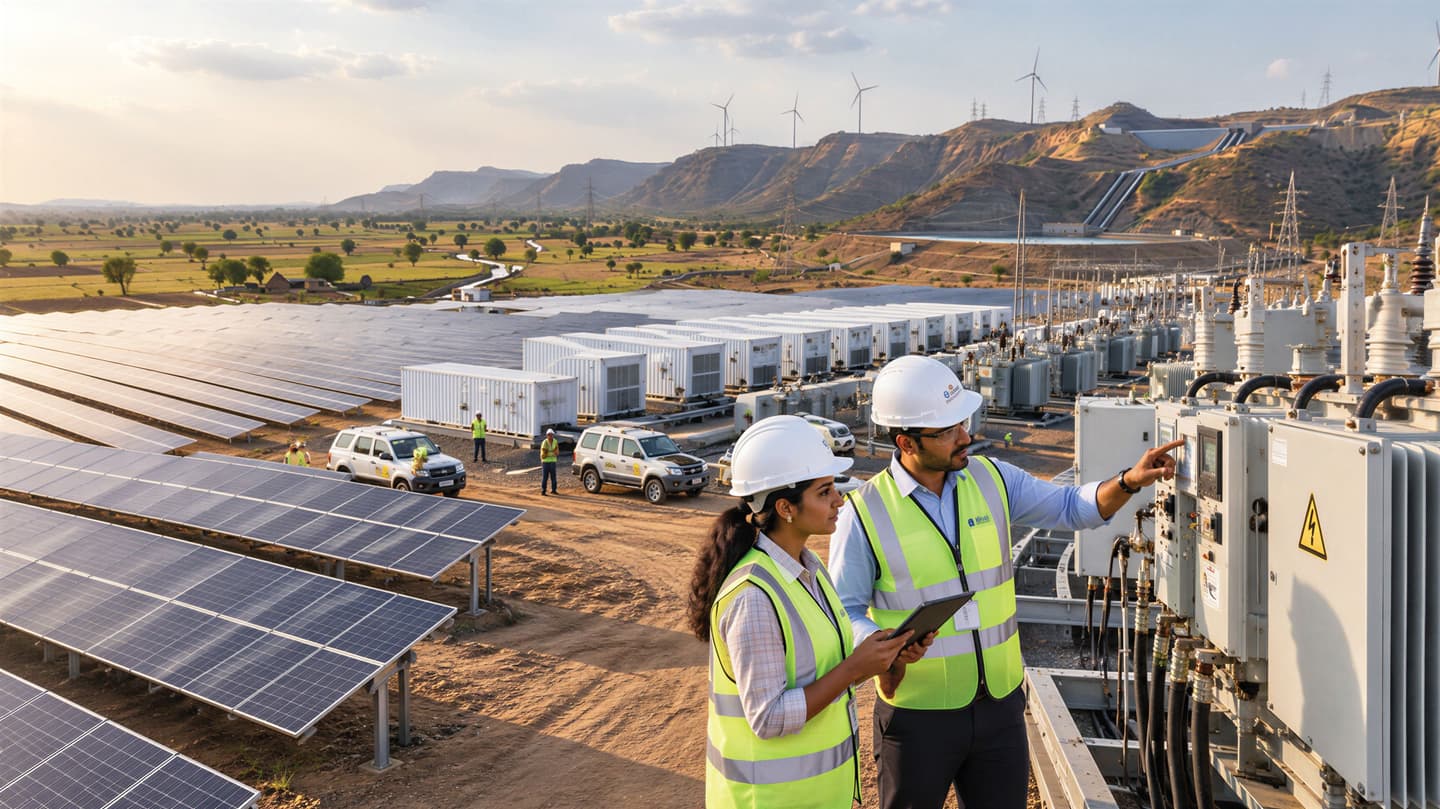
The larger the renewable fleet becomes, the more important timings become. CEA’s planning indicates an energy storage requirement of 82.37 GWh in 2026–27 and 411.4 GWh in 2031–32. The construction pipeline is already substantial. As of June this year, MoP reported that pumped storage projects totalling 15.87 GW or 95.22 GWh were under construction. Battery Energy Storage System (BESS) projects totalling 15.754 GW or 42.53 GWh were also under construction.
An additional 11.747 GW or 38.425 GWh was awarded, and 19.192 GW or 67.574 GWh was under tender. The distinction between power and energy is important here. A battery’s GW rating describes how much power it can deliver at a given moment; its GWh rating describes how long it can sustain that output. The future electricity system will need both. It will also need hydro, nuclear, thermal generation, demand response, forecasting and better market signals. Storage is therefore not a substitute for the grid or generation. It is becoming another layer of the power system.
Coal Remains Part of the Build-out
The growth of renewables has not removed conventional capacity from India’s planning. As of June 30 this year, 47.545 GW of thermal capacity was under construction, including 4.845 GW of stressed projects. Contracts for another 16 GW had been awarded. The same government position showed 12.973 GW of hydro and 8 GW of nuclear capacity under construction.
CEA’s generation planning projects coal capacity of 259.6 GW by 2031–32 with a projected plant load factor of 58.7%
CEA’s generation planning projects coal capacity of 259.6 GW by 2031–32 with a projected plant load factor of 58.7 percent. This points to a mixed electricity system for the coming decades. Renewables will provide an increasing share of generation and storage, hydro will provide flexibility, and nuclear can provide firm low-carbon generation as the planned programme develops. Thermal capacity will continue to play a role in reliability and energy supply.
The transition is therefore not a simple handover from one technology to another, but a long period in which different forms of generation have to operate together while the economics and operating requirements of the system change. That has implications for coal supply, plant utilisation, flexible operation, emissions controls and eventual retirement.
Industry: The harder Half
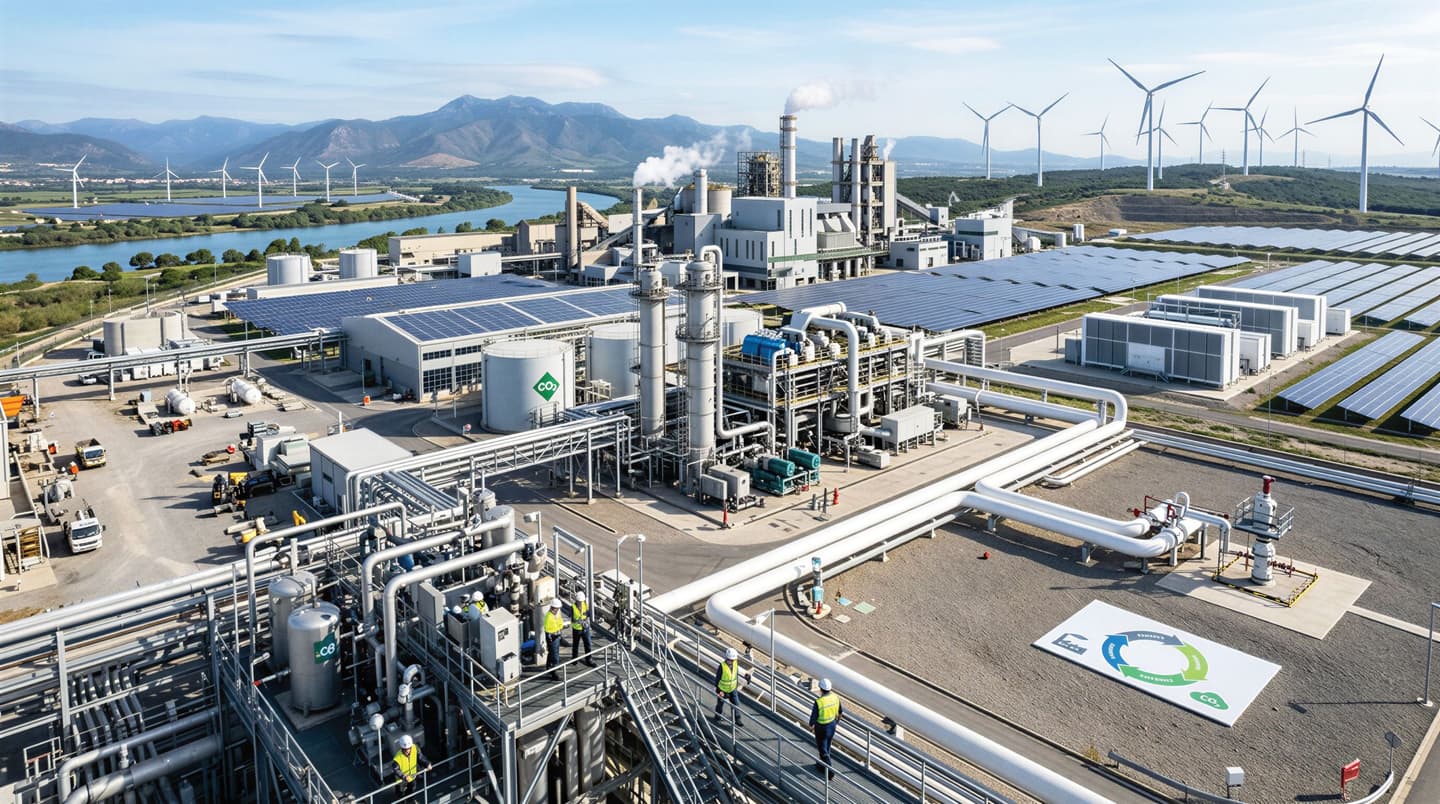
Power sector decarbonisation can be described in gigawatts. Industrial decarbonisation is more competitive because emissions can be embedded in the production process itself. Steel is a clear example. According to the Ministry of Steel, India’s crude-steel production reached approximately 168.4 million tonnes in FY 2025 26, which is an increase of 10.7 percent over the previous year. Finished steel consumption was about 164 million tonnes. The sectors' decarbonisation pathways include energy efficiency, renewable electricity, greater use of scrap, green hydrogen, process changes and, for some applications, carbon capture.
The wider mission has also awarded 8,62,000 tonnes per annum of green hydrogen production capacity and 3,000 MW a year of electrolyser manufacturing capacity
The government has also established a taxonomy for green steel. Certification provides a way of distinguishing lower-emission production from conventional output. But, technology availability is not the same as commercial revenue. Hydrogen-based iron-making, for example, still has to overcome the cost of hydrogen, renewable electricity, equipment and financing. The same problem appears in cement, refining, fertiliser and chemicals. While some emissions can be reduced through electrification, others require low-carbon molecules, besides some arise from industrial processes themselves. There will not be one industrial decarbonisation pathway.
Hydrogen Needs an Industrial Market
India’s National Green Hydrogen Mission (NGHM) targets five million tonnes per annum by 2030. The first large projects are beginning to show where demand could develop. According to MNRE, 30 KTPA of green hydrogen production capacity has been awarded for refineries under the Strategic Interventions for Green Hydrogen Transition (SIGHT) programme under Mode-2B. This includes 10 KTPA at Indian Oil Corporation Ltd (IOCL) Panipat, 5 KTPA at Bharat Petroleum Corporation Ltd (BPCL) Bina, 5 KTPA at Hindustan Petroleum Corporation Ltd (HPCL) Visakhapatnam, and10 KTPA at Numaligarh refinery.
NITI Aayog’s 2026 Net Zero scenario estimates cumulative demand for critical energy-transition materials of around 169 million tonnes between 2025 and 2027
Refineries already consume hydrogen. Replacing fossil-derived hydrogen with green hydrogen therefore creates a market around an existing industrial requirement. The wider mission has also awarded 8,62,000 tonnes per annum of green hydrogen production capacity and 3,000 MW a year of electrolyser manufacturing capacity.
The next test is economics. Can producers supply hydrogen at a price that industry users can absorb? Can renewable electricity, electrolysers, water, storage, transport and offtake contracts be brought together into commercially viable projects? Those questions will determine how far hydrogen moves beyond demonstration projects and selected industry applications.
Building Nuclear as a Long-term Proposition
Nuclear capacity stood at 8.78 GW at the end of August this year, according to MNRE. The government has a roadmap to reach around 22 GW by 2031–32 and 100 GW by 2047. MoP has separately reported 8 GW of nuclear capacity under construction as of June 30 2026, targeted for completion by 2031–32.
Therefore, the programme presents different industrial challenges from solar and wind. Projects have long development and construction periods; financing structures must accommodate that duration, manufacturing capacity must expand, and regulatory capability, fuel security, and specialised skills must develop alongside the physical plants. If 100 GW is to become an operational operating system rather than a policy number, India will need repeatable project development and manufacturing capability. That is as much an industrial proposition as an electricity proposition.
The Transition Has a Material Bill
Every energy technology has a physical supply chain. Solar requires manufacturing materials and equipment, batteries require lithium, graphite, nickel and other minerals, and transmission requires copper, aluminium, steel and specialised equipment. NITI Aayog’s 2026 Net Zero scenario estimates cumulative demand for critical energy-transition materials of around 169 million tonnes between 2025 and 2027, which is about 51 percent above its current policy scenario.
The assessment puts cumulative demand for copper at roughly 66 Mt and graphite at 46.4 Mt, with silicon at about 19 Mt, nickel at 11 Mt and lithium at 5.4 Mt. These are scenario estimates and not government procurement requirements. Their significance lies in the scale of the material system implied by a low-carbon economy. India is pursuing exploration, domestic production, overseas resource access, processing and recycling.
Recycling will become increasingly important as batteries, solar modules and other equipment installed during the first phase of the transition reach the end of their useful lives. The energy transition therefore creates another transition from a linear model of extraction, manufacture, use and disposal towards a more circular material system.
Manufacturing becomes Part of Energy
The transition will require an enormous quantity of equipment. India has developed substantial solar module manufacturing capacity and is building domestic battery manufacturing. The supply chain is broader than cells and modules. Transformers, cables, inverters, power electronics, electrolyser components, battery materials, control systems and specialised nuclear equipment will influence how quickly projects can move from sanction to commissioning.
The objective is not simply to manufacture everything domestically but to reduce exposure to concentrated supply chains for equipment that becomes critical to the operation of the electricity system. Manufacturing policy is therefore becoming part of energy policy.
Land, Water and Skills are Infrastructure Too
The physical transition will encounter constraints that do not appear on a capacity chart. Solar and wind projects require land, transmission requires corridors, pumped storage requires suitable topography, hydrogen production requires electricity and water, and data centres require reliable electricity and cooling. Water will increasingly connect energy and industry policy. The data centre sector illustrates the point.
According to MeitY, cooling technologies including direct-to-chip liquid cooling and closed-loop systems are being adopted to reduce power and water requirements. So will skills. On September 16, the Ministry of Environment, Forest and Climate Change (MoEF&CC) reported that 12 refrigeration and air conditioning manufacturers had adopted 248 ITIs to align technician training with industrial requirements.
The emerging system needs technicians and engineers who can work across high-voltage networks, batteries, nuclear facilities, electrolysers, power electronics, digital control systems, industrial efficiency and recycling. The infrastructure of the Net Zero economy is therefore not limited to concrete, steel and cables, but includes people who can build, operate and maintain the systems.
The States are Where Execution Happens
India’s Net Zero economy will ultimately be built by states. The centre sets national policy and supports major programmes, and states influence land, distribution networks, industrial development, water, local infrastructure and project implementation.
Rajasthan, Gujarat, Tamil Nadu, Karnataka and Andhra Pradesh, among others, are pursuing combinations of renewable generation, manufacturing, storage, hydrogen and industrial development. The important question is not which state has the largest announced target, but it is whether the pieces within each state fit together.
A renewable energy project requires transmission, a hydrogen project requires electricity, water and an industrial customer, and a manufacturing plant requires power, logistics, land, skills and a market. An industry cluster requires both infrastructure and demand. State-level execution will consequently determine how much of India’s national energy architecture becomes operational infrastructure.
Who Pays for the Build-out?
NITI Aayog’s Net Zero scenario estimates cumulative investment requirements of approximately $22.74 trillion between 2026 and 2070. Its modeling estimates around $16.2 trillion of financing availability, implying a modeling financing gap of about $6.52 trillion. For the power sector, the scenario estimates cumulative investment requirements of around $12.33 trillion.
Rajasthan, Gujarat, Tamil Nadu, Karnataka and Andhra Pradesh, among others, are pursuing combinations of renewable generation, manufacturing, storage, hydrogen and industrial development
The financing problem is also more complicated than the headline numbers suggest. A transmission project has a different risk profile from a battery project. A nuclear plant has a different construction and financing cycle from a solar project. Industrial decarbonisation may require concessional finance, guarantees or market mechanisms that create demand for low-carbon products.
Discoms balance sheets present another set of constraints. Industrial companies must decide whether cleaner production can generate acceptable returns. Consumers ultimately experience part of the system’s cost through tariffs and other charges. The transition therefore requires not only capital but financing structures suited to technologies and risks.
2030: Construction Test
India’s 2030 objectives are often discussed as capacity targets. However, a more revealing test will be physical. Is transmission keeping pace with generation? Has storage moved from tender documents into dependable operation? Can distribution networks handle EV charging and rooftop generation? Can domestic manufacturers supply the equipment developers require? Can hydrogen projects produce at commercially useful prices? Can industrial companies cut emissions without losing competitiveness? Can critical mineral processing and recycling operate at a meaningful scale? These are execution questions, which cannot be responded to by another target.
2035: System Test
India’s updated Nationally Determined Contribution for 2031–35 raises three quantitative targets. According to the Union Cabinet’s March 2026 approval, India will seek to reduce emissions and intensity of GDP by 47 percent from the 2005 level by 2035, achieve 60 percent cumulative installed electricity capacity from non-fossil sources, and create carbon sink of 3.5-4 billion tonnes of carbon dioxide equivalent through forest and tree cover by 2035. The numbers show why the transition cannot be reduced to electricity generation. Power is central, but industry, transport, buildings, land use, materials and carbon management all sit within the broader emissions picture.
2047: The Scale Test
By 2047, the infrastructure being built today will either have become an integrated industrial system or exposed the limits of fragmented development. The nuclear roadmap envisages 100 GW. Electricity demand will be substantially higher. Storage will have to operate at a much greater scale. Industrial consumers will increasingly require low-carbon electricity and molecules. The first generation of batteries, solar modules and other transition assets will begin reaching.
According to the Union Cabinet’s March 2026 approval, India will seek to reduce emissions and intensity of GDP by 47 percent from the 2005 level by 2035
2070: The Residual Emission Test
The country’s Net Zero commitment is not simply an electricity target. While some emissions can be reduced through efficiency and electrification, others can be eliminated through low-carbon fuels and process changes, and some will remain difficult to avoid. This is where carbon management, natural sinks and other forms of removal enter the picture. India’s approach therefore has to distinguish between emissions avoided, reduced, captured and absorbed. The distinction matters. A carbon sink cannot substitute indefinitely for reducing emissions at source.
India has set the direction. The next test is execution. The target is 2070. The build-out cannot wait.