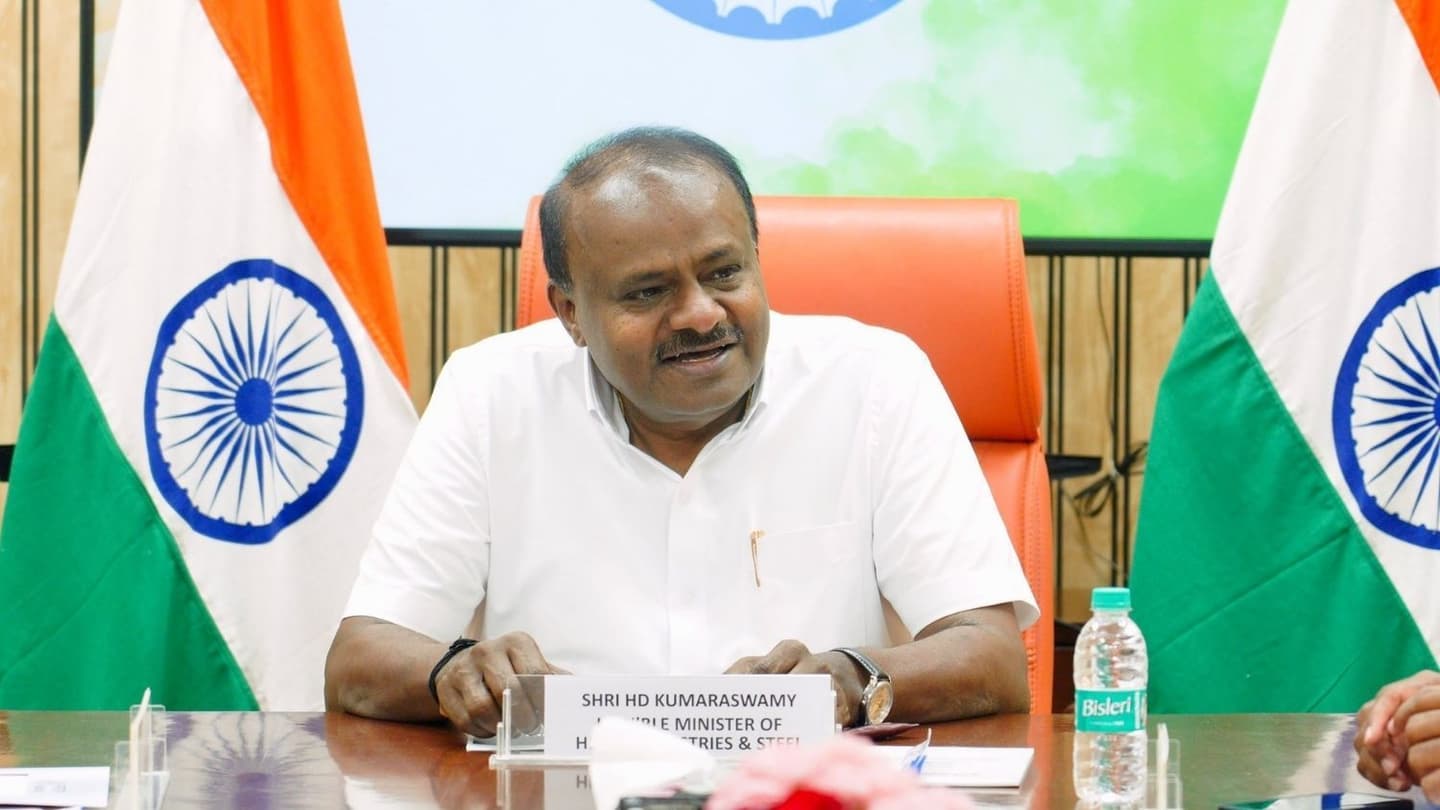
Union Minister for Steel and Heavy Industries H D Kumaraswamy stated that national strength in today's evolving global landscape depends on manufacturing resilience and tech supply chains rather than simple resource access. ANI reported on Thursday. He added that energy security has undergone a fundamental transformation
In his keynote speech at "Energy Security & Supply Chains" at the 7th CII International Energy Conference & Exhibition in New Delhi, the minister laid emphasis on industrial capability and energy security are now fundamentally linked.
"Today, under the visionary leadership of Hon'ble Prime Minister Narendra Modi, India's energy security is no longer defined solely by access to energy resources. It is increasingly determined by our ability to manufacture, innovate and build resilient supply chains for the technologies that will power the future," the Minister said.
He further noted that industrial priorities saw a shift worldwide due to the recent geopolitical disruptions and competition over critical minerals. He elaborated that India is responding by creating indigenous capabilities and supporting the vision of Aatmanirbhar Bharat while being connected to the global value chains.
He stated,"India should not merely become one of the world's largest consumers of clean energy technologies. India must become one of the world's leading producers of the equipment, materials and technologies that will drive the global energy transition,"
Furthermore, he emphasised the importance of Heavy Industries and Steel adding that steel is the key pillar of the clean energy transition, pointing out that renewable infrastructure, battery factories, and hydrogen projects rely directly on steel.
Kumaraswamy observed that India is well positioned to satisfy its growing domestic demand while meeting international requirements for sustainable steel. He also confirmed the national goal of meeting 300 million tonnes of steelmaking capacity by 2030 through eco-friendly practices.
The Minister elaborated key initiatives causing this industrial shift such as the Production Linked Incentive (PLI) Scheme for Advanced Chemistry Cell Batteries, committing Rs 18,100 crore for 50 GWh of battery capacity and the PM E-DRIVE Scheme with an outlay of Rs 10,900 crore to build complete electric mobility ecosystems. He also highlighted the Rs 7,280 crore scheme for manufacturing Sintered Rare Earth Permanent Magnets to secure critical mineral supply chains.
Furthermore, he insisted that industry, academia, and financial institutions collaborate with the government to boost national self-reliance and support long-term economic development goals.