India will be the second country in the world operating a commercial-level fast breeder reactor, as the country has achieved a significant milestone by developing an indigenously designed 500 MWe Prototype Fast Breeder Reactor (PFBR), Union Minister Dr Jitendra Singh said on Monday.
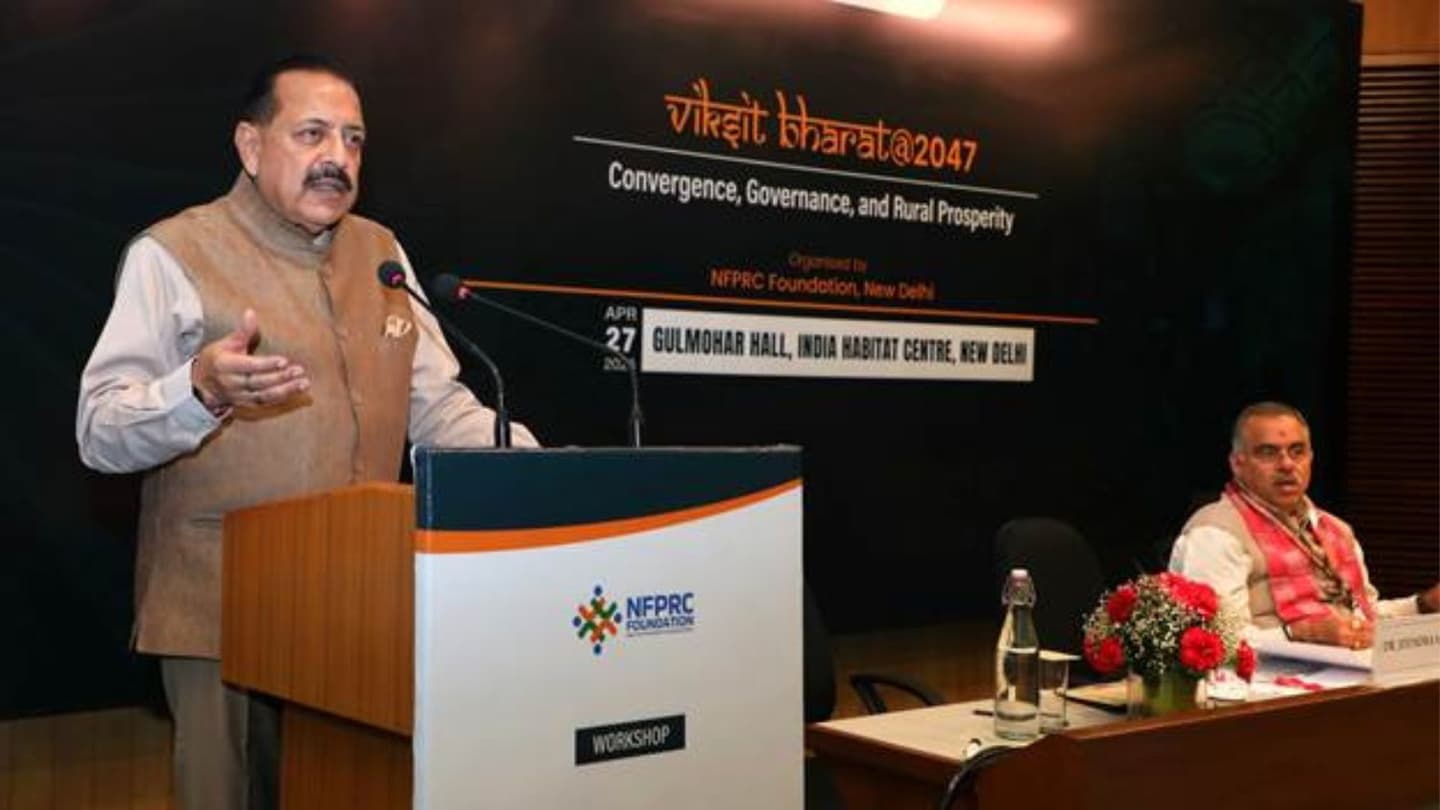
Addressing a workshop of MPs and MLAs on ‘Small Modular Reactors’, Dr Singh said that after Russia, the country will be the world’s second nation to operate such a reactor after the PFBR at Kalpakkam, Tamil Nadu, achieved first criticality on April 6, 2026.
Developed by the Indira Gandhi Centre for Atomic Research (IGCAR) and built by BHAVINI, this reactor marks the start of the second stage of India's three-stage nuclear power program, using uranium-plutonium mixed oxide fuel to produce more fuel than it consumes. With this achievement, India moves toward leveraging its vast thorium reserves in the third stage of its nuclear strategy. Once fully operational, India will be the second country in the world, after Russia operating a commercial-level fast breeder reactor, he added.
Dr Singh further explained that the significance of this achievement lies in the fact that with this, India moves toward leveraging its vast thorium reserves in the third stage of its nuclear strategy.
Currently, Russia is the only country operating commercial fast breeder reactors (FBRs), with India in the advanced stage of commissioning its own. While several nations have historically developed or operated experimental fast reactors—specifically USA, UK, France, Japan, Germany and China—most of these programmes are currently shut down.
Referring to recent developments in India’s three-stage nuclear programme, the minister said that the successful establishment of PFBR marks a significant step towards the second stage of the programme, enabling more efficient utilisation of nuclear fuel and paving the way for future use of India’s vast thorium reserves.
The Minister further stated that nuclear energy will play a crucial role in India’s clean energy transition and long-term sustainability goals, particularly in achieving the target of 100 GW nuclear power capacity by 2047.