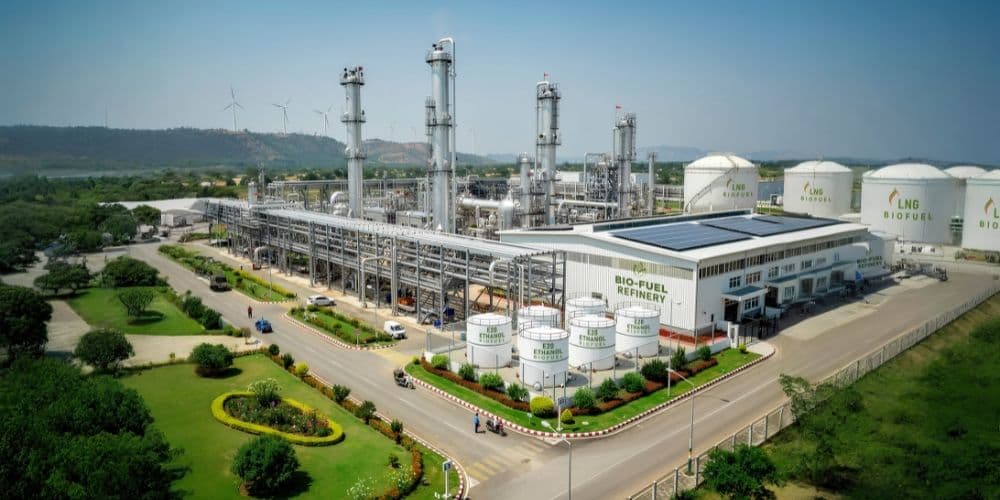
Agradual but visible shift in priorities is visible in the downstream sector in India. A deep analysis of varied perspectives across policymakers, experts and industry captains reveal that refineries have begun redefining how they will grow and operate. The strategy includes diversification beyond fuels, efficiency-led emissions reduction and greater use of technology to extract value from existing assets.
Broadening Product Base
A push to move beyond capacity-led growth towards a broader strategic redefinition of refining and petrochemicals is a clear policy-driven trend emerging in India’s downstream sector. Some policymakers reason that adding multiple new refineries is a sustainable response to a global environment which witnesses the closure of refineries and a shift in demand patterns, especially for middle distillates.
This underscores the country’s paradoxical position as a major refining hub in spite of limited domestic hydrocarbon resources and the need for deeper structural thinking. Besides, the gap between crude processing and the economy’s requirement for a variety of chemicals, pharmaceuticals and industrial inputs signals a trend, where downstream is being encouraged to diversify beyond a narrow product base dominated by Polyethylene (PE), Polypropylene (PP) and Polyvinyl Chloride (PVC). This stresses redefining downstream as a supplier of varied industrial inputs, aligned with competitiveness and long-term resilience rather than fuel volumes alone.
Embedding Decarbonisation
A key trend emerging is the integration of decarbonisation into daily operation of refining assets. Refineries, in their quest to reduce emissions, are pursuing measures. This includes refinery benchmarking, reducing steam and fuel consumption, improving catalyst performance and deploying differentiated fuels and enzymatic technologies.
Many industry observers emphasise that while sustaining refinery operations, efforts are on ensuring cumulative efficiency improvements that lower emissions.
This approach indicates a downstream strategy that outlines addressing decarbonisation using operational practices alongside longer-term transition goals.
Pursuit for Lower Carbon Intensity
Rather than sunset infrastructure, refineries are being treated as long-life assets, as oil demand is expected to rise beyond 2040. Some refineries have begun layering electrification, renewable power, biofuels, hydrogen and carbon-capture initiatives onto existing operations. The focus is on progressively reducing emissions intensity by maintaining scale and reliability. This reflects an evolutionary rather than disruptive shift in India’s refining landscape.
Towards Value Optimisation
Perceived as a sunset industry, refining is now being framed as an industry that is into a value-optimised, integrated industrial system. To achieve top-quartile operational performance and improve system-level efficiency, the downstream competitiveness is increasingly linked to maximising value per molecule. Alongside fuel diversification, greater integration of refining with petrochemicals and fertilisers reflects an effort to strengthen resilience amidst global refinery closures and shifting energy priorities. Instead of retreat or wholesale replacement of existing assets, some industry players view that the emphasis is on adaptability and efficiency as the basis for long-term relevance in a low-carbon economy.
An Integrated, Tech-driven Approach
Another trend is noteworthy: India’s downstream sector is shifting from fuel-centric refining towards an integrated, technology-led value platform. Going beyond fuel volumes, many players foresee growth around refining–petrochemical integration, higher-value chemicals and improved operational efficiency. They stress on plant redesign, process optimisation, automation and digital tools, including Artificial Intelligence (AI) used for predictive maintenance, energy optimisation and real-time process control. These reveal a strategy that focuses on obtaining greater value from existing assets from efficiency and integration, instead of depending only on scale expansion.
Cumulatively, the trends signal an industry gearing up to devise a new growth model without deviating from its central role of refining. While capacity remains vital, competitiveness increasingly relies on efficiency, integration and emission performance. The downstream sector seems to be on the path to strengthening resilience and relevance by changing incrementally rather than any radical structural disruption.