Karnataka is witnessing a phase in which its renewable energy sector is transitioning, which is arguably defined more by operational scale and less by capacity announcements. The state’s total renewable capacity stands at 26,138.62 MW that includes large hydro, as of January 2026, according to the Ministry of New and Renewable Energy (MNRE).
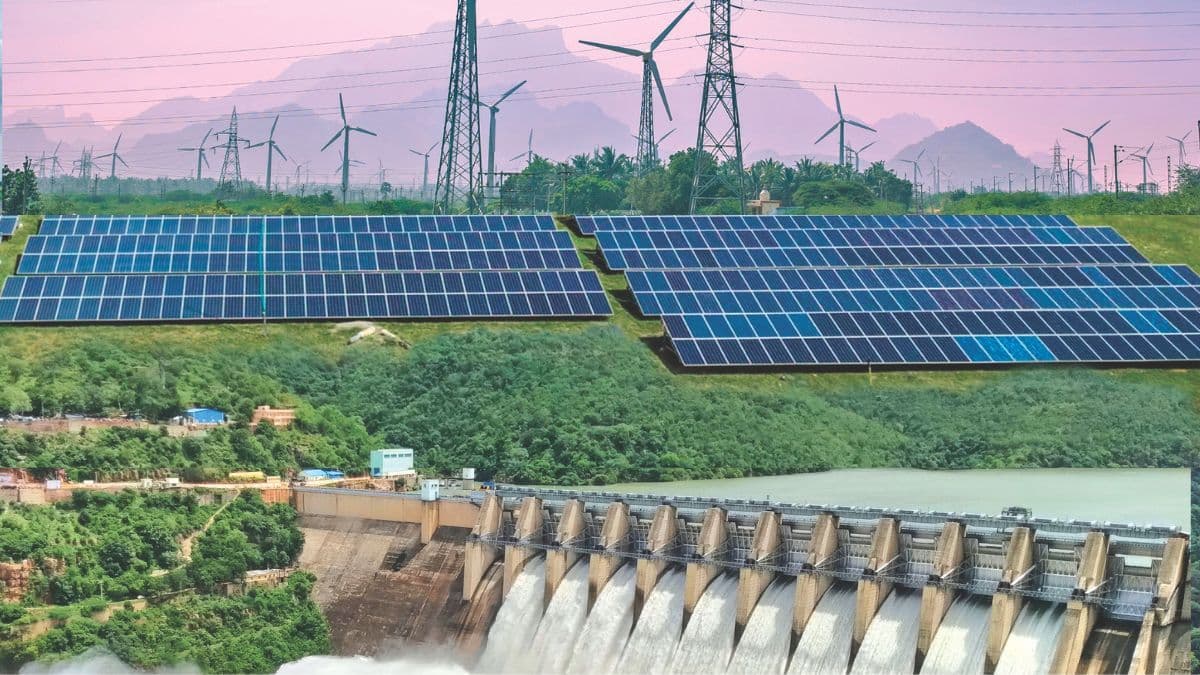
The energy portfolio of Karnataka shows diversification across technologies. The solar stands at 10,824.00 MW; wind 8,423.64 MW; small hydro 1,284.73 MW; and large hydro: 3,689.20, positioning Karnataka among the country’s leading renewable states in installed capacity. However, it is generation performance and system behaviour that are a more telling indicator of integration maturity.
Karnataka registered 4,824.39 MU of renewable generation in January 2026, compared with 4,568.68 MU in January 2025, as per the Central Electricity Authority’s (CEA) Monthly Renewable Energy Generation Report for January 2026. Cumulative renewable generation between April 2025 and January 2026 reached 49,624.69 MU, up from 40,061.30 MU during the corresponding period of the previous year. This affirms that Karnataka is not only adding renewable capacity but converting it into measurable electricity output at scale.
Wind and Solar: A Diversified Output Profile
The central pillar of Karnataka’s renewable base remains wind. In January 2026, wind generation stood at 1,376.50 MU, vis-à-vis 1,085.67 MU in January 2025. Cumulative wind generation from April 2025 to January 2026 totalled 16,546.77 MU.
Solar generation in January 2026 reached 1,678.06 MU, with a cumulative output of 14,420.68 MU during the April–January period. This relatively comparable scale of wind and solar output shows that no single resource dominates the state’s renewable profile. Instead, the state’s system benefits from two large variable sources operating within the same grid. A diversified mix between wind and solar can moderate extreme intraday variability.
Compared with systems where one resource overwhelmingly shapes output patterns, a diversified mix between wind and solar can moderate extreme intraday variability. While both resources are inherently intermittent, differences in seasonal and diurnal behaviour may partially offset one another.
Regional and National Positioning
In the southern region, total renewable generation in January 2026 was 11,357.77 MU of which Karnataka’s contribution was 4,824.39 MU, about 42 percent. In pan-India, renewable generation, including large hydro, in January 2026 was 33,895.22 MU. Karnataka’s share was therefore about 14 percent of total monthly renewable generation. This underscores the state’s importance within both regional and national renewable supply.
A high share of regional generation increases the significance of coordination through scheduling, transmission planning and real-time dispatch frameworks. As renewable penetration rises, regional balancing and inter-state flows become more central to grid management.
Hydro as Structural Flexibility
Large hydro capacity in Karnataka stands at 3,689.20 MW. While the CEA generation report does not detail operational ramping behaviour, hydro resources are inherently dispatchable compared with wind and solar. Dispatchable hydro capacity provides flexibility within a high-renewable system. It can support balancing during periods of renewable variability and contribute to maintaining grid stability as renewable injection fluctuates.
Growth and Integration Dynamics
Cumulative renewable generation for the April 2025-January 2026 period rose to 49,624.69 MU, compared with 40,061.30 MU during April 2024-January 2025, according to CEA data.
As renewable generation grows, integration shifts from being a planning consideration to an operational priority. Forecasting accuracy, scheduling discipline and system responsiveness assume greater importance when renewable output forms a significant share of supply.
Rising renewable penetration typically necessitates enhanced forecasting of both generation and demand, improved coordination through State Load Despatch Centres and adherence to regulatory scheduling frameworks. Integration at this scale depends not only on installed megawatts but on system-level optimisation.
Storage and Emerging Flexibility Options
The installed capacity and generation data confirm renewable scale but do not directly quantify storage deployment within Karnataka. In power systems globally, higher renewable penetration is commonly accompanied by the introduction of storage solutions.
Battery energy storage systems can assist with short-duration balancing and peak management, and pumped hydro storage can provide longer-duration flexibility. Karnataka’s existing hydro base may offer structural alignment for pumped storage expansion alongside other storage technologies.
Market Alignment and Cost Signals
The CEA report records renewable generation volumes but does not provide direct data on price movements. However, renewable scale influences market dynamics through supply patterns.
Periods of elevated solar output may coincide with lower marginal prices in competitive power markets, while evening peaks can attract higher prices. Participation in day-ahead and real-time markets, combined with accurate scheduling, can support efficient price discovery and system optimisation as renewable share increases.
Renewable Share and Decarbonisation Pathways
Installed renewable capacity of 26,138.62 MW (as of January 2026) and cumulative renewable generation of 49,624.69 MU (April 2025-January 2026) indicate that renewables form a substantial and expanding component of Karnataka’s energy mix.
An increasing renewable share contributes to the diversification of electricity supply and supports decarbonisation objectives by reducing fossil fuel dependence during periods of high renewable generation. Maintaining reliability alongside emissions reduction requires calibrated coordination between renewable, hydro and conventional resources.
The Next Phase
The January 2026 data portray a renewable system operating at a considerable scale, with sustained year-on-year growth in output and significant regional contribution.
Looking ahead, integration is likely to focus on continued diversification between wind and solar resources, strengthening of transmission infrastructure, deployment of storage technology to enhance flexibility, and advancement of forecasting and digital dispatch systems. These developments align with broader national renewable expansion and decarbonisation pathways.
Karnataka’s renewable trajectory, as per MNRE and CEA, reflects both scale and sustained growth. With more than 26 GW installed and nearly 50,000 MU generated over ten months, the state occupies a prominent position within India’s renewable landscape. The quantitative record is clear.
As renewable share continues to rise, the central task is system optimisation: aligning variable generation with dispatchable flexibility, strengthening grid coordination and integrating emerging storage pathways.
In this sense, Karnataka’s renewable journey is defined not only by megawatts added, but by the management of scale within an evolving power system architecture.