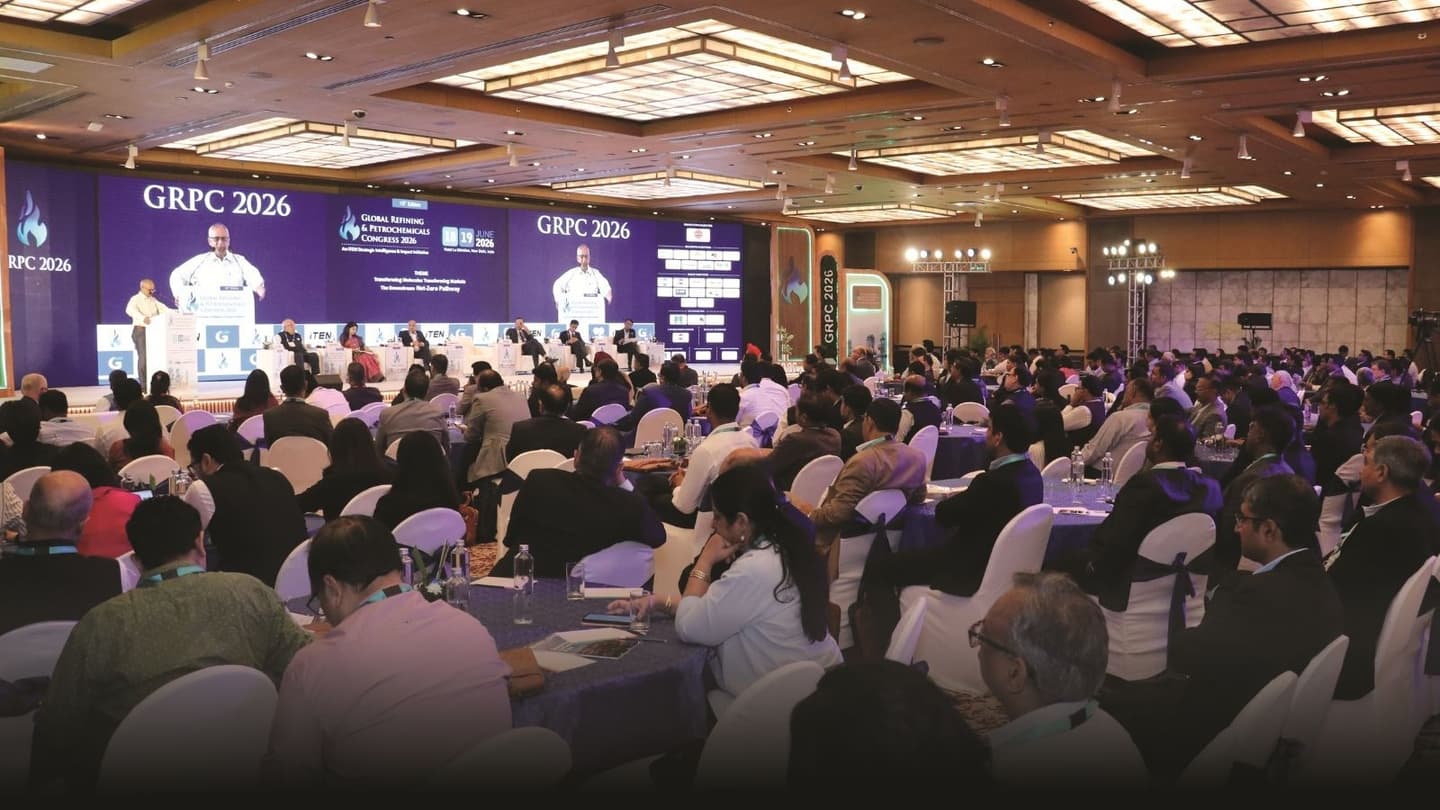
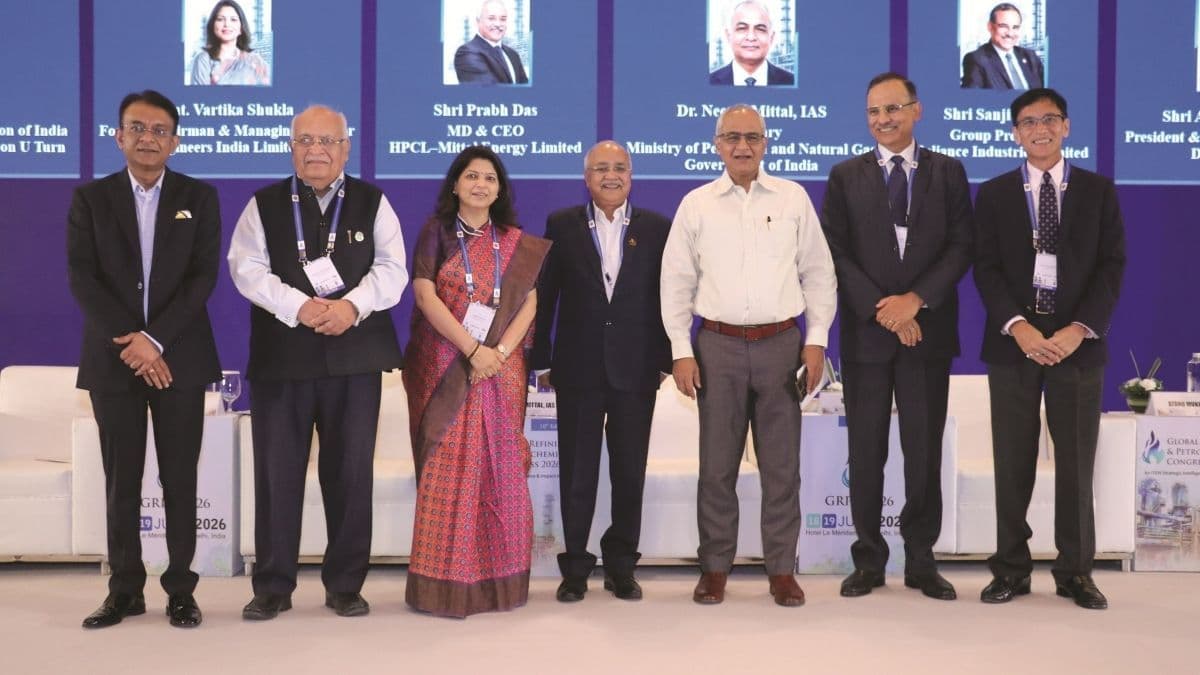
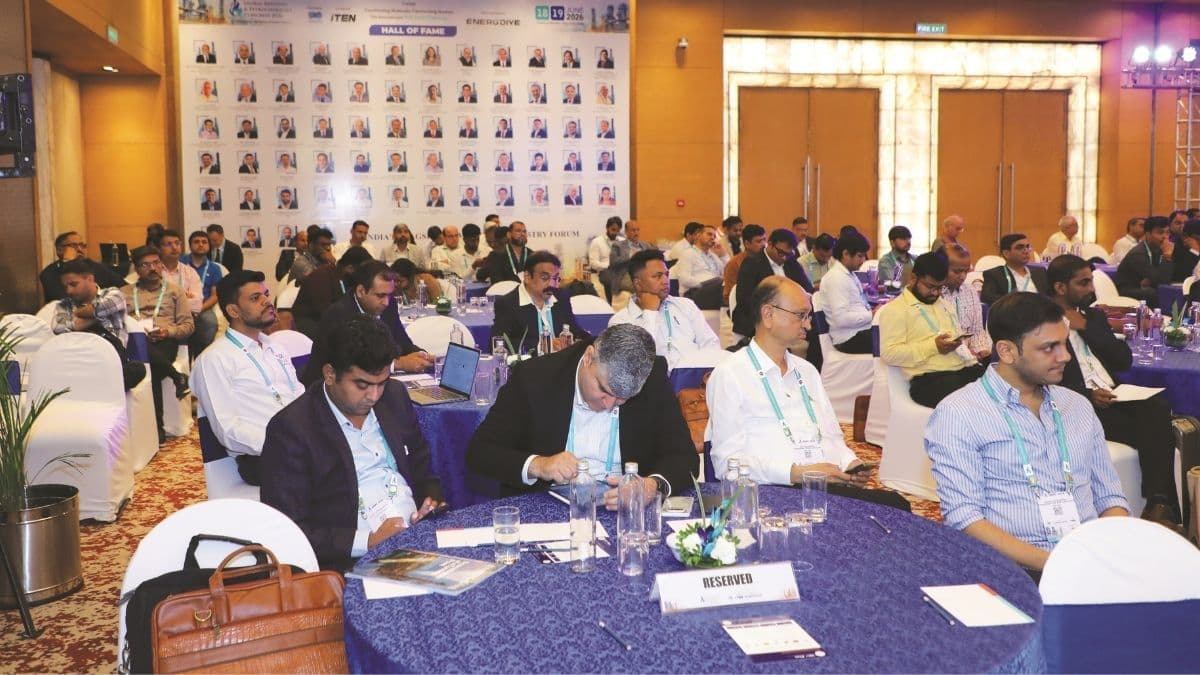
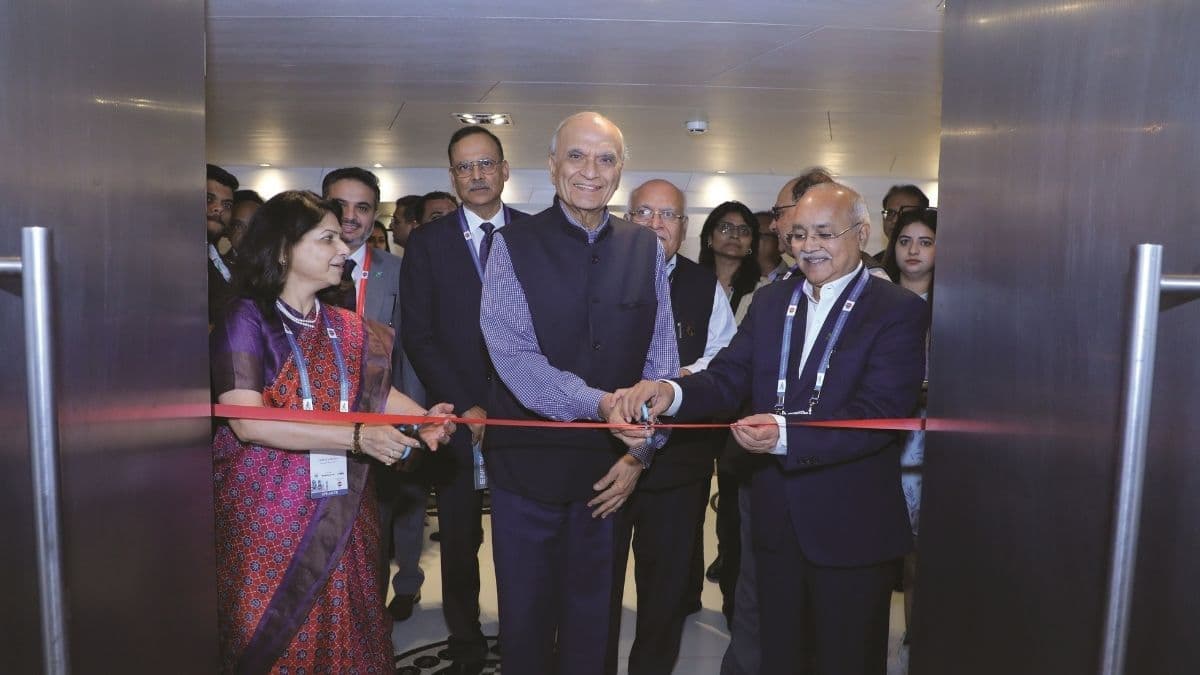
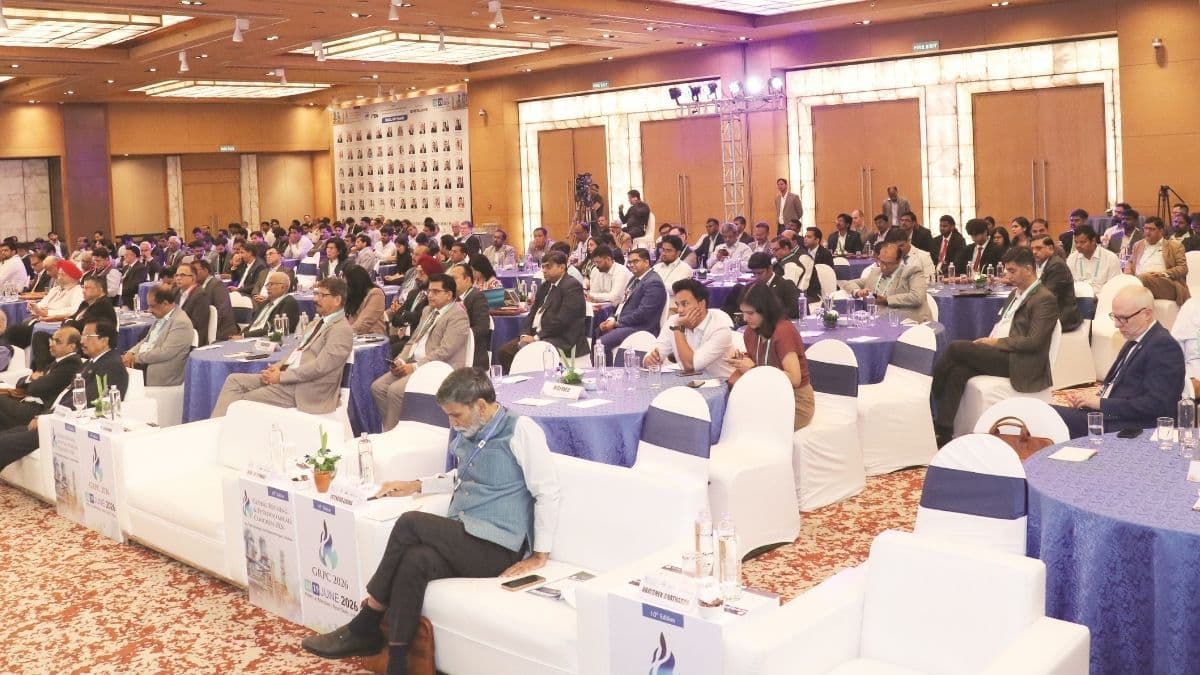
At the Global Refining & Petrochemicals Congress (GRPC) 2026 held on June 18-19, a cross-section of India's downstream leadership — refiners, policymakers, technology providers and academics — converged on a single message: net zero cannot come at the cost of energy security, affordable growth or industrial competitiveness. Instead, the sector is betting on a portfolio of pathways, from AI-driven optionality to carbon-as-a-utility, to double capacity while decarbonising.
Energy Security Has a Price Tag
Dr Neeraj Mittal, Secretary, the Ministry of Petroleum and Natural Gas (MoPNG) grounded the Net Zero conversation in a recent supply shock through the Strait of Hormuz, through which roughly 90 percent of India's imported Liquified Petroleum Gas (LPG) — itself about half of domestic LPG supply — normally flows.
He detailed the scale of the response: crude sourced from 41 countries, LPG production raised from about 34 to 54 TMT per day, delivery reliability improved from 80 percent to over 95 percent, alongside large-scale anti-black-marketing enforcement. Mittal was candid about the cost: Oil Marketing Company losses near ₹1 lakh crore in a single quarter, and a comparable annual burden on the government's budget from an excise cut. His conclusion was that Net Zero must be pursued alongside energy security, farmer incomes and manufacturing competitiveness, not as a goal isolated from them through multiple fuels, multiple feedstocks and greater use of biogenic carbon.
Stable Instability
Vartika Shukla, former CMD, Engineers India Ltd described the present moment as one of "stable instability," where commodities, policies and resources worldwide have become weaponised even as nations paradoxically turn inward. She cited India's power grid absorbing a record peak demand above 270 GW last month, met partly by a 34 percent renewable share, as proof of the oil and gas sector's role as the economy's shock absorber. Shukla noted the current oil-supply shock, though comparable to the 1970s crisis, was cushioned by higher renewables penetration and a reordered global crude market, with the US overtaking Russia and Saudi Arabia in supply and the UAE exiting OPEC. She highlighted India's refining capacity near 258 million tonnes (heading past 300 million), ethanol capacity already covering over 70 percent of E20 blending needs, and diversified LPG sourcing for roughly 33 crore households.
Zero must be pursued alongside energy security, farmer incomes and manufacturing competitiveness, not as a goal isolated from them through multiple fuels, feedstocks and greater use of biogenic carbon
She then outlined four transformation pivots: expanding and modernising refining capacity for diverse crude slates and deeper petrochemical integration; strengthening capital formation through green bonds and blended finance; backing proven, forward-looking technologies via new business models; and improving project implementation through stronger contracting capacity and AI-based monitoring.
No Single Technology will do the Job
Prof KK Pant, Director, IIT Roorkee discarded the idea of a single dominant route to decarbonised chemicals. He argued that refiners must draw on electrochemical and thermochemical routes together, layering in multiple feedstocks rather than betting on one.
With India's refining capacity expected to grow from roughly 300 million to 500 million tonnes by 2040, he framed the core engineering challenge around two long-standing principles: atom efficiency and minimising the E-factor, the waste generated per unit of product.
Prof Pant pointed to India's coal reserves as a feedstock worth folding into the transition through gasification routes such as coal-to-hydrogen, alongside a growing role for biomass, including torrefied biocoal blended with coal. He called for miniaturised, process-intensified reactor design supported by AI-assisted molecular simulation. Also, he stressed that none of this happens without sustained R&D investment, academia-industry “Living Lab” partnerships, and multidisciplinary young talent from India's technical institutes.
Green Hydrogen's Cost Problem and the Case for Low-Carbon Instead
Hydrogen Association of India (HAI) president Dr RK Malhotra reframed the hydrogen debate, arguing the sector should target low-carbon hydrogen broadly, a category that could include blue hydrogen produced within a strict carbon dioxide emissions ceiling, rather than chasing green hydrogen exclusively. Cost, he said, remains the central barrier to green hydrogen scaling domestically, even as India's production costs become more competitive globally.
India’s coal reserves as a feedstock worth folding into the transition through gasification routes alongside a growing role for biomass, including torrefied biocoal blended with coal
He expects near-term demand to concentrate in hard-to-abate sectors such as steel, cement, fertilizer and refining, driven partly by regulatory pressure such as Europe's Carbon Border Adjustment Mechanism (CBAM) and India's own Carbon Credit Trading Scheme. On carbon management, Dr Malhotra expressed a clear preference for Carbon Capture and Utilisation (CCU) over pure storage, arguing that converting captured carbon dioxide into chemicals or fuels can offset capture costs and build a genuine market for carbon-derived products. He also mentioned biofuels momentum, including moves toward 25 percent ethanol blending as a more immediately deployable lever.
Transport's Multiplicity Problem
Dr Reji Mathai, Director, Automotive Research Association of India (ARAI) brought the conversation to vehicles, describing the core challenge as multiplicity: refiners, OEMs and fleet operators must simultaneously handle a widening mix of fuels and powertrains, each with different logistics and infrastructure needs. Electric Vehicle (EV) adoption, he noted, is progressing unevenly by segment — fastest in three-wheelers, at around 43 percent, slower in two-wheelers, and slowest in four-wheelers and heavy trucks, where battery weight remains a major constraint.
Companies cannot manage what they cannot measure, and product-level carbon foot printing today is still largely a manual, consultant-driven exercise...
He pointed to tightening Corporate Average Fuel Economy (CAFE) targets, moving from nearly 112 g/km toward 88–89 g/km as a key lever forcing fleets towards a blended mix of low-emission and EVs. Dr Mathai argued that long-term, coordinated roadmaps are essential so OEMs and fuel suppliers can plan infrastructure together, citing an early proposal for a Mumbai–Delhi hydrogen refuelling corridor.
Digital as the Missing Infrastructure Layer
David Seabrook, Director, Digital Sustainability, SLB, argued that digital tools are a precondition for decarbonising at all, not optional supporting infrastructure. His central point: companies cannot manage what they cannot measure, and product-level carbon foot printing today is still largely a manual, consultant-driven exercise — far too slow for firms managing hundreds or thousands of products. Automating carbon foot printing, he said, is what allows companies to establish a real baseline and track the impact of feedstock or energy-source changes as they decarbonise.
Using What is Already Built: Co-Processing and Catalysis
Mukund Balachandran, Senior Technical Service Manager, WR Grace, representing the catalyst and technology side of the industry, argued that the fastest near-term lever is not new plants but better use of existing assets. Co-processing agricultural waste, pyrolysis oil and plastic-derived pyrolysis oil through existing FCC and hydroprocessing units, he said, needs minimal new investment and can start displacing crude-derived feedstock immediately. He pointed to advances in high-activity ZSM-5 catalysts for ethylene and propylene selectivity, and to new ebullated-bed hydroprocessing capacity coming online in Visakhapatnam, as evidence the domestic catalyst and technology ecosystem is already moving in this direction.
SAF and the Circular Economy
Sarvesh Kumar, Executive Director (HT&TS) detailed Indian Oil's parallel push on Sustainable Aviation Fuel (SAF) and circular economy pathways for used lubricating oil. With India targeting 1 percent SAF blending by 2027 rising to 5 percent by 2030, Indian Oil has identified feedstock sources, trained used-cooking-oil suppliers, and signed an offtake agreement with an airline for a 30 KTA co-processing unit, expected to meet roughly half of India's 2027 mandate on its own. Longer term, the company is pursuing both a grassroots HEFA unit and an alcohol-to-jet (ATJ) route using ethanol, since feedstock availability alone cannot support the scale SAF will eventually require.
Net Zero is an Ecosystem Problem, Not a Company Problem
Anshu Sharma, VP, Petrochemical Operations and Maintenance, HMEL, made the case that no single company can build the infrastructure decarbonisation requires alone. Hydrogen, he argued, is not a technology challenge but an ecosystem challenge, requiring renewable power developers, electrolyser manufacturers, refiners, fertiliser and steel companies to move together. Sharma extended the same logic to shared carbon dioxide pipelines and storage hubs, and to circular-economy feedstock collection, where municipal bodies, waste managers and recyclers all need to participate.
India’s real opportunity is not refining advantage but defining advantage, the ability to combine crude-source optionality, refining-asset optionality and demand optionality using AI-driven intelligence to build resilience
Reframing “Refining Advantage” around Optionality
Atanu Mukherjee, President & CEO, Dastur Energy, offered a structural lens, arguing India's real opportunity is not refining advantage but what he called “defining advantage”, the ability to combine crude-source optionality, refining-asset optionality and demand optionality using AI-driven intelligence to build resilience. He was explicit that decarbonisation only works if it is economically self-sustaining: margin-preserving carbon management, not decarbonisation pursued in isolation from cost. On CCUS specifically, he argued capture infrastructure should be treated as a regulated utility — similar to power or water — rather than something every individual refinery builds and operates itself, since that is what will let carbon capture scale.
From Oil Downstream to Energy Downstream
Sanjiv Singh, Group President, Reliance Industries Ltd, traced the sector's evolution from simple, protected refineries decades ago to today's integrated, globally competitive refining-petrochemical complexes, and argued the next shift is definitional: downstream companies need to think of themselves as energy companies, not oil and gas companies. That reframing brings molecules and electrons together — deeper integration with renewable and other power sources — alongside multiple feedstocks, AI-driven operating models across the full value chain, and carbon management as a core capability rather than an add-on.
India’s energy demand is set to double by 2045, requiring roughly 50 million tonnes of oil-equivalent in additional energy every year, a gap too large for renewables, gas, coal or nuclear to fill alone, meaning all sources will be needed simultaneously
The Real Threat is not Diesel — It is Petrol and Petrochemical Oversupply
Prabh Das, MD & CEO, HPCL-Mittal Energy Ltd, said that India's energy demand is set to double by 2045, requiring roughly 50 million tonnes of oil-equivalent in additional energy every year, a gap too large for renewables, gas, coal or nuclear to fill alone, meaning all sources will be needed simultaneously. But he challenged the industry's usual focus on diesel decline, arguing that petrol (motor spirit) is the more difficult problem given accelerating EV and ethanol-blend penetration, and that petrochemicals, where global capacity is set to outstrip demand by tens of millions of tonnes as China nears self-sufficiency — pose an even bigger structural risk. His prescription: capture value from lower-value cracker streams rather than selling them as fuel, push refinery efficiency to global-best levels, and lean on younger talent to accelerate AI adoption.
The summit converged on a shared conviction: India's downstream sector will not reach Net Zero through any single fuel, feedstock or mandate, but through the speed and coordination with which multiple pathways are deployed together. Recurring threads ran through nearly every talk: treat carbon capture as shared infrastructure rather than a per-company burden, measure before you decarbonise, protect margins while cutting emissions, and prepare for a petrochemical market becoming more crowded even as India's own energy demand keeps climbing. The two-day conference was organised by The Energy & Climate Initiatives Society (ENCIS), co-organised by ITEN Media Pvt Ltd, with ENERGDIVE as the official host publication.