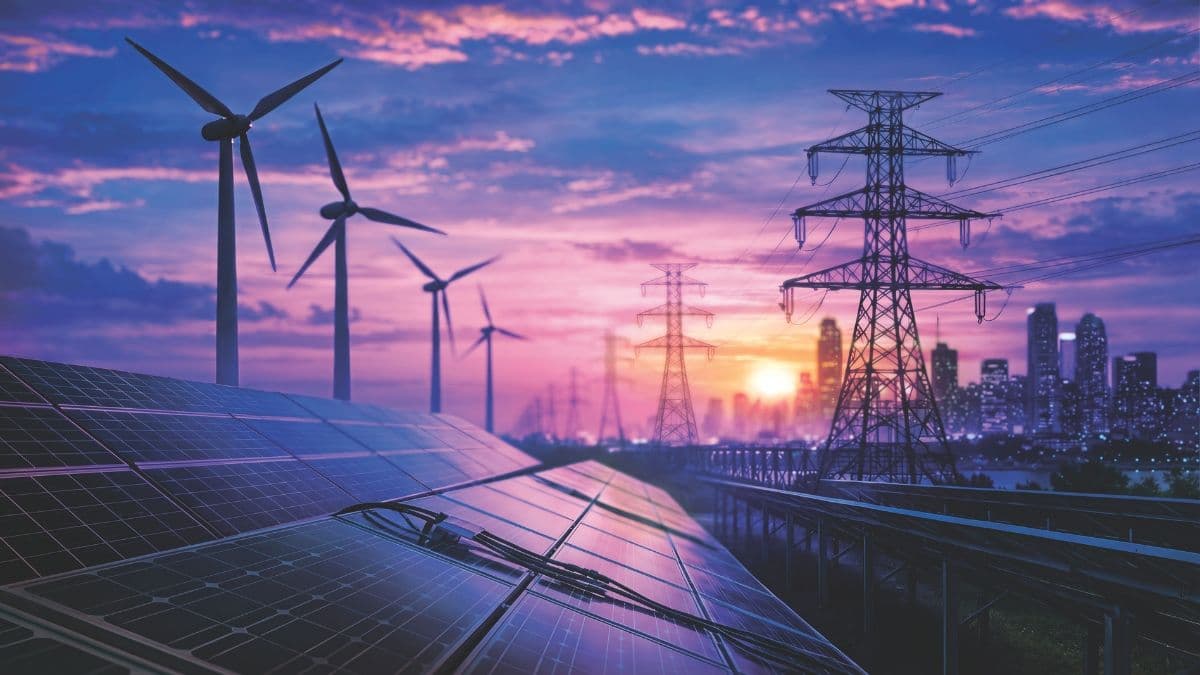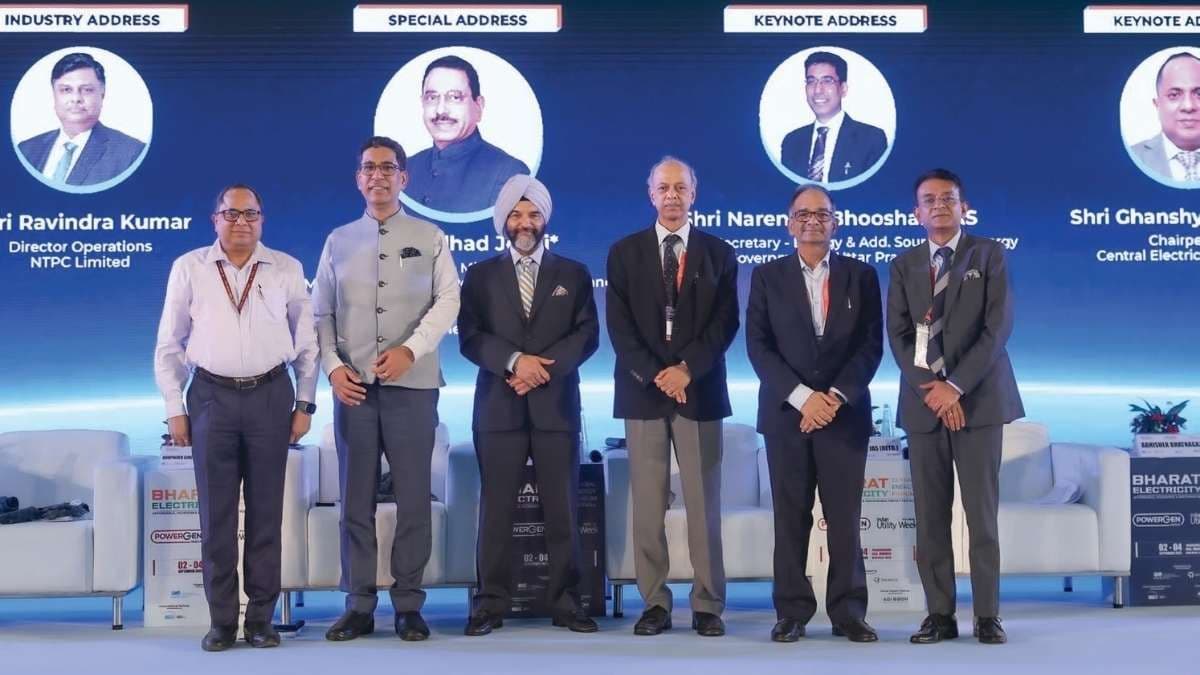
India’s power sector has moved beyond adrenaline-driven capacity expansion. The country boasts 237 GW of non-fossil fuel capacity, another 187 GW under implementation, and 67 GW in tendering. Solar dominates at over 120 GW, while wind sits at 52 GW, creating daytime price crashes and evening reliability gaps. Meanwhile, electric buses, data centres, and green hydrogen are rewriting consumption patterns. At Powergen India 2025, the conversation shifted from adding capacity to making it work, integrating variable renewables, financing scale responsibly, preparing people and plants for flexible operation, strengthening digital and legal foundations, and giving domestic manufacturing global competitiveness.
Turning Policy Ambition Into Market Certainty
Abhay Bakre, Mission Director, National Green Hydrogen Mission, identified the single most crucial hinge for India’s hydrogen economy: demand creation matched to clear long-term visibility. He split the roadmap into two phases: until 2027 to lock policy, standards, certification and offtake clarity, and 2027–2030 for scaling investment and capacity. Without reliable buyers and price signals, electrolyser and project developers cannot commit. By sequencing demand anchors with policy and standards, India can convert its early momentum into large, bankable projects post-2027, transforming targets into sustainable market pull and global competitiveness.
Brajesh Singh, MD, Generation, CESC Ltd nailed the system hinge: re-engineering thermal plants for a flexible grid. He argued that design assumptions built for steady 85 percent-plus baseload no longer hold; daily cycling makes “every day a bathtub curve”. That flips reliability from 80 percent natural degradation/20 percent environment to around 60/40, demanding new KPIs and control logic. His prescription: rewrite CMC/auto-loop polynomials, shift from time-based to condition-based and prognostic maintenance, and drive run-repair-replace decisions from live data. He tied this to safety by digitising SOPs, LOTO and asset barcodes. In short, without control and maintenance redesign, predictive tech and storage will not deliver outcomes.
Fixing the Financial Engine
Financing emerged as another fault line. Amit Sen Gupta, Group Corporate Finance, Avaada Group, noted that while capital is chasing good projects today, the picture will shift once India tries to scale annual renewable additions from 30 GW to 50–60 GW. “We must move beyond plain project finance,” he said. He called for deepening India’s corporate bond market, making NABFiT’s new partial credit enhancement facility truly cost-neutral, and recycling developer equity faster. Without such evolution, India’s fast, low-cost solar and wind build-out could stall just when scale is needed most.
Mindset and Capacity Building
Akhil Agarwal, GM, Project Engineering, NTPC Ltd, spotlighted the single biggest enabler for India’s coal fleet to flex safely and economically — mindset and operator capacity building. He warned that India’s plants were built and staffed for steady baseload; yet today’s grid needs fast ramping and deep turndown. Without shifting from an “energy market” to a “balancing market” mindset and retraining young operators, flexibleisation targets will remain paper goals. He called for mandatory compliance, deep training, and closer OEM engagement to redesign control logic, monitoring, and materials for frequent cycling. His message: technical fixes matter, but people and processes decide grid flexibility’s success.
Legal and Regulatory Clarit
Vishrov Mukherjee, Partner, Dispute Resolution and Arbitration Practice, Trilegal, highlighted legal fragmentation as a growing deterrent to investors. India’s Electricity Act, 2003 and state-level rules are “a drag on investment,” he said, citing abrupt changes such as banking withdrawal, new cross-subsidy surcharges and ad hoc connectivity hurdles.
Each rule tweak spawns litigation and delays. “We need to overhaul the 2003 framework, centralise core rules, and move to standardised PPAs and PSAs so developers are not renegotiating risk clauses from scratch.” For lenders, such stability would reduce risk pricing and unlock new models like merchant sales and contractsfor-difference that are essential to integrate renewables flexibly.
Data Discipline before Digitalisation
Digitalisation dominated discussion but with an urgent caution. Sonia Swami, Head, IT and Digital at O2 Power, argued that predictive analytics and AI cannot succeed on weak foundations. “We have humongous information; unless we use it efficiently, we will not meet business objectives,” she said. Secure data and advanced monitoring must come first: “Predictive systems work only when we have the cyber-security fencing around it.” Technology leaders called for common data models, interoperable digital twins and mandatory device-level protections so solar, thermal, wind and storage fleets can operate as one secure system.
Flexibility as the New Survival Code
Vivek Pandey, CGM (SO), Grid Controller of India, observed that India’s grid has flipped from “load following generation to generation following load.” Solar and wind are adding volatility to demand patterns that were already complex. “Flexibility is now survival, not choice,” he said, urging faster ramping and deeper turndown of coal plants beyond the current 55 percent technical minimum. Quick start–stop capability and real-time reserves must be built across thermal, hydro, renewables and even nuclear fleets. Without every resource contributing ancillary support, he cautioned, the system risks “curtailment, instability and shortages in non-solar hours,” undermining reliability just as the renewable share accelerates.
Manufacturing for Resilience and Export
Supply chain security remained central. Gurpratap S Boparai, CEO, Manufacturing Business, Suzlon Energy Ltd, noted that Indian wind turbines now achieve nearly 90 per cent localisation and a 33 percent annual growth rate in domestic manufacturing. But Dr Prabir Kumar Dash, Scientist E, MNRE, cautioned that viability depends on “steady 10 GW annual wind additions.” Over-regulation or irregular tendering, he said, can push costs up and blunt competitiveness.
Across sessions, the mood was pragmatic. India has proved it can add renewable capacity at world-record speed; now the challenge is to operate a far more complex, decentralised, data-driven and storage-rich system safely and profitably. From making flexibility an investable service and rewriting legacy operating logic, to giving financiers predictable rules and manufacturers longterm visibility, Powergen India 2025 showed a generation sector shifting from headline targets to system discipline.
Leadership Imperatives for India’s Power Transition
- Turn Policy Ambition Into Market Certainty: Build multi-year pipelines with clear offtake, standards and certification to attract bankable investment
- Re-Engineer Thermal Fleets for Flexibility: Retrofit controls, adopt predictive maintenance, and train operators for frequent ramping and low-load operation
- Deepen and Diversify Capital: Expand corporate bond markets, scale NABFiD credit enhancements, and recycle equity faster to fund 50–60 GW annual renewable growth
- Data Discipline Before Digitalisation: Standardise data models, strengthen cybersecurity, and build interoperable digital twins for a reliable smart grid
- Legal and Regulatory Stability: Streamline the Electricity Act, create uniform PPAs/PSAs, and reduce state-level unpredictability to lower investor risk
- Manufacturing With Global Ambition: Use steady, visible demand to sustain localisation, meet export-grade quality and capture emerging hydrogen and offshore wind markets
- Invest in People and Processes: Shift workforce mindset from base load to balancing, strengthen training, and hardwire operational discipline for a flexible grid