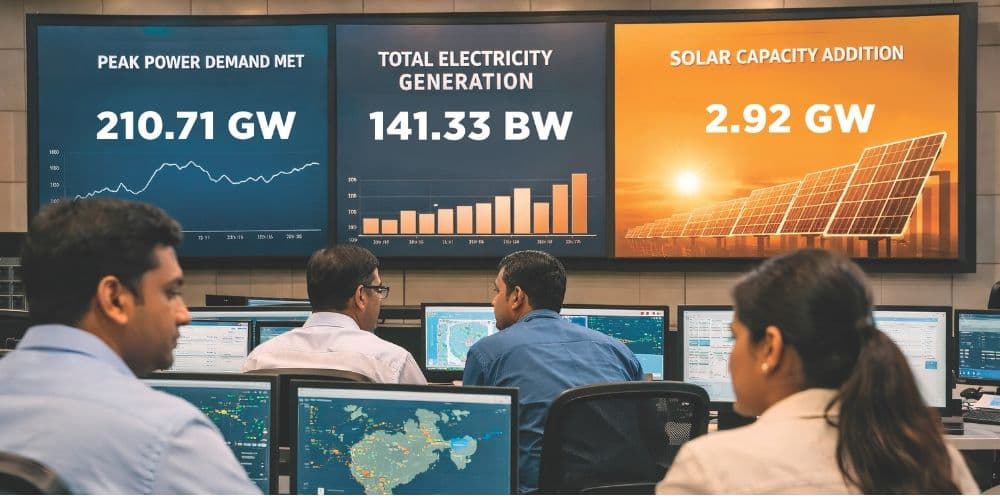
The country’s energy sector in October operated in a phase of consolidation rather than acceleration. The data shows operational stability, adequate capacity and predictable supply patterns across hydrocarbons, electricity and renewables. This demonstrates how the system is functioning as the transition unfolds.
Oil & Gas: Stable Supply Conditions
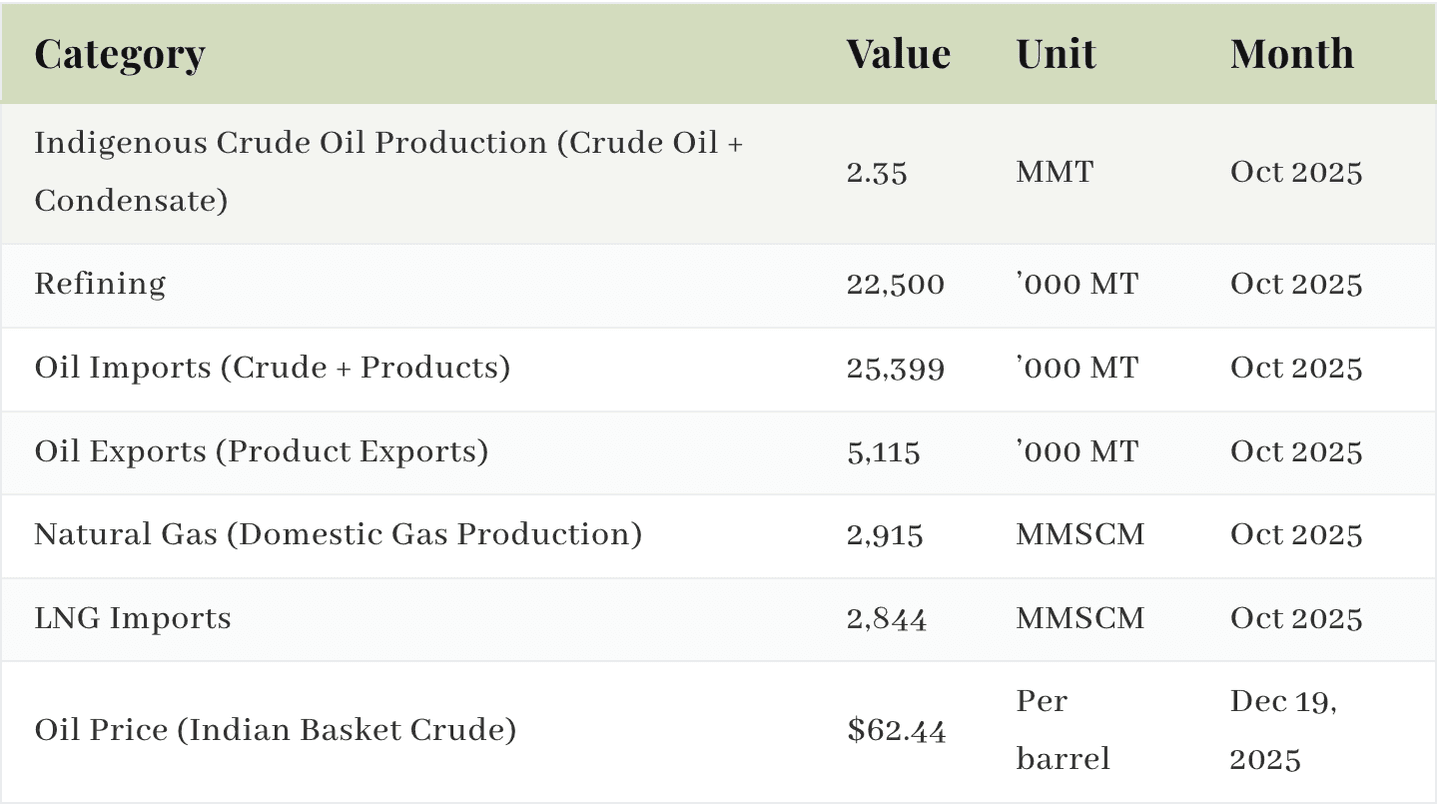
The data of oil and gas indicators reflect continuity across the value chain. Indigenous crude oil production, including condensate remained steady during the month. Refinery stayed elevated, indicating healthy utilisation of downstream assets. Imports continued to play a major role in meeting demand and combined crude, and product imports significantly outweighed exports. In natural gas, domestic production and Liquified Natural Gas (LNG) imports were almost evenly matched, underscoring the structural dependence on gas to support consumption growth. Crude prices, as reflected in the Indian basket, remained moderate through mid-December, contributing to the price stability.
Oil & Gas: Key Indicators
*Provisional Data
Source: Petroleum Planning & Analysis Cell (PPAC)
Power & Utilities: Demand Fully Met
Power sector data for October show a system comfortably meeting demand.
All India peak demand was fully served with no unmet requirement. This is a reflection of sufficient generation capacity and effective grid management. While thermal power continued to form the backbone of generation, renewables, including large hydro, provided a growing share.
Capacity additions during the month were dominated by solar installations with wind adding incrementally. Smart metering data indicates strong progress in sanctions and awards, however, installations remain at an early stage, signalling execution as the next focus area.
October 2025’s dashboard portrays an energy system running smoothly with no immediate stress points. Stable hydrocarbon supply, full demand fulfilment in power, and solar-led renewable growth suggest that the transition is being absorbed without operational disruption. The next phase will focus on execution, particularly on translating policy scale into physical delivery across the grid.