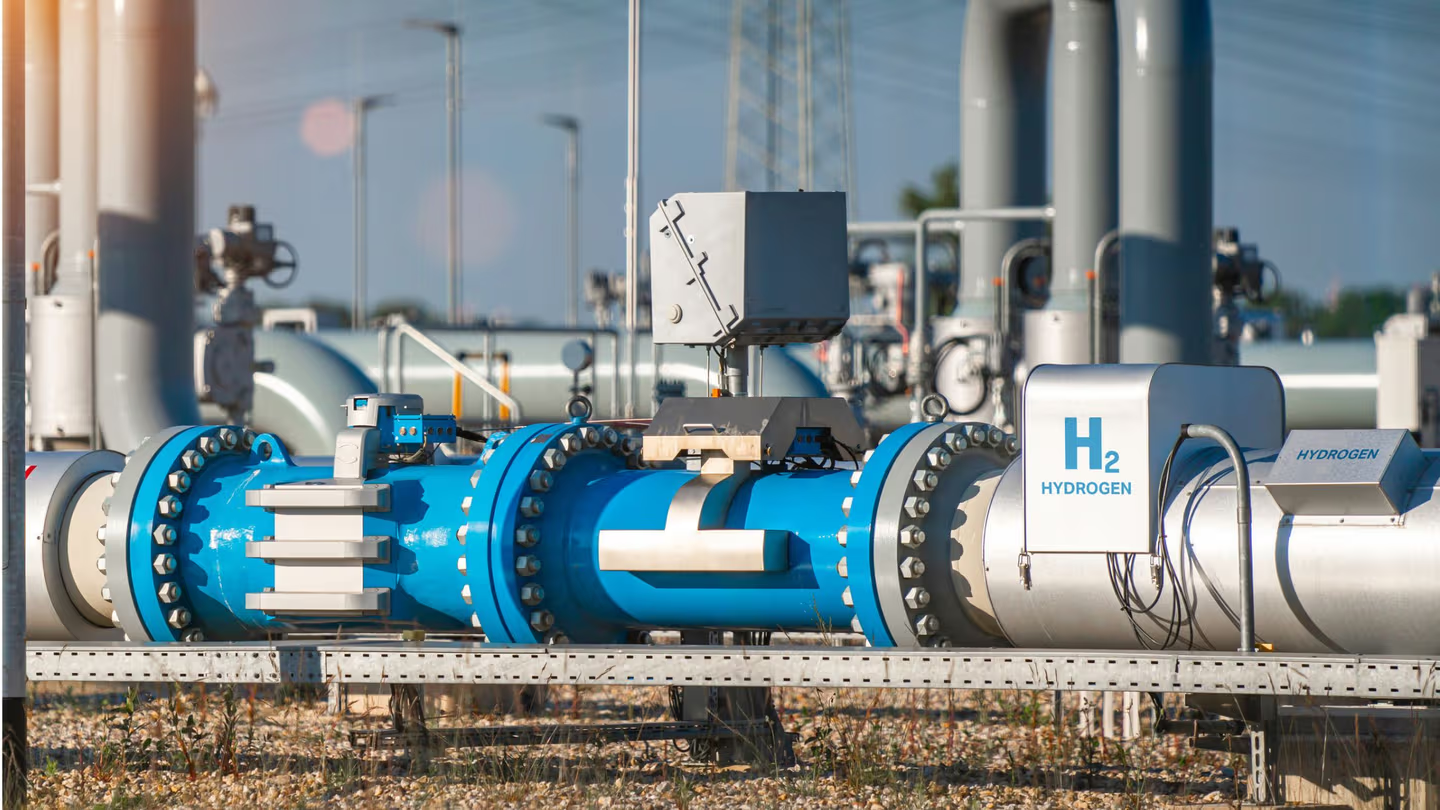
The Petroleum and Natural Gas Regulatory Board (PNGRB) has initiated plans to allow blending of hydrogen at a level of 5 per cent volume into natural gas supplied for domestic consumption via City Gas Distribution (CGD) networks. The guidelines specify the safety considerations, infrastructure, operation, metering, and billing aspects concerning the commercial supply of hydrogen-blended fuel to DPNG customers.
The proposal will only apply to small hydraulic zones delivering DPNG services using a single injection point. Furthermore, distributors will require special approval from the PNGRB along with legal permits and confirmation that their distribution systems can safely handle hydrogen blending up to the stipulated amount.
Safe levels of hydrogen blending need to be controlled cautiously. A 5 percent cap does not represent an operational benchmark. Instead, the distribution companies have to manage a safe level well below the permissible percentage while providing sufficient margin to avoid crossing the threshold at peak or minimum demand conditions.
As per the guidelines, there has to be constant monitoring of hydrogen concentrations along with validated and reliable mixing and controlling mechanisms, and security measures that prevent hydrogen mixing under circumstances where key parameters cannot be determined or operation goes beyond permitted parameters.
These guidelines do not cover compressed natural gas (CNG), hydrogen enhanced CNG (HCNG), use in automobiles, transportation pipelines, hydrogen supply itself, refueling operations, de-blending operations, or consumers of piped natural gas other than household applications without separate PNGRB approval.