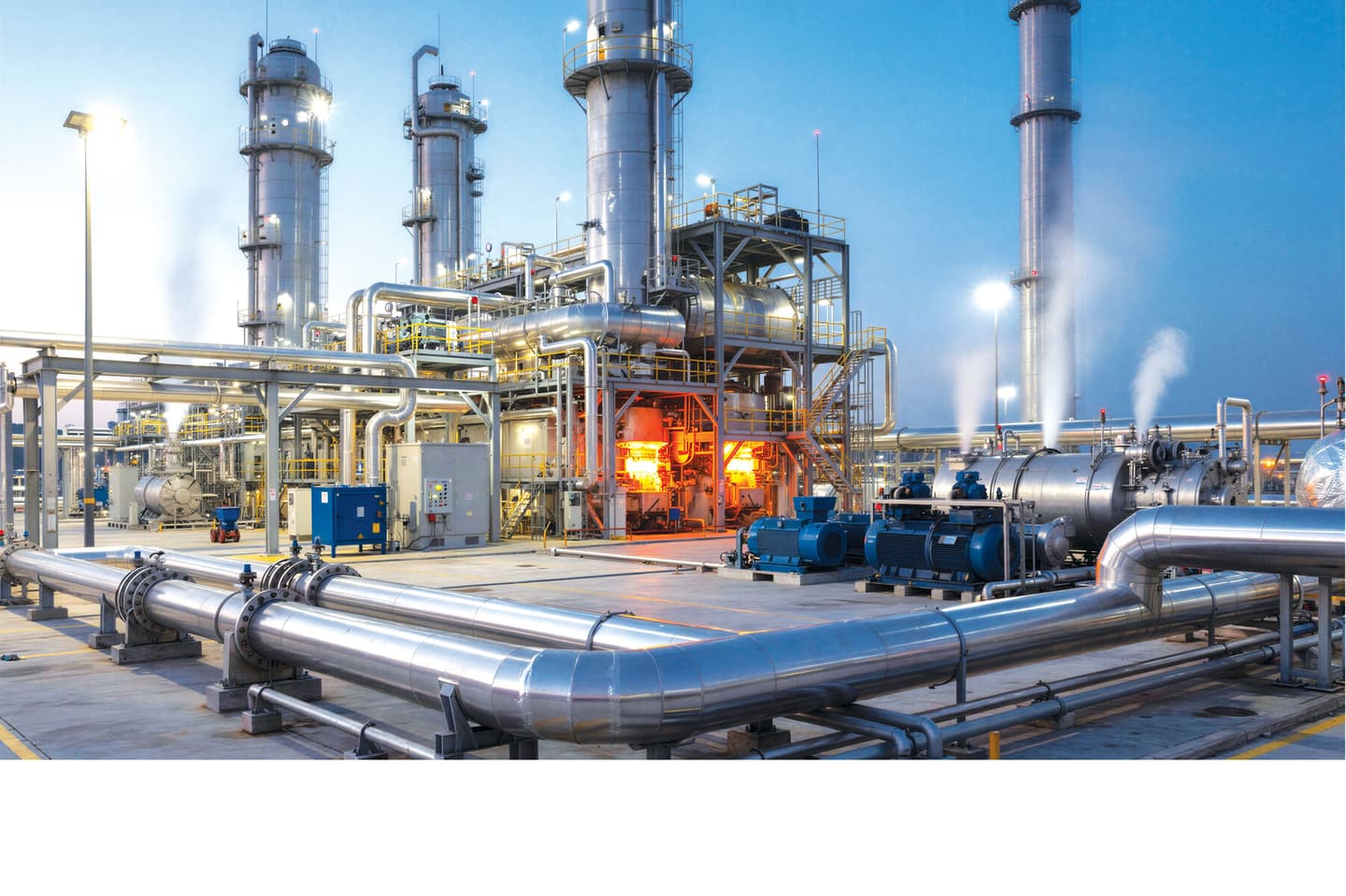
BharatH₂Sep is BPCL’s asymmetric hollow-fiber membrane system that economically recovers hydrogen from low-pressure, impurity-rich refinery off-gases. Operating with 95 mol percentage purity and 80–95 percent recovery at 100 kg/hr. A 1,000 kg/hr commercial study projects annual savings of ₹25 crore, payback < 3 months, and 10,000 t CO₂ cuts, advancing efficient H₂ reuse and India’s net-zero goals.
Background & Context
Hydrogen (H2) plays a vital role in the global energy transition as a clean and versatile fuel. In petroleum refineries, H₂ recovery is strategically important due to high internal demand, the need to reduce fresh hydrogen production by reusing residual streams, and attractive return on investment (ROI), given hydrogen’s high cost. However, recovery from off-gases remains challenging due to low H₂ concentrations, low pressures, and contaminants such as hydrocarbons, H₂S, moisture, and amines.
Conventional technologies like Pressure Swing Adsorption (PSA) and Cryogenic Distillation (CD) are often unviable for these streams because of high capital and operational costs. Consequently, H₂-rich off-gases are frequently diverted to fuel systems, resulting in resource loss.
This study introduces BharatH2Sep Technology, an advanced membrane-based solution designed for cost-effective hydrogen recovery. It employs asymmetric hollow fiber membranes with dual selective layers and ultra-thin walls, enabling high permeability and selectivity—five times greater for H₂ over C₁–C₅ hydrocarbons than conventional membranes. The system maintains a low pressure drop (<25 psig), supporting energy-efficient separation.
Pilot-scale validation (100 kg/hr) at the Vacuum Gas Oil Hydrodesulfurization (VGO-HDS)
Unit of BPCL refinery demonstrated enhanced H₂ purity (from 65–85 mol percent to >95 mol percent.) and recovery rates of 80–95 percent. A key advantage is the ability to operate within existing pressure conditions (feed: 2–35 barg; permeate: 1.10–30 barg), allowing direct integration with the refinery’s H₂ header without the need for recycle gas compression (RGC), thus reducing both capital and operating costs.
A commercial-scale evaluation (1,000 kg/ hr) showed annual savings of ₹25 crore, less than three months payback, and a 10,000-ton CO₂ emission reduction. BharatH2sEP provides a scalable, efficient solution that supports refinery decarbonisation and India’s Net Zero targets.
A commercial-scale evaluation (1,000 kg/ hr) showed annual savings of ₹25 crore, less than three months payback, and a 10,000-ton CO₂ emission reduction
Objectives
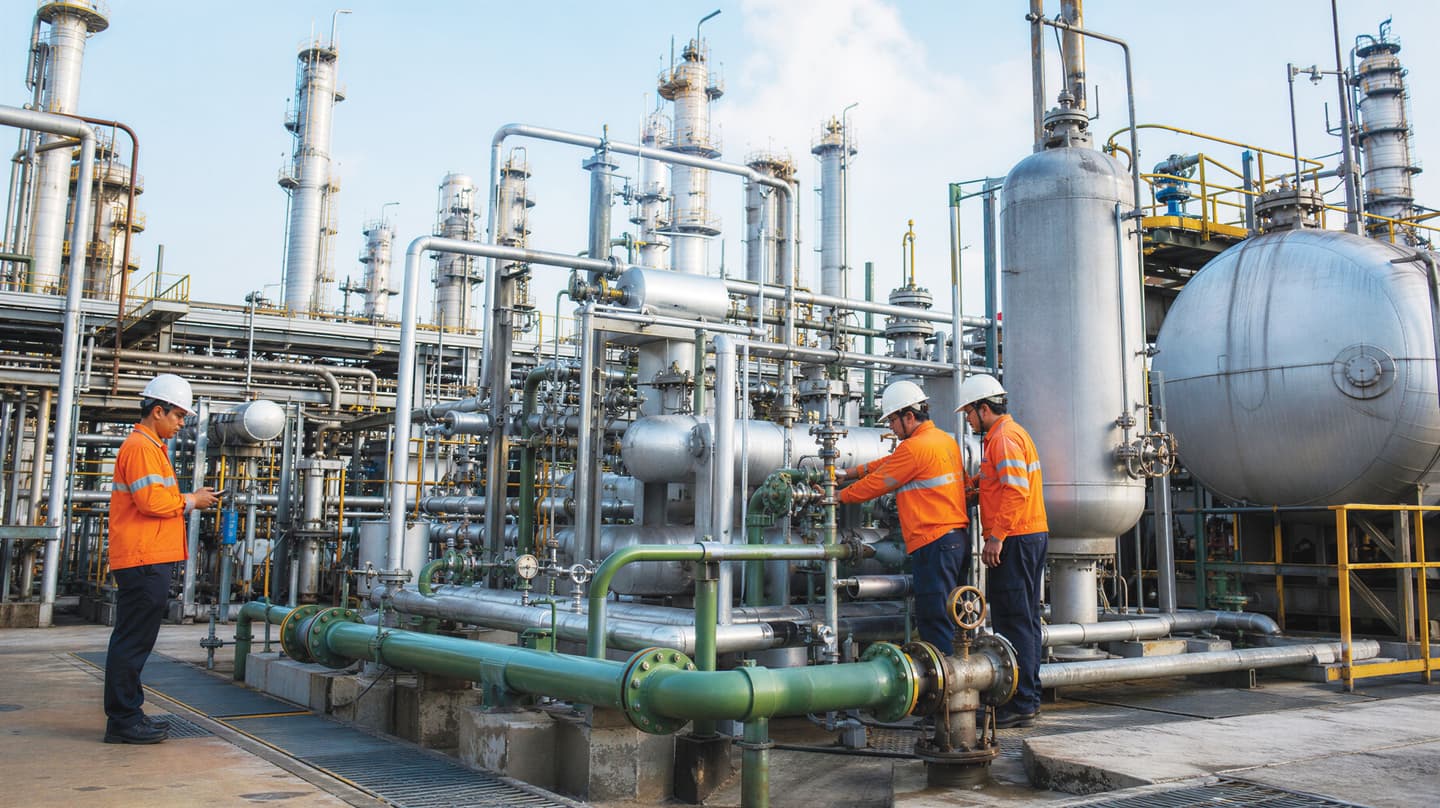
• Meet the target of hydrogen purity (>95 mol percent) from refinery Off-gas (H2 ~70-75 mol%) & reduce loss of valuable hydrogen gas from VGO HDS plant
• Reduce the CO2 emissions associated with hydrogen production
• Technology demonstration on real feed condition of refinery
Methodology
Technology Design & Development
• Advanced asymmetric hollow fiber membranes with dual selective layers were designed to maximise H₂ selectivity and permeability while minimising flow resistance and pressure drop (25<psig)
• Membrane materials were selected based on chemical compatibility, thermal stability, and performance against typical refinery off-gas contaminants (Example, H₂S, hydrocarbons, moisture)
Laboratory Evaluation
• Bench-scale tests were conducted to determine membrane performance under simulated refinery off-gas conditions
• Selectivity towards H₂ over C₁–C₅ hydrocarbons was found to be 5–10× higher than conventional commercial membranes (Example, polysulfone, polyimide)
Pilot-scale Demonstration
• A 100 kg/hr pilot plant was installed at the VGO-HDS unit of BPCL Refinery
• Field trials evaluated H₂ purity, recovery efficiency, and system integration with refinery headers (feed: 2–35 barg; permeate: 1.1–30 barg)
• Operational data confirmed H₂ enrichment from 65–85 mol percent to >95 mol percent, with 80–95 percent recovery
Techno-Economic Analysis
• A commercial-scale model (1,000 kg/ hr) was developed, incorporating equipment sizing, energy savings, and integration without recycle gas compression (RGC)
• Cost-benefit analysis showed annual savings of ₹25 crore, a payback period of less than 3 months, and 02 reduction of up to 10,000 tons/year
Challenges
During the planning and execution of the BharatH2Sep pilot plant trial at the VGOHDS unit, several technical and operational challenges were encountered:
Hydrocarbon Liquid Ingress into Membrane System
One of the most critical issues observed during early trials was the deterioration in membrane performance due to the carryover of hydrocarbon liquid along with the off-gas stream. The presence of liquid-phase hydrocarbons not only reduced membrane selectivity and permeability but also risked irreversible damage to the membrane structure.
• Root Cause: Insufficient vaporisation of the off-gas stream under certain operating conditions led to partial condensation, allowing liquid hydrocarbons to enter the membrane skid
• Mitigation Strategy: To address this, heat tracing and thermal insulation were implemented along the entire gas transfer line and membrane module housing. This ensured the off-gas stream remained fully in the vapor phase, eliminating the possibility of condensation and protecting membrane integrity during continuous operation
Pressure Matching with Hydrogen Header Without Compression
Integrating the membrane system directly with the refinery hydrogen header (operating at ~20 barg) without a recycle gas compressor posed a significant design constraint. The challenge was to optimise the membrane skid’s performance within the narrow available pressure window (feed: 30–35 barg, permeate: 21–33 barg).
• Mitigation Strategy: The system was designed with low pressure drop membranes (<25 psig) and optimised flow configuration to utilise the available pressure differential effectively. This avoided the need for energy-intensive compression, preserving the project’s economic viability.
Space and Utility Constraints at Site
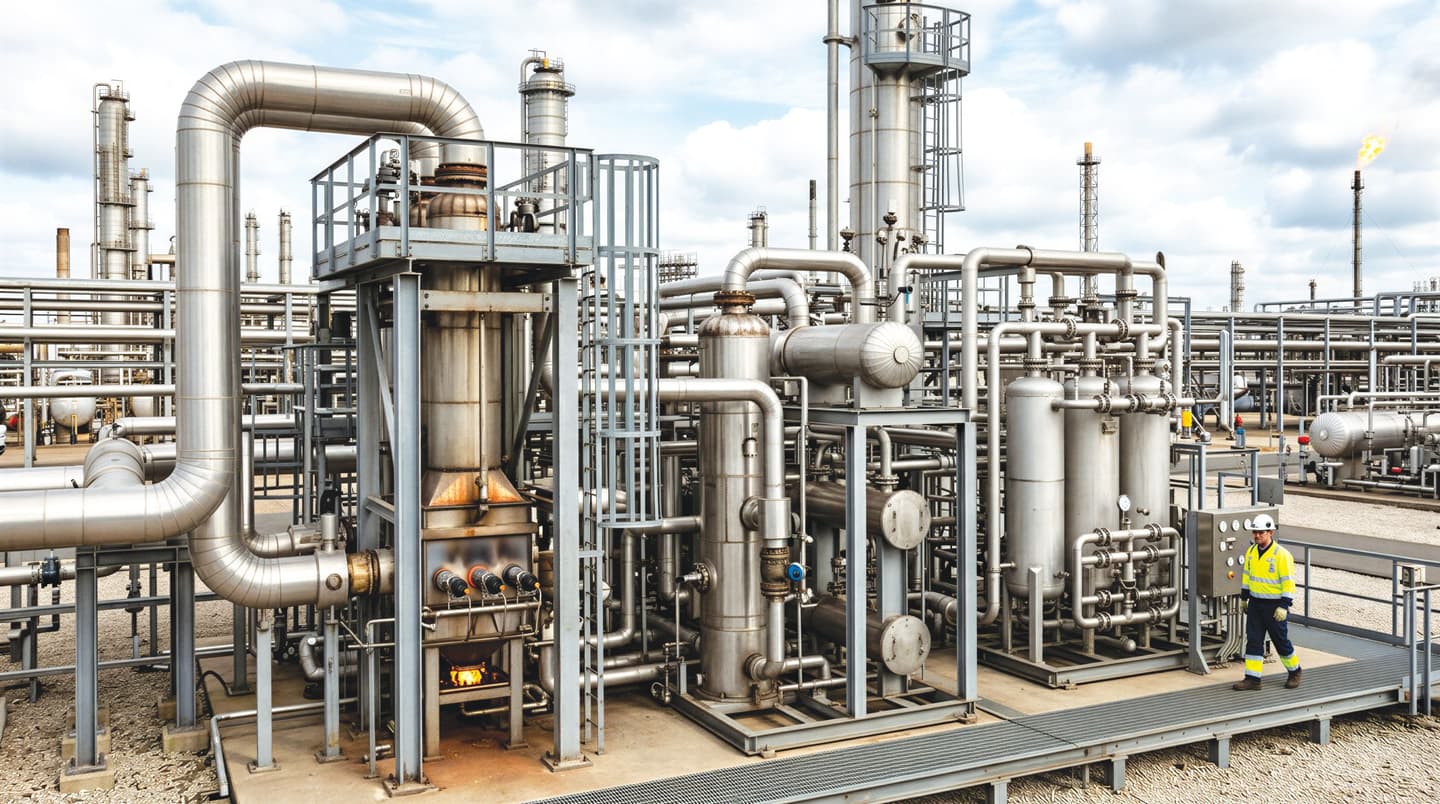
Implementing a pilot unit within the live process environment of a refinery posed logistical challenges related to space, utilities, and tie-ins.
• Mitigation Strategy: The pilot plant was designed as a modular skid-mounted unit to minimise space requirements and facilitate quick on-site installation with minimal disruption to ongoing operations
Overall, a cross-functional approach involving process engineering, operations, instrumentation, and site safety teams helped ensure that the challenges were systematically addressed, enabling successful demonstration and scale-up planning of the BharatH2Sep technology.
The pilot plant was designed as a modular skid-mounted unit to minimise space requirements and facilitate quick on-site installation with minimal disruption to ongoing operations
Implementation
Timeline & Phases
• Conceptualisation & Design: The initial phase focused on the design of asymmetric hollow fiber membranes with dual selective layers and ultra-thin walls to enhance H₂ permeability and selectivity. Lab-scale membrane testing was conducted to assess performance with simulated off-gas compositions containing hydrocarbons, H2S, and moisture
• Pilot Plant Fabrication: Based on lab results, a 100 kg/hr pilot membrane skid was engineered and fabricated in partnership with a membrane technology vendor. The system included gas conditioning, membrane modules, instrumentation, and safety systems
• FAT & Site Preparation: Factory Acceptance Testing (FAT) was successfully completed with the participation of the MR technical team. Simultaneously, space allocation, utility access, and tie-in planning were conducted at the VGO-HDS unit of BPCL Refinery
• Installation & Commissioning: The pilot unit was installed as a modular skid with minimal interface to live systems. Pre-commissioning checks and leak tests were carried out before initiating field trials
• Field Trial Execution: The pilot unit was operated continuously for 30+ days. Performance metrics such as H₂ purity, recovery efficiency, pressure drop, and system stability were monitored in real-time
• Scale-Up Planning: Based on pilot success, technoeconomic evaluation and basic engineering for a 1000 kg/hr commercial unit were initiated
Stakeholders Involved
The success of BharatH2Sep was driven by active collaboration among multiple stakeholders:
• CRDC (R&D Team): Technology conceptualisation, membrane development, and performance validation
• BPCL-Kochi Refinery (Process Unit Owner): Site support, integration with VGO-HDS unit, and trial operation
• E&C (Engineering & Construction): Design review, skid installation, and utility tie-ins. • Instrumentation & Control Teams: Data logging, pressure/flow monitoring, and safety interlocks
• Vendor Partner: Membrane fabrication, skid assembly, FAT support, and post-installation service
Challenges Encountered & Mitigation
• Hydrocarbon Liquid Ingress: Initial trials showed performance loss due to liquid hydrocarbons entering the membrane. This was mitigated by installing heat tracing and ensuring complete vaporization of off-gas prior to membrane entry
• Pressure Compatibility: Matching the system’s permeate pressure with the hydrogen header (20 barg) without using a compressor was a critical constraint. This was addressed through low-pressure-drop membrane design and optimal feed/permeate flow control
• Site Constraints: Limited space and utility availability at the VGO-HDS unit required the unit to be skid-mounted and compact, enabling seamless integration with existing infrastructure
Through structured execution, cross-functional collaboration, and innovative problem-solving, BharatH₂Sep was successfully piloted and is now progressing toward commercial-scale deployment, supporting hydrogen efficiency and carbon reduction goals in refineries.
Quantitative Outcomes
The implementation of the BharatH2Sep hydrogen recovery technology not only delivered strong technical and economic results but also led to several nonquantifiable, strategic, and organisational benefits that will have a lasting impact on future refinery operations and innovation culture.
Successful piloting of an indigenous membrane technology at a live refinery site instilled confidence in adopting Make-in-India solutions
• Technology Demonstration and Confidence Building: Successful piloting of an indigenous membrane technology at a live refinery site instilled confidence in adopting Make-in-India solutions for core process applications. It validated the potential of advanced membrane-based gas separation as a reliable alternative to capital-intensive conventional technologies like PSA and cryogenic distillation.
• Cross-functional Collaboration: The initiative fostered seamless collaboration among R&D, refinery operations, process engineering, E&C, instrumentation, and vendor teams. This cross-disciplinary coordination enhanced team synergy and knowledge-sharing, setting a benchmark for future innovation-driven projects.
• Operational Awareness and Process Integration: Integration of the pilot unit into a running process unit deepened site teams’ understanding of off-gas composition, handling challenges, and membrane operating principles, leading to improved awareness of system-level energy and material efficiency opportunities.
• Sustainability and Policy Alignment: The project reinforced the refinery’s alignment with India’s Net Zero goals, emphasizing carbon abatement and resource circularity. It also enhanced the organization's internal focus on energy transition and low-carbon pathways.
• Platform for Future Scale-up: The initiative established a strong foundation for future deployment of modular hydrogen recovery systems across multiple refinery units, potentially leading to broader organizational transformation in hydrogen management practices.
Overall, BharatH2Sep delivered substantial qualitative value by demonstrating technological self-reliance, promoting sustainability awareness, and fostering a collaborative, innovation-focused work culture.
Innovation & Uniqueness
• Ideal gas selectivity of H2 towards CH4 is 5-6 times higher than commercially available membranes. This provides higher H2 purity (>96 mol%) and recovery (>90 %) per membrane module
• Least pressure drop of H2 separation/enrichment- Eliminates the additional requirement of compressor. Hence, capital expenditure reduces by >60% and operating expenditure reduces by >90 percent
• Robust polymeric membrane handling different impurities of Off-gas (hydrocarbons, H2S, moisture, amines, etc). Life of membrane is > three years
Scalability & Replicability
The BharatH₂Sep technology has been designed with a clear focus on scalability and adaptability, making it highly suitable for deployment across a wide range of refinery units and similar industrial environments.
Scalability
The pilot unit, demonstrated at 100 kg/ hr capacity, has already been evaluated for commercial scale-up to 1000 kg/hr. The modular design of the membrane system allows it to be scaled linearly by adding parallel membrane banks, without significant changes to process control or utility requirements. The low pressure drop (<25 psig) and ability to operate within existing refinery pressure envelopes (feed: 2-35 barg; permeate: 1.1-30 barg) make it highly compatible with standard process units, eliminating the need for compression systems in many cases. This feature significantly reduces capital cost, ehancing viability at commercial scale.
Replicability
The success of BharatH₂Sep at BPCL’s Kochi Refinery establishes a strong reference case for replication across:
• Other hydrogen-producing units such as hydrocrackers, reformers, and hydrotreaters within the same refinery
• Additional BPCL refineries (Mumbai, Bina)
• Other Indian and global refineries facing similar off-gas management challenges
The technology is feed-flexible and can handle a variety of off-gas compositions with hydrocarbons, H₂S, and moisture, making it suitable for different process streams. The skid-mounted, plug-and-play configuration simplifies installation even in space-constrained brownfield environments.
Furthermore, the initiative aligns with national goals such as Make in India and Net Zero by 2070, and can contribute meaningfully to corporate ESG commitments by enabling resource recovery and emissions reduction.
In summary, BharatH₂Sep offers a highly scalable and easily replicable solution for hydrogen recovery that can be deployed across multiple locations and industrial contexts with minimal customisation.
BharatH₂Sep offers a highly scalable and easily replicable solution for hydrogen recovery that can be deployed across multiple locations and industrial contexts with minimal customisation
Key Learnings
• Proof of Indigenous Innovation: The project successfully demonstrated the performance of an indigenously developed membrane technology under real refinery conditions, validating its 26 effectiveness for hydrogen recovery from low-pressure, impurity-laden off-gas streams
Operational Integration Without Compression: A major breakthrough was achieving direct integration with the hydrogen header without requiring a recycle gas compressor (RGC), thanks to the membrane’s low pressure drop design. This significantly lowered both capital and operating costs.
• Cross-Functional Collaboration: Strong coordination between R&D, refinery operations, E&C, instrumentation, and vendor teams was key to timely execution and performance optimisation, establishing a collaborative model for future pilot-to-plant transitions.
• Platform for Scale-Up: The successful pilot trial established confidence in the technical scalability and economic viability of the solution for larger capacities (e.g., 1000 kg/hr and beyond).
Overall, BharatH2Sep reaffirmed the importance of robust process understanding, adaptive engineering, and proactive problem-solving in translating lab-scale innovations to impactful field applications.