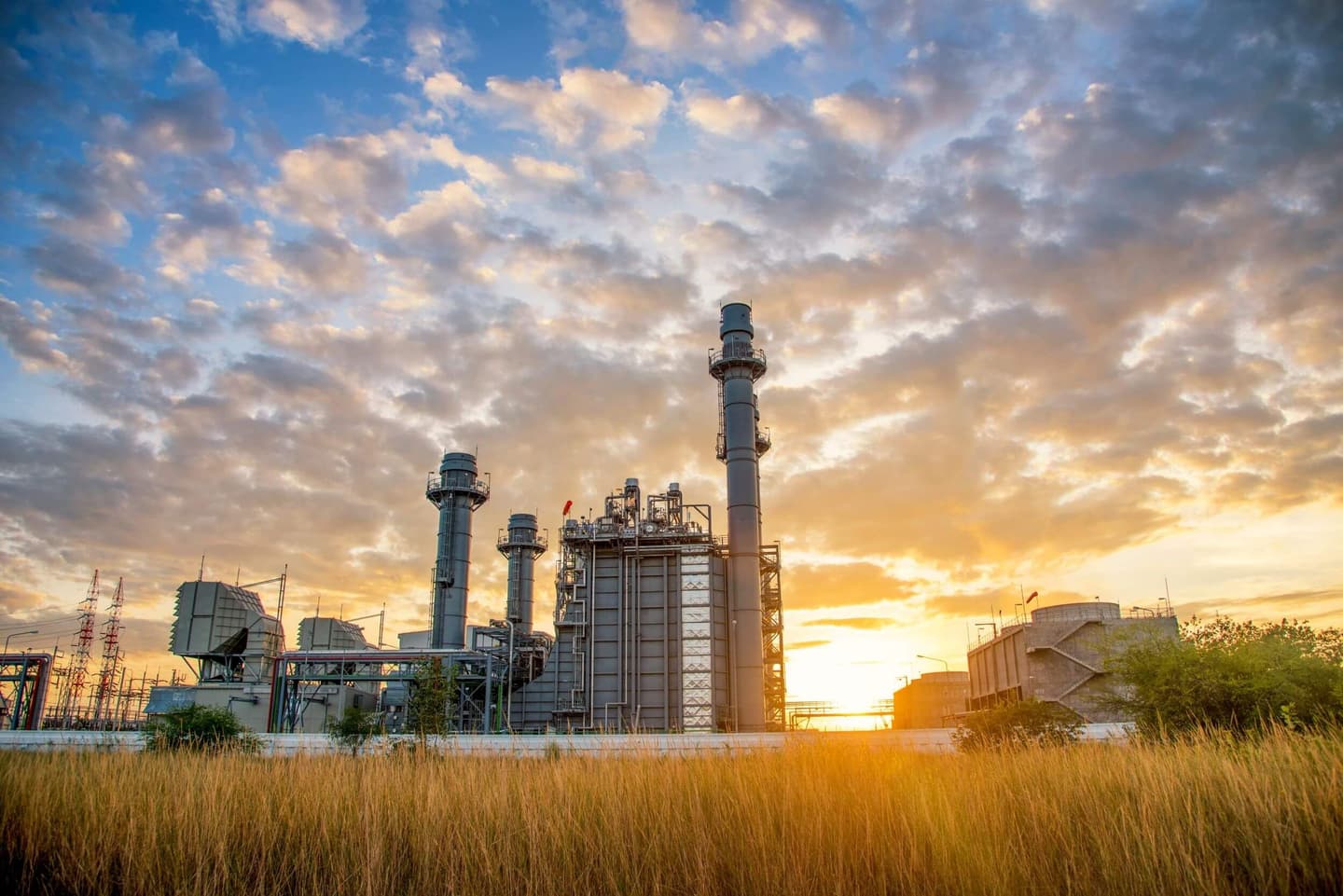
On a humid evening in the mid-2030s, most households and factories will care about only two things: whether the power is on, and whether they can afford it. Behind that simple expectation sits an extraordinarily complex engineering and policy project. India is trying to expand electricity access, sustain high economic growth, and meet climate goals, all while reshaping the fuel mix and the grid’s hardware. The choices being made now will determine whether that future evening feels routine or become a stress test for the entire system.
Rising Demand Meets Climate Constraints
India’s peak power demand is projected to rise sharply from current levels into the 2030s, driven by industrial growth, urbanisation, and new loads such as electric vehicles. At the same time, the country has pledged to build 500 GW of non-fossil capacity by 2030 and reach Net Zero greenhouse gas emissions by 2070.
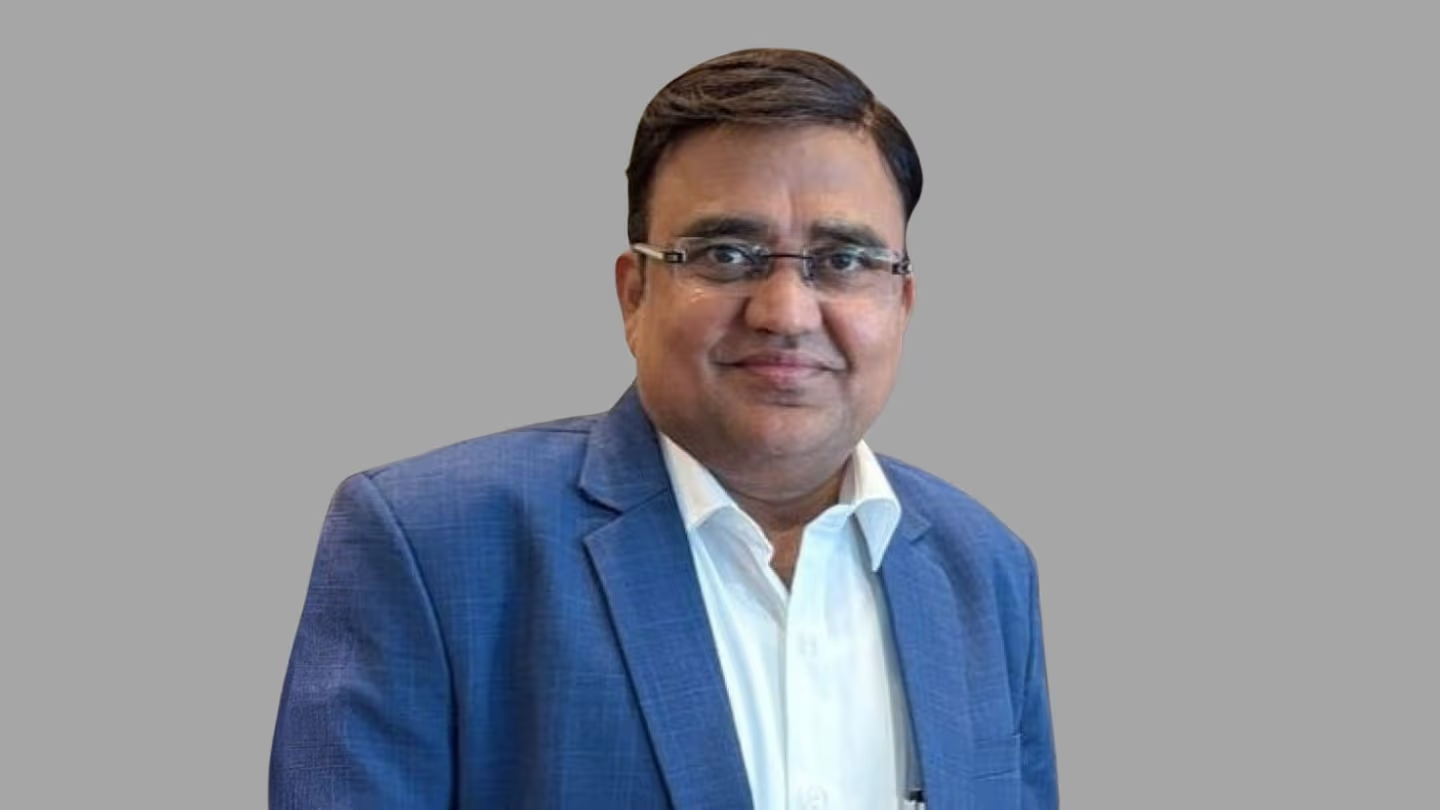
For Ghanshyam Prasad, Chairperson, Central Electricity Authority (CEA), the fundamental tension is clear. Coal still provides around 70 percent of electricity generation, yet pathways aligned with the 1.5°C temperature limit imply that coal’s share must fall towards the high teens within little more than a decade. In his framing, the problem is not ideological but mathematical: evening peak demand has to be met every single day, even as solar power vanishes with the sun and wind output fluctuates.
Prasad’s lens is firmly on adequacy during “non-solar hours”. The question is how much new coal capacity is still unavoidable for that purpose, how much can be replaced by nuclear power and storage, and how far existing thermal fleets can be made more flexible without undermining reliability or financial viability.
Pumped Storage, Batteries and Evening Peaks
For the 2030s, flexibility is more likely to come from water and lithium than from uranium. Prasad lays out an aggressive expansion of Pumped Storage Projects (PSP), with capacity rising from under 5 GW recently to around 57 GW by 2032. The new wave of PSP schemes is dominated by closed-loop, off-stream projects in peninsular India, deliberately kept away from live river channels to reduce environmental and social complexity.
Construction timelines of three to four years and a strong private-sector appetite make pumped storage attractive as a provider of long-duration storage and system inertia. It offers both “rotating mass” to keep frequency stable and the ability to shift surplus solar energy into the evening peak.
Battery Energy Storage Systems (BESS) are being layered in as a more modular alternative. Government viability gap funding for 13 GWh, followed by a larger 30 GWh tranche, is intended to build experience across multiple use-cases: firming renewables, managing congestion, providing fast frequency response and supporting distribution networks.
An Indian twist is the deliberate pairing of BESS with existing coal plants. By physically locating batteries at thermal stations, planners aim to ease ramping constraints, handle minimum technical load conditions and keep machines closer to their optimal operating points. Early allocations to NTPC Ltd and other utilities are being treated as real-world trials of this hybrid model.
Coal as Balancing Power, Not Just Baseline
Coal remains the backbone of the system, but its role is evolving from pure base load towards balancing. Ravindra Kumar, Director (Operations), NTPC Ltd, captures the dilemma well. NTPC, once known purely as National Thermal Power Corporation, still runs one of the world’s largest coal fleets, yet it is simultaneously adding solar, wind, storage and even nuclear partnerships.
Kumar’s assessment is straightforward: coal is “balancing power as of now”. Many NTPC units have been engineered to operate reliably down to 55 per cent of rated load, allowing more renewable energy to be accommodated during high solar periods. At the same time, he warns that every additional notch of flexibility has a price: accelerated wear, more frequent maintenance and a shorter asset life.
To mitigate this, NTPC is investing heavily in Artificial Intelligence (AI) and Machine Learning (ML) systems that monitor plant health and flag emerging problems before they lead to forced outages. Kumar sees this as essential to keeping coal units flexible yet dependable.
From the planning side, Prasad is pushing further. Central Electricity Authority (CEA) regulations envisage minimum technical loads eventually moving towards 40 per cent of capacity, in line with experience in other highly renewable systems. He recognises the industry’s anxiety about lifetime impacts, but also stresses that, without deeper flexibility, the scale of renewable energy that India aims to integrate will not be feasible.
The unresolved piece is market design. Kumar underlines that tariffs built around energy alone cannot sustain plants that are asked to cycle constantly. Prasad hints at new structures that would explicitly reward flexibility and reserve provision, rather than treating these services as unpaid side-effects of generation.
Wind’s Strategic Role and Industrial Edge
While solar has dominated recent headlines, wind energy is reasserting its strategic value. Vivek Srivastva, CEO, WTG Division, Suzlon Group, argues that wind’s higher capacity factors and natural complementarity with solar make it central to India’s vision of “accessible, reliable, low-carbon, sustainable and low-cost” electricity in 2035 and beyond.
Srivastava notes that the procurement landscape is shifting from simple capacity auctions towards round-the-clock and firm, dispatchable renewable contracts. In those structures, he believes wind must regain its share because it supports grid stability and reduces the amount of storage required.
There is also a strong industrial policy angle. Srivastava points out that domestic content in Indian solar manufacturing still hovers around 20 per cent, whereas the wind sector already exceeds 60 per cent and is moving towards 80 per cent. India has about 20 GW of wind manufacturing capacity and, crucially, can produce all major components in-country. That capability, supported by hundreds of micro, small and medium enterprises (MSME), positions India as both a strong domestic supplier and an export base.
Repowering is another underused lever. Many of India’s best wind sites are occupied by first-generation turbines installed 15 to 20 years ago. Shivas sees enormous opportunity in replacing those machines with modern, larger turbines on the same land and grid connections, turning existing infrastructure into a far more productive asset.
Grids, Hardware and Digital Intelligence
None of this works without a smarter, stronger grid. Sandeep Zanzaria, CEO and MD, GE Vernova T&D India, emphasises that transmission and distribution networks are becoming as much about software and data as about steel and aluminium.
On the transmission side, Zanzaria points to Static Synchronous cCompensators (STATCOM) combined with super capacitor-based storage as a way to create “virtual inertia”, stabilising voltage and frequency in a system dominated by inverter-based renewables. Dynamic line rating systems, which use real-time weather and loading data to adjust how hard lines can be run, offer another route to squeezing more capacity out of existing corridors in a country where right-of-way has become a major bottleneck.
At the distribution level, Zanzaria sees distributed energy resource management systems (DERMS) embedded within advanced distribution management systems (ADMS) as essential for handling rooftop solar, electric vehicle charging and other variable loads. His central argument is that utilities need long-term digital architectures designed for interoperability, not a patchwork of tactical fixes that become unmanageable as complexity grows.
The hardware side of the grid has its own momentum. Anurag Agarwal, Global CEO – Exports & New Businesses (EHV & Conductor), Polycab India Ltd, notes that Indian manufacturers already supply Extra High Voltage (EHV) cables and conductors for every major type of generation technology and export to more than 80 countries. Polycab itself is investing in high towers and advanced conductors aimed at High Voltage Direct Current (HVDC) corridors, positioning India as a credible supplier into both domestic and global grid expansion.
Yet Agarwal also highlights a familiar investment dilemma. Companies are putting capital into new facilities and technologies but still face uncertainty around long-term procurement pipelines and qualification norms in the home market. Policymakers, meanwhile, want industry to scale rapidly and move up the value chain. Bridging that gap will be critical if ‘Make in India’ is to translate into resilient, competitive grid supply chains.
What Will Ultimately Decide India’s Power Transition
India’s electricity transition hinges on whether diverse technologies and policy ambitions can move in sync. Nuclear power is being built for the long game, pumped storage and batteries are racing to meet evening peaks, coal fleets are being re-engineered for flexibility, and wind is regaining its place as a stabilising force. Beneath all this, the grid is being rewired with digital intelligence and advanced hardware, demanding unprecedented coordination across the entire power ecosystem.
What happens next will depend less on individual technologies and more on how well they are integrated. A system that expands reliably and affordably while cutting emissions at speed will reinforce economic growth and energy security across every sector. But if this integration falters through delays, design gaps or investment shortfalls, the impacts will be felt just as quickly in homes, industries and critical digital infrastructure.
This article is adapted from a panel discussion on ‘India Electricity Roadmap 2035 and Energy Outlook to 2047: Priorities, Pathways & Partnerships’ at Bharat Electricity 2025.