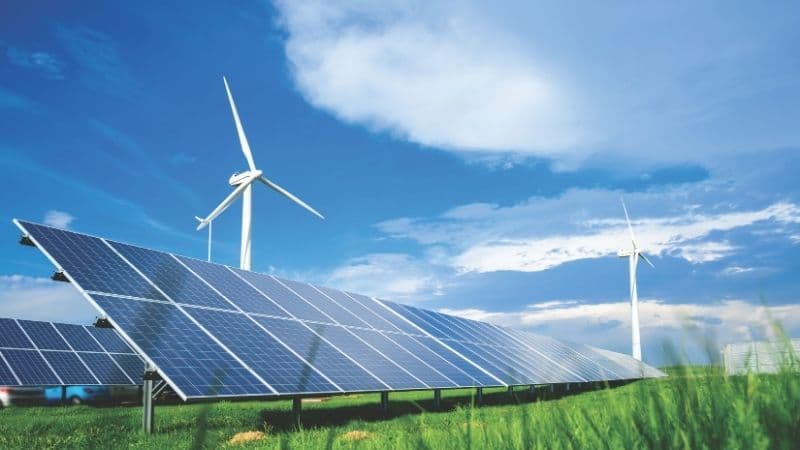
India’s decarbonisation pathway spans power, industry and buildings together responsible for nearly two-thirds of national emissions. Achieving sectoral transformation demands massive investment in physical assets such as solar modules, wind turbines, electrolysers, storage systems and energy-efficiency technologies. Estimates indicate India requires $170–200 billion every year until 2030, yet current flows remain significantly below this threshold. The challenge is no longer conceptual; it is structural, financial and deeply intertwined with how markets, regulation and risk evolve.
Renewable Energy Growth Meets Systemic Financial Pressures
India’s renewable sector remains globally competitive, and developers continue to secure debt at favourable terms. International lenders have become active participants in Indian green infrastructure, reflecting confidence in project-level execution. However, as annual capacity requirements climb from roughly 30 GW to 50 GW, systemic financing frictions are becoming visible.
Amit Sengupta, Group Corporate Finance at Avaada Group, notes that while developers can currently raise capital without difficulty, the broader banking system may struggle to accommodate the volumes required to meet future targets. He views the proposed partial credit enhancement facility by the National Bank for Financing Infrastructure and Development (NABFID) as a potentially important step provided its pricing does not undermine refinancing viability. Access to the bond market, he stresses, must not come at the expense of sustainable borrowing costs.
Demand-side constraints are compounding the challenge. A build-up of unsold PPAs has slowed tendering, largely because distribution companies (discoms) anticipate further tariff reductions and remain hesitant to commit to long-term procurement. Saurav Kumar Shah, Executive Director, RDSS PSC Ltd, explains that discoms are recalibrating their strategies as demand patterns shift, green open access expands, and the need for dispatchable power intensifies. With prices stabilising and new storage-integrated models emerging, he expects this phase of hesitation to diminish.
Domestic Manufacturing: Essential but Exposed
India has made notable progress in establishing downstream solar module capacity, driven by domestic content rules and the Production Linked Incentive (PLI) framework. But true resilience requires depth in the upstream supply chain cells, wafers and polysilicon segments still dominated by imports and vulnerable to geopolitical and economic volatility.
Mayank Bhardwaj, Director, KPMG India, highlights the structural barriers: upstream manufacturing is capital-intensive, highly energy-dependent and currently uncompetitive against global producers. He stresses the importance of predictable policy, stable pricing frameworks and dedicated industrial clusters with reliable power access to bridge the cost gap. Without long-term certainty, he notes, investors are unlikely to commit to such deep industrial capacity.
Sengupta adds that both central and state governments are increasingly aligned to accelerating domestic manufacturing. Faster regulatory approvals, support for technology transfer, and targeted incentives are improving project feasibility. Yet the downward pressure on global technology prices complicates investment. Sustainable demand signals such as reinforced Approved Lists of Models and Manufacturers (ALMM) remain vital for bankability.
Green Hydrogen: Export Potential, Domestic Dilemmas
Green hydrogen has emerged as a strategic pillar in India’s long-term decarbonisation plan. While the technology is promising, commercial viability remains distant.
Sandeep Narang, Partner, EY, underscores that India’s competitive edge in low-cost renewable power is beginning to reflect in global green ammonia pricing, positioning the country as a credible exporter. Markets such as the European Union, Japan and South Korea—each facing stringent emission constraints represent significant opportunities. Export-linked revenue streams, Narang notes, can be financed in foreign currency, mitigating hedging risks and enabling financial centres like GIFT City to play a catalytic role.
Domestically, however, adoption faces cost hurdles. Bharadwaj emphasises that hydrogen purchase obligations could mirror the success of renewable purchase obligations by providing developers with assured demand. He also highlights the usefulness of contracts-for-difference and tailored viability gap funding to stabilise early-stage pricing and de-risk investments.
Green Open Access: Aggregation as the Missing Ingredient
Lowering the green open access threshold to 100 kilowatts theoretically opens the market to thousands of MSMEs. Yet bankability remains a concern because smaller commercial consumers cannot typically commit to long-term offtake.
Gupta explains that while large industrial clients offer strong credit profiles, smaller loads lead to higher financing costs. He believes aggregation facilitated by industry associations, cluster bodies or dedicated intermediaries is essential to create multi-megawatt bankable portfolios. Emerging mechanisms such as Virtual Power Purchase Agreements (VPPAs) could further consolidate demand by allowing customers to procure green attributes without physical supply changes.
Energy Storage: A Market Waiting for a Framework
India’s storage requirement exceeds 200 GWh by 2030, far beyond the limited viability gap funding currently available. Sha observes that while government support will expand as needed, true scalability depends on contractual maturity and market design.
Gurpreet Chugh, Managing Director, India, ICF, stresses that storage economics improve only when the asset can generate value across multiple services—peak supply, ancillary markets, grid-balancing and trading. He calls for regulatory recognition of storage as an independent market participant, enabling revenue stacking that improves returns and reduces reliance on subsidies.
Energy Efficiency: The Underfunded First Fuel
Despite being the most cost-effective climate solution, energy efficiency continues to draw significantly less capital than renewable generation. Chugh notes that the difficulty of measuring and securing savings, combined with the small, dispersed nature of retrofit projects, makes financing challenging. Without clear taxonomies or credit enhancement tools, banks hesitate to lend.
Bhardwaj adds that bank capacity building is essential, and aggregation models such as common facility centres for industrial clusters could materially improve financing potential.
Financing Architecture for the Next Decade
India’s clean energy transformation no longer hinges on technology availability; it hinges on building markets that capital can trust. Long-term policy visibility, sophisticated financial instruments, reliable contracting structures and robust risk-mitigation mechanisms will determine the speed and scale of progress.
The foundation is strong. But the next leap from incremental growth to systemic transformation requires India to engineer a financing ecosystem as ambitious as its climate goals.
This article is adapted from a panel discussion on ‘Climate Finance: Unlocking Capital for Clean Energy’ at Powergen India 2025.